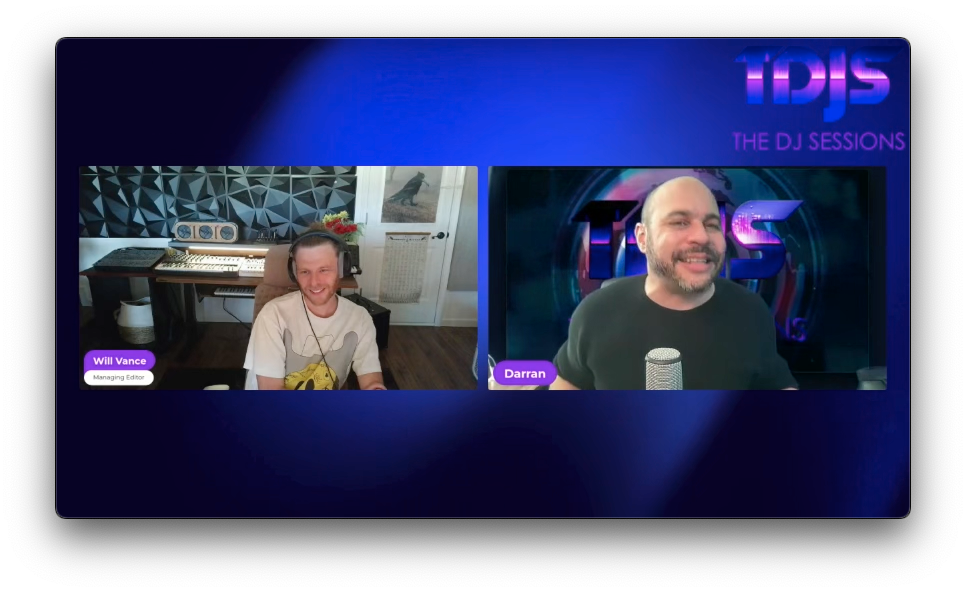
Will Vance – Writing, Labels, and Redefining Success in Dance Music on the Virtual Sessions 2/10/26
Shownotes
Broadcasting from Dundee, Oregon, just outside Portland, Will Vance joins for a thoughtful industry conversation that spans technology, media, labels, and what it truly means to “make it” in music. As Managing Editor of Magnetic Magazine, Will reflects on his unconventional entry into the electronic space, using writing as his foot in the door while developing his own skills as a producer. His journey through blogs, liner notes, marketing roles, and ultimately into leading day-to-day operations at Magnetic highlights the value of persistence, timing, and simply being reliable.
The discussion explores the rapid evolution of music technology, from mailing demo tapes decades ago to today’s frictionless digital distribution. While access has never been easier, Will stresses that opportunity alone does not equal success. He challenges the idea that “making it” only means headlining festivals, instead redefining it as creative fulfillment, sustainability, and staying connected to the process.
A major theme centers on record labels and artist relationships. Will speaks candidly about horror stories many artists face and emphasizes that labels must go beyond uploading tracks. Real value comes from advocacy, thoughtful A&R work, meaningful promo networks, and genuinely going to bat for developing talent.
Looking ahead, he notes the resurgence of bass-driven genres such as drum and bass and deeper dubstep, hinting at expansion plans for Magnetic’s label division. Through it all, his core advice remains simple yet powerful: show up on time, be easy to work with, protect your music, and stay obsessed with the craft.
Topics
0:11 – Growing up technical and choosing music over sports
6:40 – Breaking into the industry through writing and blogs
9:49 – Looking back versus forward in music’s evolution
15:08 – What record labels should actually be doing for artists
18:23 – Should young producers pursue music as a career
23:18 – Inspiring industry figures behind the scenes
27:12 – Best advice ever received – show up and be easy to work with
30:44 – Redefining what “making it” in music really means
38:27 – Bass music and drum and bass resurgence
41:58 – Final advice for artists submitting demos
Connect with Will Vance
Magnetic Magazine:magneticmag.com
Instagram: magnetic_magazine
About Will Vance –
From the rain-soaked northwest corner of the United States, Will Vance crafts a distinctive dance music experience. Intertwining intimate atmospheres and melodic textures with club-ready percussions, his creations emphasize a unique human soul over formulaic designs. Inspired by Twilight and the thin line between the real and imagined worlds, Will’s music resonates sentimentally, earning him global acclaim with hit remixes on Songspire and celebrated releases on Where The Heart Is Records. His role as A&R and Label Manager at David Hohme’s label further attests to his profound impact on the contemporary music scene.
Will’s connection to the outdoors is more than an inspiration; it’s the heartbeat of his musical approach. His work with Where the Heart Is Records, and Elliptical Sun Recordings reveals organic and ethereal compositions, mirroring his philosophy that music transcends the mundane. This authenticity and dedication to craft make his sound unique and emblematic of a new wave in melodic dance music.
In a landscape awash with fleeting trends, Will Vance symbolizes lasting innovation and emotional resonance. His musical vision paves a trail for others to follow, redefining the genre’s standards. Follow Will’s journey, and be part of an exploration that continues to inspire and reshape the world of dance music.
About Magnetic Magazine –
Magnetic Magazine is an online publication specializing in music and culture featuring interviews, premieres, mixes, charts, gear reviews, industry news, op-eds, and more. Magnetic focuses on the cutting edge and is the perfect intersection of electronic, indie, and hip-hop.
Founded in 2011 by BPM Magazine founder/publisher, David Ireland, and editor Rob Simas, Magnetic was designed to move in real-time. The content is an ever-evolving amalgamation of what our editorial team considers to be fresh, disruptive, and inspiring.
Magnetic delves deeper into the notions and politics of what modern music has become and what’s next. The perfect junction between culture and music, diving into topics such as sustainability, travel, camping, and festival life.
The seasoned voice within these cultures featuring journalists that have been there since the beginning, while also giving fresh perspectives from a new crop of opinion leaders. The future is being written, and Magnetic was created to document it. We’d like it very much if you’d join us. Become part of our dialogue.
Observe. Report. Experience.
About The DJ Sessions –
“The DJ Sessions” is a Twitch/Mixcloud “Featured Partner” live streaming/podcast series featuring electronic music DJ’s/Producers via live mixes/interviews and streamed/distributed to a global audience. TheDJSessions.com
The series constantly places in the “Top Ten” on Twitch Music and the “Top Five” in the “Electronic Music”, “DJ”, “Dance Music” categories. TDJS is rated in the Top 0.11% of live streaming shows on Twitch out of millions of live streamers.
“The DJ Sessions” is listed in the Feedspot directory as one of the Top 60 EDM Podcasts.
It has also been recognized by Apple twice as a “New and Noteworthy” podcast and featured three times in the Apple Music Store video podcast section. UStream and Livestream have also listed the series as a “Featured” stream on their platforms since its inception.
The series is also streamed live to multiple other platforms and hosted on several podcast sites. It has a combined live streaming/podcast audience is over 125,000 viewers per week.
With over 2,700 episodes produced over the last 16 years “The DJ Sessions” has featured international artists such as: Matt Staffanina, The Midnight, Felix Sama, Jens Lissat, BT, Plastik Funk, Redman, Youngr, Dr. Fresch, Ferry Corsten, Robert Owens, Darude, Herbert Holler, Meecah, YORK, Martin Jensen, Sevenn, Amber D, Joey Riot, Drove, Martin Trevy, Thomas Datt, Siryuz & Smoky, Simon Shackleton, SurfingDJ’s, Jacob Henry, Rïa Mehta, Vintage & Morrelli, Joachim Garraud, Mizeyesis, Drop Out Orchestra, Dave Lambert, Tom Wax, Kenn Colt, Nathassia aka Goddess is a DJ, Joni Ljungqvist, mAdcAt, Wuki, DiscoKitty, Handshake in Space, Thaylo, Moon Beats, Barnacle Boi, IAMDRAKE, Spag Heddy, Scott Slyter, Simply City, Rob Gee, Micke, Jerry Davila, SpeakerHoney, Sickotoy, Teenage Mutants, DJ Mowgli, Wooli, Somna, Gamuel Sori, Curbi, Alex Whalen, Netsky, Rich DietZ, Stylust, Bexxie, Chuwe, Proff, Muzz, Raphaelle, Boris, MJ Cole, Flipside, Ross Harper, DJ S.K.T., Skeeter, Bissen, 2SOON, Kayzo, Sabat, Katie Chonacas, DJ Fabio, Homemade, Hollaphonic, Lady Waks, Dr. Ushuu, Arty/Alpha 9, Miri Ben-Ari, DJ Ruby, DJ Colette, Nima Gorji, Kaspar Tasane, Queen City Hooligan, Andy Caldwell, Party Shirt, Plastik Funk, ENDO, John Tejada, Hoss, Alejandro, DJ Sash U, Arkley, Bee Bee, Cozmic Cat, Superstar DJ Keoki, Crystal Waters, Swedish Egil, Martin Eyerer, Dezarate, Maddy O’Neal, Sonic Union, Lea Luna, Belle Humble, Marc Marzenit, Ricky Disco, AthenaLuv, Maximillian, Saeed Younan, Inkfish, Kidd Mike, Magitman, Michael Anthony, They Kiss, Downupright, Harry “the Bigdog” Jamison, DJ Tiger, DJ Aleksandra, 22Bullets, Carlo Astuti, Mr Jammer, Kevin Krissen, Amir Sharara, Coke Beats, Danny Darko, DJ Platurn, Tyler Stone, Chris Coco, Purple Fly, Slantooth, Dan Marciano, Johan Blende, Amber Long, Robot Koch, Robert Babicz, KHAG3, Elohim, Hausman, Jaxx & Vega, Yves V, Ayokay, Leandro Da Silva, The Space Brothers, Jarod Glawe, Lotus, Beard-o-Bees, Luke the Knife, Alex Bau, Arroyo Low, Camo & Crooked, ANG, Amon Tobin, Voicians, Florian Kruse, Dave Summit, Bingo Players, MiMOSA, Drasen, Yves LaRock, Ray Okpara, Lindsey Stirling, Mako, Distinct, Still Life, Saint Kidyaki, Brothers, Heiko Laux, Retroid, Piem, Tocadisco, Nakadia, Protoculture, Sebastian Bronk, Toronto is Broken, Teddy Cream, Simon Patterson, Morgan Page, Jes, Cut Chemist, The Him, Judge Jules, DubFX, Thievery Corporation, SNBRN, Bjorn Akesson, Alchimyst, Sander Van Dorn, Rudosa, Hollaphonic, DJs From Mars, GAWP, David Morales, Roxanne, JB & Scooba, Spektral, Kissy Sell Out, Massimo Vivona, Moullinex, Futuristic Polar Bears, ManyFew, Joe Stone, Reboot, Truncate, Scotty Boy, Doctor Nieman, Jody Wisternoff, Thousand Fingers, Benny Bennasi, Dance Loud, Christopher Lawrence, Oliver Twizt, Ricardo Torres, Patricia Baloge, Alex Harrington, 4 Strings, Sunshine Jones, Elite Force, Revolvr, Kenneth Thomas, Paul Oakenfold, George Acosta, Reid Speed, TyDi, Donald Glaude, Jimbo, Ricardo Torres, Hotel Garuda, Bryn Liedl, Rodg, Kems, Mr. Sam, Steve Aoki, Funtcase, Dirtyloud, Marco Bailey, Dirtmonkey, The Crystal Method, Beltek, Darin Epsilon, Kyau & Albert, Kutski, Vaski, Moguai, Blackliquid, Sunny Lax, Matt Darey, and many more.
In addition to featuring international artists TDJS focuses on local talent based on the US West Coast. Hundreds of local DJ’s have been featured on the show along with top industry professionals.
We have recently launched v3.4 our website that now features our current live streams/past episodes in a much more user-friendly mobile/social environment. We have now added an “Music” section, site wide audio player, transcoding, captions, and translation into over 100 languages, There is also mobile app (Apple/Android) and VR Nightclubs (Beta in VR Chat).
Transcript
[Darran]
Hey everyone, welcome back to another episode of The DJ Sessions Presents The Virtual Sessions. I’m your host Darran, and right now I’m sitting in The Virtual Studios in Seattle, Washington, and coming in just down south, not too far away from our studios, just outside of Portland, Oregon, in a small little town in wine country called… Will, what’s that city called?
[Will Vance]
It’s a small little village called Dundee by McMinnville, 45 minutes outside of Portland or something like that. Not a big music industry town, that’s for sure, but I love it.
[Darran]
Not too far away, we have Will Vance with Magnetic Magazine, the managing editor today, in one of our special exclusive industry interviews. Thanks for being here today, Will.
[Will Vance]
Yeah, thanks for having me.
[Darran]
Yeah, well it looks like you’re in your home studio, you got some stuff set up back there, and how have things been going for you?
[Will Vance]
Yeah, things are going… my little man cave, well not little, but my man cave slash studio slash office slash oasis up here. Things are going good, there’s a decent outside, and just kind of getting after it with work.
Yeah, you’ve caught me at a perfect time.
[Darran]
Gotta ask you, you live in the Pacific Northwest, and Oregon does not have a pro football team, are you a Seahawks fan?
[Will Vance]
No, oddly enough, I’ve never followed sports that much, and this is actually funny, I haven’t told this story, but like back in college I was living with all my old high school buddies and college buddies and stuff like that, right? There’s like five of us living in a house, and all of those boys were like, are still to this day, super big sports guys, but I always hated it. And so whenever they would have the games on, I would just figure out how to work this thing called Ableton, and that was 14 years ago.
Probably spent hundreds of hours every semester in my room making beats, just because I didn’t want to watch the only thing on in the house, and here we are.
[Darran]
Yeah, no, I mean, you can call me a fair weather fan. I like seeing when the Hawks are winning and all that fun stuff, you know, but definitely interesting times we’re in right now with the Hawks winning the Super Bowl, and we had our mobile studio out the night they won, and we’re taking it out for the parade tomorrow, so pretty excited for that and seeing what’s going on there.
[Will Vance]
Yeah, I’m excited for you for that.
[Darran]
No, I am more the kid that was also, growing up, was more the technical kind of playing with video cameras. My brothers had a studio playing with the keyboards and the gear and reading the manuals in the 1980s that were loosely translated from Japanese to English, and they didn’t really read. I mean, you’re playing with this stuff at six and eight years old.
You’re kind of looking and going, how are you making heads or tails of this? I don’t have some engineering degree and learning about MIDI and like this cable here, and turn on this thing here, and dude, there was no internet to search.
[Will Vance]
There was no YouTube video to watch, and you couldn’t go to languages that you don’t speak.
[Darran]
Yeah, and it wasn’t like you could go to Guitar Center and be like, hey, can I sit down and work with this rack mount and tell me how to plug in these buttons? You were like reading the manual right there working with it, but no, it’s having that technical aspect. Yeah, I didn’t get into sports.
I was more geek and into video games and all that fun stuff. Speaking of technology though, it moves very fast in DJ land, production land. If you could think of something that’s not on the market today, but in your vision, would be really amazing, what would that be?
[Will Vance]
Oh, geez. I don’t know. That puts me on the spot, thinking of something super, super technical.
I don’t know. I mean, I feel like DJing has been what it is for a very long time. There hasn’t been too many new breakthroughs in technology, and granted, that makes it interesting, right?
Because it’s like, all right, this established art form, what do you do within the confines of that art form? But I think that there are some really cool stuff happening there. Granted, this is not my idea, and granted, I think this stuff is already in the works.
It’s not like me coming up with this idea out of thin air and stuff, but the spatial audio stuff in clubs, I think is really interesting. Some of the new technology coming out, being able to break up, almost stem out songs, and for the DJ to be able to control that right around the space of clubs and stuff like that. Again, not my idea, but I do think that that is something that is on the very, very near horizon that I think is super, super cool.
Some of the bigger exhibits and stuff that we saw at the NAMM show down in Anaheim two weeks ago. I think it was two weeks ago. Yeah, time behaves weird when you have a baby and a toddler in the house.
But that was super, super exciting. Some of the more innovative stuff that I saw down there. So that’s kind of where my answer is, is probably piggybacking off of the genius of some of those developers and some of those minds, but that’s what I think is cool.
[Darran]
You know, it always reminds me, you mentioned stuff like that, and it reminds me of that scene out of the movie Virtuosity with Russell Crowe and Denzel Washington. When he goes into the night club, Russell Crowe’s character, and he’s playing the music and the DJ things, and he’s like, and he samples the people’s audience. He’s like, and doing all this stuff.
And I used to have the Roland MC-505, the SP-808 back in the early 2000s, and they had that V-beam where you can kind of control, assign it different parameters and put your hand over it. And like, you had two beams that came out and one could, you could like control pitch and you can control arpeggio. Okay, I’m not a musician.
You can just know right there, I’m not a musician, but you can control the different functions or you could, with the sampler, you could put your hand over it and it would, one of the sample pads would trigger as you put your hand over it. And I was like, it’s kind of really cool. I’m surprised that never really took off, but you know, seeing technology and yeah, you’re right, it changes, but it doesn’t change.
But the spatial audio, I think, I mean, those systems are going to be pretty expensive. I would assume they’re pretty expensive to put in.
[Will Vance]
Oh yeah, I bet they are. I mean, yeah, for sure they are expensive to put in, but you know, Nightlife is still a very lucrative business for some of the bigger corporations who are kind of consolidating their power within it. So hopefully, hopefully, not that I’m wishing for more monopolies in that, but you know, there are some companies out there who probably have the money to very cool systems and experiences for it.
So I guess it’s a curse or two sides of the same industry.
[Darran]
And how long have you been working with Magnetic Magazine for?
[Will Vance]
I’ve been running the day-to-day operations for Magnetic for four years almost now.
[Darran]
Okay. How did you stumble into that opportunity? Did you just like, oh wow, I’m out here and I read an article and I want to work with you?
Or was it, did somebody reach out to you? Or how did you get involved with that situation?
[Will Vance]
I wrote for like, when I was in college at University of Oregon, I wrote for, I was an English major there. So I wanted to get some sort of internship in writing. And so I got an internship writing for EDM tunes back then.
They’re still around, but back then that was kind of in the heyday of dance music blogs, right? Kind of like when Skrillex was doing Scary Monsters and Nice Sprites kind of era, that helps put a benchmark or chapter marker there. And so I was doing that and I did that for three or four years and I kind of was like always figuring out how I was going to use writing to like break into the music industry.
Because I’ve been a producer and I wanted to be a producer forever, right? But I wanted to use my writing as a foot in the door. So I thought that going through the blog avenue was going to help.
And then just kind of like throwing different things out there. I wrote liner notes for Silk Music, the progressive melodic house label for a while, just completely for free, just because I wanted to keep getting my name out there writing, writing in dance music world, blah, blah, blah. And now through that is around COVID time, where I saw a position at the Hyperbits Masterclass, which is like an online music production school or whatever.
They were looking for a marketing manager, assistant marketing manager or whatever. So I applied there and got that job, which was my first official job in the industry. That was during COVID time.
Worked there for a year and a half. And then kind of wanted to spread my wings a little bit. And I always knew that at my time at EDM Tunes, I was like, well, I met so many people and had a chance to interface with so many different people there.
If I was ever going to meet someone who may want to hire me for a different gig, I’d be writing for blogs. But I didn’t want to write at the EDM blogs because most of them were still kind of covering Deadmau5’s drama and whatever Deadmau5 said in his latest tweet or, you know, blah, blah, blah. And that wasn’t that exciting for me.
But Magnetic had a little bit more of a more nuanced, I guess, editorial and more gear focused, which is what my forte is anyway. So I applied and I was instantly hired because who doesn’t want to have a writer write for their website for free? And then I wrote like two or three articles over the course of a month.
And then at the time, a guy named Ryan was running this. He got a job. I think it was at like, you know, DistroKid or CD Baby or whatever.
I probably did LinkedIn where I can’t remember, it was four years ago. And so he sent out an email to all of the other writers, seven people at the time. Remember, me just being in the right place at the right time got that email.
So I emailed David being like, hey, I’m probably… David is the owner of Magnetic. I’m like, hey, I’m probably low on the chopping block, like low on the priorities of people when it comes to seniority here.
But I would love to take the job. And he said, let’s hop on a call, but it’s yours because no one else had applied for it. And because everyone else is like super casual, you know what I mean?
Like writing a couple of articles a month kind of thing. So there we go. And that was four years ago now.
And here we are.
[Darran]
Nice. Congratulations. And you look like kind of young, younger type of guy.
I mean, I’ve been in the game for 35 years. I just turned 51 last year. So if you could go back 25 years in music history or forward 50 years in the music future, which way would you go on the spectrum?
That’s a good question.
[Will Vance]
Probably, I mean, I’m probably back. Yeah, probably back just because, you know, just think, I don’t know, it’s like, that’s just kind of where my brain goes. I mean, because you could still, it was around that time where you could still make music on computers and stuff like that, which is kind of like where, what I am so obsessed with, you know what I mean?
I played video games all growing up, big world of Warcraft and Starcraft player and stuff like that. And then I also played guitar religiously. I just off, just off camera, I have my Fender and my Taylor.
And so like making music on my laptop was kind of the merger of both worlds. And I think 20 years ago now at this point, it’s like you, there were still, you know, that was starting to be a thing. Yeah, I think that was it.
I would say like 50 years is an exciting time to get to, like, it will be an exciting time, you know what I mean? But it’s, but what got me into this in the first place was like, you know, I wanted to make, be a career as a musician and like, and I wanted to like be a producer and blah, blah, blah. And I wanted to find success and monetary success in, in music and stuff like that.
And I think that those barriers of entry or like those is going to be very hard in 50 years. That being said, I think there’s gonna be a ton of tools for artists to just express themselves and just like be a part of the act of creating in 50 years. So I think that’s very exciting about seeing the value in doing that.
I think it’s going to be an interesting time for them because it’s accessible and there’ll be ways of expressing themselves through electronic music, especially in ways that we can’t even think of now. But I think that takes a complete reframing or reshaping of what most people want to get into dance music. Right now, uh, we’ll be right.
Uh, maybe it’ll be kind of come full circle. Cause I feel like 20 years ago, people got into this hobby and stuff because they just fricking loved it. Cause no one was a superstar DJ.
Well, there were, but like they were few and far between, you know, uh, and people got in just cause they were obsessed with it and just love active, either making things on a four track track mixer or, or just finding weird stuff in a, in a, in a record bin and sampling it and making a track out of that. Right. It was just, it was the act of creating in this new space that was so exciting 20 years ago.
Um, and maybe that will come full circle. Um, but I think from making a sustainable living, not that music has ever been easy to make a living in, but, um, I think it’ll be, uh, trickier in 50 years, but what do I know?
[Darran]
You know, you go, you do go back 25 years and we didn’t have, I mean, internet was there, bulletin board systems was our BBS, you know, and I was on some of those, but you’re right. I was playing Starcraft back in those days, but you know, if you wanted to get picked up by a label, it was a lot of mailing demo tapes mail. I mean, could you even really burn a CD in 20 into 2000?
[Will Vance]
Um, yeah, I think you, I think you could, it wasn’t a data CD or cutting edge technology.
[Darran]
Yeah. I was like, I mean, so you’re, you’re making these demo tapes, you’re mailing them off. You know, if, if you can find the addresses and the contacts to mail them off these labels, you can just imagine the amount of tapes that would come in.
You would have to put in a cassette player, listen to, and they’d have to listen to the whole thing because it wasn’t like you could put it on two times speed or three times speed or jump to the, you know, look at the way for any of that stuff. So you have to listen to all this music. And I mean, just getting out there and the art of obviously changing as digital distribution, even in my field, we had broadcast, we had public access television, we had broadcast television.
And then 2005, YouTube comes out and now everyone can sing a video online, you know, and then you have iPod video. iPod comes out and now you can have everyone with a video player in their pocket to the iPhone comes out in 2007. Now you have an internet device.
You can download any video and watch YouTube or watch your videos online. You know, and that distribution just really accelerated the game to where I think it was in 2017. The number I heard there was a million videos being uploaded to YouTube every minute.
I’m sure that was handy. And the 200 and 300% increase of live streaming and podcast growth from 2020 to 2022, you know, distribution is just, you can do it all now, you know, back then you really couldn’t do it all. And even forming your own label.
Okay. I got my own label. I’m going to submit my demos to universal and Sony and whoever was there to maybe get picked up by them.
And, you know, it was, it was very interesting to see how that all went, which leads me into kind of my next question is that, you know, labels, magnetic magazine. Okay. Is it okay if I say magnetic mag?
Is that the show?
[Will Vance]
Yeah. Yeah. That’s, I mean, that’s what the, that’s, that’s what the URL is magnetic mag.
[Darran]
Okay. So, you know, magnetic mag has its own label. People can form their own labels, but out there nowadays, what is kind of the most important things that record labels should be doing for their artists in this mass distribution, easy to distribute environment?
And are they doing it? Yeah.
[Will Vance]
I mean, uh, some labels are other label, uh, you know what I mean? I think it’s not, it’s not a secret in this, in this game. Most artists are pretty sick of labels.
You know what I mean? Uh, most artists that all artists that I’ve met have at least more than one horror story or big frustration of working with labels that they had, you know what I mean? Um, I think the biggest thing that I think labels should be doing for us, uh, these days, and I’ve, to be fair, like I’m an artist myself, right.
I’ve released on a number of labels throughout my, my career. Uh, is it like, they just need to show that they’re going to bat for their artists. You know what I mean?
Doing more, doing more than just uploading, uh, uploading the artists stuff to Spotify and making artwork for the artist and then collecting 50% of the royalties, but then also baking in $400 of recoupables, uh, in, into the release, you know, so the artist doesn’t see anything, uh, until the release has made that money back. Um, which is like, you know, fairly common. I feel like these days, especially for like the small, like the smaller, um, the smaller kind of labels whose bread and butter artists are developing talent.
You know what I mean? Obviously you can get into the big labels that like the conversation completely shifts once you’re dealing with like the end Junas or the defectives or stuff like that. Right.
Cause like they have so much more to offer artists and, and, and stuff. Right. So it’s, but I’m, I’m more too focused on kind of like the, the smaller labels that, you know, the majority of artists in these games will be interacting, interfacing with for the first decade of their career or whatever, like, you know what I mean?
Um, so yeah, they have to show that they’re going to bat form, whatever, whatever that may, whatever that may be, you know what I mean? Whether it’s, you know, uh, networking with, with radio show operators to get their music played in radio shows that actually move the needle or building their DJ promo list so that when they send stuff out on inflight, uh, big DJs actually respond and like it, you know what I mean? It’s like, there’s a million different things artists can do to just like show that they care about the artists and do more for artists than just upload their stuff to Spotify.
Cause at this day and age distribution is so easy. Artists can do that. And if the label isn’t going to do anything for the artists, the artists should be controlling all of their, uh, keeping control of, of, of their music and the rights of their music as possible.
[Darran]
And, and mentioning some of those horror stories, you know, that possibly could happen. Would you recommend a career as a DJ slash producer to young kids? Um, and what would be some of the pros and cons of that, of them getting in?
I mean, again, now they have access to things we did not have access to 25 years ago, you know, uh, in the sense of things, but they can go out now and kind of go, okay, Google this YouTube, this take a master course here via online with somebody, you know, um, and, and say, mom, dad, can you buy me some decks? Or can I start with virtual DJ or, you know, whatever it is. Or I remember I was playing with fruity loops three back in 2000, 2000, you know, stuff there and, you know, garage band comes on every Mac computer nowadays, you know?
So, um, those kinds of things, but what do you think the pros and cons would be of, of possibly recommending a career to young kids wanting to get into this electronic music industry?
[Will Vance]
Um, this might sound like a hot take. Uh, and granted, like, you know, I’m not a career DJ by any means. So like, you know, this is, this isn’t really a professional DJ offering career advice to aspiring DJs, but this might come on like a hot take, but like, I would never recommend that someone, uh, that someone like try to make a deep, make a career to set out on this journey with the, with the sole aspiration of making a career out of DJing.
Right. I would recommend that they should try it out. And if they’re absolutely obsessed with it, that obsession will naturally lead them to explore every single aspect of, of, of the, of the industry and culture as a whole.
You know what I mean? And if they’re naturally pulled towards that, and if they’re like, uh, you know, if they’re, if they just have that fire under their butt or in their stomach or in their heart about it, then they will naturally lead to some ways to get paid for it because, you know, they’d rather get paid scraps, uh, doing what they absolutely are absolutely obsessed with than they would making, you know, a comfortable living in a corporate job or whatever like that. Right. But all of those naturally, I would feel like usually end up coming about because they’re obsessed with the art form or the culture in the first place.
Not because they set out to make a career in it because, um, you know, it’s a, it’s a very tasty carrot or cherry or whatever to be like, to see the end goal of some of these big DJs and the lifestyles that they live and, you know, being escorted to the, to the booth off of a private jet by a team of big security guards in Ibiza and stuff like that. But like that far between, if not near impossible to obtain in this.
[Darran]
I still want my Learjet and be escorted to nightclubs. Yeah.
[Will Vance]
Don’t, don’t we all, don’t we all. For flying in private jets. But if any of us were given the opportunity to fly on one, we definitely would not.
[Darran]
I mean, I told a friend of mine a while back, he said, when did it start becoming about, when did this stop becoming fun for you? And when did it start becoming about the money? And I said to him, it never stopped becoming fun.
I just learned I wanted to run a successful business and I need money to pay people to retain them, to keep the best of the best around. And it wouldn’t hurt to have a Learjet and a black American express card and all that stuff and perks and benefits that go with it. So I can go travel around the world doing what I love and what I do.
You know, you mentioned you have, you have two, two children, two kids.
[Will Vance]
Yeah.
[Darran]
Do your, does your family enjoy listening to electronic music? Do they get into it when you’re jamming in your, in your man cave there?
[Will Vance]
My son does. They like playing with the synths behind me. They plug it in and just like, like turning knobs and slamming keys.
I mean, my four and one, so they don’t really have too much of an understanding of music as a whole, let alone electronic music. But I mean, I don’t think I’m like alone by saying that I work in electronic music, but when I’m off the clock, I don’t listen to electronic music. You know what I mean?
So like when I’m casually just cooking or anything, I don’t, I don’t listen. I listen to some mixes and stuff like that, but it’s, you know, I like other stuff too that, that I listen to more often than not.
[Darran]
No, if you can, if what, what’s a genre that you, I mean, you’re in the electronic music industry, managing editor, mix mat, I’m sorry, magnetic mag. I’m sorry for that one. And you know, sometimes people ask what type of music do I listen to?
They think I’m all surrounded by DJs and electronic music. I am listening to electronic music, but I listened to, um, grew salad by Soma FM out of, uh, out of San Francisco. It’s down-tempo ambient chill.
Anyone knows him? It’s what’s playing in my office. It’s what’s playing in my car, you know, cause I got so much stuff going on.
I want chill, you know, kickback stuff.
[Will Vance]
So, um, yeah, I mean, I kind of similar, similar sort of vibe with me. Um, I listened to a lot of like Irish folk music. Um, there’s a couple of like, there’s an old NPR show called Thistle and Shamrock that I, you grew up listening to with my dad, cause my dad’s super into it.
Um, and so while that show like discontinued, uh, on, on public radio, there’s a whole bunch of like Spotify playlists that are inspired by it, that like are updated regularly with like that similar sort of vibe. So I listened to those playlists a lot. Um, I’m like five years running on being in the top 0.5% of Lorena McKinnon super fan, like, you know, like top listeners on Spotify during my Spotify raft. And she’s like, technically world music, but it’s kind of like ambient Celtic sort of music. Um, yeah, it’s all like, again, super like chill, very not electronic-y sort of stuff.
[Darran]
And you’ve been working in this industry with Magnetic Mag for four years, but also doing other stuff. Who’s the most, you mentioned, uh, you know, being kind of in the top of one of your, our favorite artists you listen to. It’s not in the electronic music scene, but who’s the most inspiring person you’ve ever met backstage or on site?
Uh, and why was that person such an inspiration to you?
[Will Vance]
I mean, there’s, that’s a good question. I haven’t really thought about it. Um, I think, I don’t know, everyone, everyone that I meet and that I interface with and like work with is inspiring in their, in their own way.
You know what I mean? Like all the bosses that I’ve had, and this sounds like I’m just going to suck it up for my bosses, but it’s honestly not the case. But like, you know, I, I thought Hyperbits, I still work with him.
Um, he’s inspiring just because of his like, his business. I mean, he’s a killer producer, right? He had a career as a producer before, uh, you know, before starting the masterclass and now he has a career as a producer throughout the masterclass, right?
It’s called the Hyperbits Masterclass. Um, but I liked his, it’s inspiring to see his kind of redirect into starting that school. Um, I ran David Holmes’ Where the Heart is, uh, records for three years, four years.
I, you know, I left working that about a year ago. Um, so like seeing David’s hustle as an independent musician, DJ, and all the different like things that he has, uh, on his plate. Now that was inspiring.
Um, I think it’s inspiring seeing my boss David and the career that he’s, he’s put together. Uh, and just like, you know, especially, you know, he’s been in the game for like forever, right? You know, he was doing BPM magazine before he went digital and launched, uh, magnetic mag 14, 15 years ago now at this point, right?
He just knows everyone in the industry and it’s fun going to Nam with him because he knows everyone. Um, and so like, that’s inspiring to see like a culmination of his career, um, where it’s kind of brought and it’s fun to be a part of that. So it’s like, I don’t know, any, anywhere you look, you know what I mean?
It’s like, it takes a lot, it takes a lot of, it takes a lot of brain and ambition. The brain’s probably the wrong word, but like, you know, you gotta, you gotta figure out how to, how to, how to move in this industry to like get to, to make your way in it. And so anyone who’s like working in it, it’s kind of, they always have their own unique kind of career path and the ways that they’ve kind of played the hand that they were the unique hand that they were dealt to kind of get to where they’re at.
And the longer you’re in the game, you know, like the longer I’ve been at it, then I would say a higher up that I get because I’m just a managing editor or a website, but like it’s everyone, the stories become more and more interesting. You know what I mean? The guy like that day, we hung out with the dude who made the new Roland drum machine, you know what I mean?
He was one of the product designers. So like chatting with him about how his, his, his journey, that was inspiring in its own way. Cause he’s one of the main designers of Roland’s new flagship drum machine, right?
Like super cool hearing, hearing those guys’ stories, but again, they’re all different.
[Darran]
You know, I’m, I’m glad you kind of touched on it because that’s when we did decide to expand and not just cover just DJs and producers. We’d love to get somebody like that from Roland talking about that story. Cause those people don’t ever get put in the spotlight.
The engineers, the promoters sometimes never get put in the spotlight. You know, it’s always, everyone wants the artist, the artist, the artist. And it’s like, what about the lighting designer?
You know, what about the audio engineer that can lend some of the licensing manager or the label manager, you know, that does all the backend work to make all this stuff happen that nobody gets the spotlight on. We definitely opened that up and you know, it’s, it would be hard for me to say who’s been the most inspiring person as well. It’d be so many people, like you said, right down the line from, from day one of, of maybe even working in my local scene with the people that supported me back then to certain celebrity or even yourself, you know, it’s so many, so many ways.
I like how you use that analogy of everyone’s working with the cards they’re dealt with in their own way, making this all happen. There’s no one set A, B, C, D, you know, you go from A and jump to Q and then jump back to L and then totally off into a different universe. And you’re like, Whoa, but out of all that, what has been the best piece of advice you’ve ever been given?
Is there something that rings true with you at number one rule or mantra that you say? I remember someone so told me that. Um, and I kind of followed that.
I heard somebody say that and it really resonated with me. Is there anything that comes to mind as top of mind when you think about that question?
[Will Vance]
Yeah. I mean, I think it’s some words that my mom said to me many, many years ago. My mom was a nutritionist, like a dietitian author growing up.
And like, you know, so she, um, had a, she traveled a lot, you know, she was on TV a lot in New York and stuff. Uh, you know, I spent my whole life in Oregon, right? So she was traveling the East coast a lot and stuff like that.
So I wouldn’t say she wasn’t showbiz, but it was something tangential just because she worked in, you know, she was involved in media and wrote for shape magazine and stuff like that all the time. But the biggest piece of advice she said is just to show up on time and be easy to work with. Uh, and I think that holds very, very true.
It’s like, it sounds so simple, but, um, you know, in like so much of music kind of, there’s so much going on that being able to be predictable and reliable and also just like not a jackass, uh, is kind of, can be, can be a pretty big X factor sometimes.
[Darran]
Definitely. And we know probably, and I’m sure you’ve seen it. I’ve seen it a number of times, some of the egos that can get in the way.
Um, you know, unfortunately I’ve dealt with a lot of that and a lot of the more, the higher up the chain I’ve gotten, the lower that comes down. Um, you know, it’s like, Whoa, you’d think that this person’s going to be like, and you get all kind of fanboy or nervous going, Oh, I got so-and-so and they’re like, hi, how’s it going? And you’re like, okay, cool.
You know? But, um, it’s, interesting how that happens. Um, speaking of famous people or not, I should say non-famous people.
If you could put one non-famous person in the spotlight who means a lot to you, other than your direct family or friends, who would that be and why?
[Will Vance]
Um, that’s a good question too. Um, I would say, uh, I wouldn’t say like, I wouldn’t say any specific person, but, uh, I would say more so the unsung heroes of just the A&Rs at the smaller record labels who actually are going to bat for their artists and actually do invest the time and attention, uh, into, into their releases. Uh, you know, once again, so many labels that I said this before, but like, so there are so many labels, like just kind of just put stuff up on Spotify for the label for the artists and blah, blah, blah.
And not like, so any label that is going to bat for their, including especially kind of where the boots meet the ground or where the rubber meets the road is at the A&R process. And that’s just something that any label can do is just to give every single artist from the release that they do, uh, the tender loving care that it needs to like be as awesome as possible. Um, and, but sometimes that can be kind of nitty gritty and a lot of back and forth and a lot of emails, a lot of critical listening to music that is far from polished and getting it to there.
Uh, and it’s not the sexiest of jobs, but I, um, I think the A, the A&Rs, uh, the good A&Rs at smaller labels who like do it for the love of the music and for the love of the artists to support them. Uh, I think that, that hopefully that works.
[Darran]
Yeah, no. And it leads right into the next question. I wanted to get to, um, you did send me over some show notes and, you know, you talked about your love of music without making it in music.
I mean, when you look at the small percentage of artists that actually make it or what we think is making it and, you know, where are they at financially? If you say you’re, you love music without making it in music, what would be your description of actually making it in the music industry without the Learjet and the black American Express card and having the security guards escort you into Ibiza?
[Will Vance]
But yeah, yeah, yeah. Um, and here’s the question. Yeah.
I mean, I think because success in music is going to look different for everyone. You know what I mean? It’s like, everyone kind of gets into the game because they see their favorite artists or whatever, like headlining Coachella or playing in Ibiza and getting delivered on a private jet and stuff like that.
And that’s what they think making it in music looks like. And yet, uh, you know, uh, and, and everything shy of that is they’re still working on their big break. You know what I mean?
Um, so, and I think that’s kind of wild, right? Um, because like, you know, I played, my parents forced me to play piano growing up, right? Uh, and I hated it.
And so much so that, uh, the, I think the piano teacher ended up like, you know, kicking me off her schedule just because I, she could tell that I hated it so much. Um, but my parents stressed that I keep, you know, for all of the other, uh, intrinsic things that it would bring to my life. They promised me that it would help me better at math somehow.
Uh, you know, they, they gave me something to do. I could do forever. Presumably stuff like that.
Right. They’re like all of these factors that were all kind of circling around playing piano that they thought would benefit my life. Um, and, and yet that’s not really a part of the dialogue when it comes to being a DJ or being a producer, right?
Everything shy of headlining Coachella is kind of just like you haven’t made it yet. Um, and I think that’s a real shame. So I would say kind of to shift the narrative a little bit, like making it music is as long as you, uh, have found an outlet where you can express yourself as an artist who’s chosen medium is electronic music in any way, shape, or form, whether that’s DJing and connecting with a crowd there or a DJ and just loving the music that you’re playing in your bedroom or making music that is authentically true to you, um, that you can like, you know, you can hang your hat on and be proud of. Um, I think that’s all kind of, kind of, uh, making it, maybe that sounds poetic.
Maybe that sounds like kind of, kind of overly, uh, flim flammy and, and not like the real brass tacks of the whole thing, but that’s kind of what, what I think about it. That’s how I kind of think about it. Um, you know, I, I think I’ve made it and I am just, uh, I’m just imagining it or a magnetic magazine, right.
But I’m, I’m home with my kids. I get to chat about music and think about music constantly, which is what I love. Uh, I like to work at building this, this, this whole, this whole magnetic thing, which is exciting.
I get to like, you know, stay home and produce and play around with new toys, uh, all the time. Uh, and that’s, that’s making it to me and it’s flexible enough where I can stay here with my kids. Right.
So like, that’s what making it to me means I have other buddies who, you know, on the label who want to be touring artists and we’re like throwing everything they can at the, at, at the wall to make that work. And they love the journey and that’s kind of making it for them. They haven’t made it yet, but they’re making it work and that’s what they love it so much.
Right. So I guess whatever keeps, keeps you going, uh, and keeps you in love with the process is, uh, making it not to sound corny and say that it’s about the journey, not the vision, but like, it’s kind of true. Uh, and, um, I think as long as you kind of get into it and don’t think that you’re a failure until you headline Coachella, I think you’re on the right track.
[Darran]
You know, you brought up something really good there about one of the things you said was producing your own stuff and loving what you do and feeling good about that. And I’ve spoken with hundreds of artists and producers on the show over the years and a kind of reoccurring theme happens is one of the things I say is, you know, what’s I say, what’s a piece of advice you’d give to an up and coming producer? And they say, make your own stuff.
Don’t try to go and copy the sound that’s hot on deep port or hot out there right now, make your own stuff, find your niche. And then, and then go after that and try to, you know, cause you might get disappointed because by the time you get up there, that genre is already gone. That genre has passed.
It’s gone. It’s been hit, you know, and maybe you’ll circle back around, but it’s, you know, go out there and do your own thing and be in love with that. And you’re right.
You may not, it may hit, it may chart, it may get up there, you know, um, but just keep doing what you love and keep what’s going on. Speaking of songs and, and, um, hitting the charts and everything though, what was one of the, in your opinion, what was one of the biggest hit tracks that you listened to heard last year? And what would you say would be the magic touch behind its success?
Is there one that sits identified with you in 2025 that came out and said, ah, this one came out, you know, I’ll get, I’ll give you one. I’ll start off. And this goes back to 2022 had an interview set up with Mal P didn’t do my research on him, but that year at 80 in Amsterdam, he drops his track because I got my drugs in Amsterdam, you know?
And I, I missed that interview because, uh, conflict of schedules and everything, but coming back, that was kind of like a big anthem for 80 that year. And then all that stuff. Has there ever been a moment like that with a song that set with you, maybe in 2025 that says, this is a big hit.
And what was the magic? How did that culminate? How did that go?
I know there’s millions of songs. It’s almost like somebody asking me what’s my favorite episode of the DJ sessions. And it’s like every single one of them, I don’t know.
Is there one that stands out though? That says this one really is defining the industry or is it changing or going that sits out, sticks out to you.
[Will Vance]
This is a cop-out answer, but not like, not really. Like there is, there’s so much music, uh, out there and so many like viral artists who are like going absolutely bananas in spaces that I just don’t follow that much, you know, like anywhere where you kind of go massively viral. Uh, I don’t, I’m not on that.
We don’t use to talk too much and stuff like that. So I don’t make a viral kind of moments. And besides like, obviously we cover like artists all across the spectrum of popularity and stuff like site.
But like, I like supporting more because again, kind of to the point where I mentioned about like, you know, tweeting about deadmau5’s drama tweet or whatever like that, which still do to this day. Right. It’s like, I would much rather support an artist who’s making a banger track that has a thousand followers on Instagram, uh, that it support that music.
Then I would write an article about that, that, that producer for the first time. Then I would, uh, writing another article about Cascades new single or whatever. No offense, he’s a phenomenal musician, obviously, you know what I mean?
But like, you know, that, that stuff, you can find that stuff anywhere. Uh, and so I kind of like looking at the stuff that doesn’t, that isn’t as making as big of a moment, uh, because that’s kind of like, that’s a little bit cooler to me. Uh, so, and that’s honestly like what we cover so much on the website is like a lot of smaller developing artists and stuff like that.
Uh, and we’re like, are kind of the bread and butter of artists that we support on the labels and stuff like that. So, um, that, that, I don’t know that maybe that was a political way to talk about that question, but that’s kind of where what I pay more attention to now is the smaller developing artists.
[Darran]
Is there one type of sound in electronic music that you’re really excited about now that’s like, oh, this could come back or I see it emerging or anything that’s like really sticking out that you say, okay, 2026 is going to be the year of, or this is a very underrated genre that needs more attention. Anyone that stands out that I, I know if you go to Wikipedia and you look up all the genres, when I grew up, there was house and techno and maybe trance started coming out, but now you go to Wikipedia and there’s like 300 different genres of sub genres of genres of sub genres. But I mean, on, on, on the top, top level, there’s, you know, 20 different main genres.
Is there one, one that you think is going to maybe come back out, kind of make a resurgence? Um, what are your thoughts?
[Will Vance]
Yeah. I mean, like, I think, I mean, I think, I think slash know that bass music is having a pretty big, uh, resurgence right now. Uh, I know that’s like literally like the widest umbrella of genres you could possibly say, but like drum and bass is like having a massive moment right now.
And we’re actually talking about launching a second label in that genre. Um, you know, in that, that like dubstep, uh, you know, not like the, not the bro Steppy, like really overly aggressive ripping and tearing sort of dubstep, but that sort of like old school rusco deeper sort of webby stuff. Um, I think that that is kind of having a little bit of a, of a moment or will be, uh, and then just like drum and bass as well.
I think the drum and bass is just like super, super cool. Uh, it’s not a genre that I make. So like interesting in that way, because I built my whole career working in like melodic house and organic progressive house, like all those types of spheres.
Uh, and so to be more actively keeping an eye on some of the smaller developing acts of very unsung, the unsung heroes of a, of a genre that, um, you know, I have no idea how to make it kind of like injects a little bit of that, that magic that I had 10 years ago when I first started getting into progressive and melodic dance music kind of back into my appreciation for it. That was a ramble, but, uh, that’s, that’s, that’s kind of my thoughts on it.
[Darran]
It’s all good. And you mentioned, you might even be looking to open up a second label. Let’s talk about magnetic mags labels for a second.
Um, how many, is it just one label or are there like sub genres of different genres?
[Will Vance]
We have the one main label, which is magnetic magazine recordings, which kind of is everything in that umbrella of, you know, melodic, progressive, uh, organic kind of house, you know, really good, like day party, day party playlist D sort of, sort of music, right. That’s kind of where my whole career has been thus far working with David Hallman where the artist and stuff. So that’s kind of where my whole community of artists and stuff was.
Um, uh, so that’s, that, that’s where we’re at now, but we’re kind of looking at repeating this success that we’ve had, uh, with magnetic recordings into a new genre, uh, which is, you know, that more low end, low end heavy sort of, sort of stuff, drum and bass stuff, stuff like that. Um, we’ve had some other ideas of starting other extra labels as well, but, uh, that’s where the focus is at right now is with the drum and bass.
[Darran]
And if somebody wanted to get involved, submit, is there, there’s obviously, I assume a submission form at the magnetic mag website?
[Will Vance]
Yeah, just demo, demo at magneticmag.com. Uh, that’s going to shuffle it towards like kind of the, the, where most of the melodic and, and organic demos are at, but, uh, we’re kind of looking for our initial run of demos for the, for the next label right now. So if you’re producing that demo at magnetic mag.com, uh, and you can see what you got, uh, but, but yeah, and again, we’ve had some, we’ve toyed with some other ideas as well, but, uh, that’s kind of where the next quarter or two is going to be focused on.
[Darran]
Nice. Yeah. It’s always awesome to hear companies expanding and growing.
Um, you know, we obviously did a bunch of changes over here recently and, and, uh, you know, partner with some really good national, international partnerships here. Uh, I want to say it again. Thank you for the article that you put up on us.
Always a pleasure. It’s not the first time we were in magnetic, but it’s good to be back in the saddle. Um, super awesome things coming out your way and we’ll definitely, um, be, we will be an ardent fan of magnetic magazine for the foregoing future.
Is there anything else you want to let our DJ sessions fans know about before we let you get going?
[Will Vance]
Oh, no, not really. Uh, I’ve kind of spoken my piece about most of what any of the hot takes that I have, uh, you know, do your research before sending your demos out to labels and stuff like that. You know, uh, the sad reality is that we only have so many songs that each of us could produce in a certain lifetime.
So don’t be throwing them away on our, uh, on labels that don’t care about you. Um, you know, whether that’s 3000 songs or 5,000 songs or 30 songs or 300 songs, you’re the amount of stuff you could make in a lifetime is limited. So don’t waste it, uh, on labels that don’t care or don’t go to bat for you.
Um, but yeah, that’s, that’s my hot takes on that.
[Darran]
And, uh, that’s awesome. Well, it was a pleasure having you. I know we’ll be talking to you in the future again.
Where’s the best place people can go to find out more information about magnetic magazine?
[Will Vance]
Uh, magnetic mag.com.
[Darran]
I’d love to check out the website.
[Will Vance]
Um, we do a lot of, we do a lot of interviews or just interviews and stuff like that. Uh, and if you like kind of reading the thoughts and opinions of, of DJs and artists, uh, I flip all the interviews we do into Instagram content. So you can just follow, follow magnetic magazine on Instagram, uh, and kind of keep tabs on the interviews that we do.
Um, we, I try to not do too many like puff pieces with DJs that just have them promote themselves, but we talk, you know, pick, picking their brain about DJ cult and what they think on modern DJ culture, their philosophy on phones, on the dance floor, what it likes to lose yourself in the booth, the kind of stuff that like is a bit more insightful than just like the standard puff pieces that are super popular. Um, or that the, or no puff pieces that they’re used to answering, I guess.
Uh, so, uh, check out, check out those because people seem to love them and you might too.
[Darran]
Yeah. You know, it’s funny. You bring up the no cell phones on the dance floor.
We’re actually looking at a new venue spot here up in Seattle. And one of our things is, um, is dealing with that exact issue, which we’re pretty excited that we know how we’re going to implement it and make it happen. Um, but more on that and another story in the future.
So awesome. Both at magnetic mag.com right there down at the bottom of the screen and magnetic underscore magazine at Instagram. We’ll thank you for coming on the show today.
[Will Vance]
Thanks for having me, man. I appreciate you.
[Darran]
Yeah. On that note, don’t forget to go to our website, the DJ sessions.com find all our socials there over 700 news stories a month, 2700 plus past episodes, our new music section, new mobile app coming out, VR nightclub, all that and more at the DJ sessions.com that’s will Vance coming in from just outside of Portland in wine country, which I want to come down there and visit sometime soon from magnetic mag, the managing editor for the DJ sessions. And remember on the DJ sessions, the music never stops.
[Will Vance]
Thank you very much.


