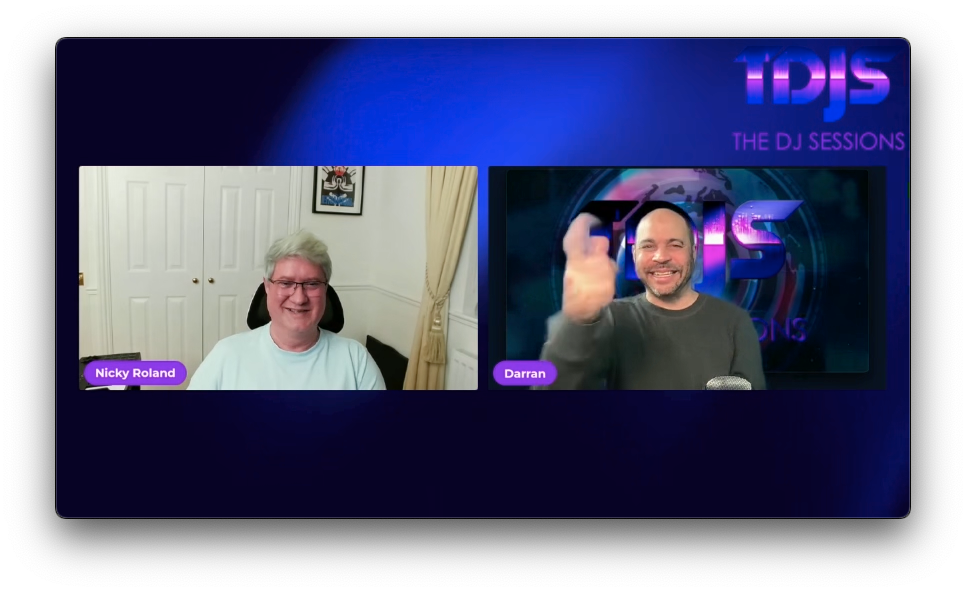
Nicky Roland – Independent Labels, AI Marketing Tools, and Reclaiming Creative Control on the Virtual Sessions 2/27/26

Shownotes
Broadcasting from London, UK, Nicky Roland joins for an in depth conversation on rebuilding a music career, launching independent labels, and developing AI powered marketing infrastructure for modern artists. With roots in the late 80s and early 90s underground scene, Nicky shares how early major label setbacks led him to step away from music before ultimately returning stronger with full creative and business control.
He walks through the evolution of Ananki & Kronos, explaining why he split the label into Gold and Black divisions to clearly serve soulful house audiences on TrackSource and harder tech house and techno listeners on Beatport. Drawing from decades of experience in tech and advertising, he outlines the importance of real promotional effort in a saturated marketplace where thousands of tracks are released daily.
The conversation expands into entrepreneurship, ownership versus corporate reach, and the realities of modern pay to play marketing. Nicky introduces ANC Promo, his AI driven promotional platform built to automate press releases, social media content, cover art generation, hook analysis, playlist swaps, and upcoming email campaign tools. His philosophy is clear – AI should enhance workflow, not replace human creativity. Imperfection, experimentation, and happy studio accidents still define great music.
Topics
0:10 – Introduction and early music beginnings in the late 80s and 90s
4:48 – Underground London and the Coalesce warehouse scene
8:20 – Major label shelving and creative independence
9:24 – The meaning behind the name Nicky Roland
15:06 – Launching Ananki & Kronos and building traction
18:01 – Splitting the label into Gold and Black divisions
25:14 – What modern labels should actually do for artists
34:51 – Introducing ANC Promo and AI powered marketing tools
48:08 – AI as workflow support versus full music creation
56:10 – The catalyst that relaunched his recording career
Connect with Nicky Roland
Instagram: instagram.com/nickyronamusic
Ananki & Kronos: instagram.com/anankikronos
ANC Promo: ancpromo.com
Discover more interviews and exclusive content at thedjsessions.com
About Nicky Roland –
Born and raised in London, England, Nicky Roland is a producer, DJ, and label founder whose career is deeply intertwined with the evolution of underground electronic music. His journey began early. At just 14, he secured his first studio session with Pinky and Longsy D, laying the foundation for a life immersed in sound, culture, and experimentation.
By 19, Nicky had signed his first record deal under the alias K-Lory, working under the guidance of Snob, then president of the London chapter of the Hells Angels. During this formative period, he collaborated with influential underground figures, most notably Travis Edwards of Satin Storm, contributing to tracks that helped shape the transition toward Jungle and DnB. His work on Think I’m Going Out of My Head was later cited by Goldie as influential in defining his own sound.
Beyond the studio, Nicky became a key force in London’s nightlife, curating music (from his record shop, Busy Boy Music) and helping organise the legendary Coalesce Sound and Vision parties. Celebrated by publications including Mixmag, The Face, and TimeOut as “London’s best-kept secret,” these events cemented his reputation as a tastemaker with a sharp ear for emerging sounds and future talent.
In the early 2000s, Nicky relocated to the United States, where his focus expanded beyond production into technology and infrastructure. He founded an online music company that contributed to the early development of digital royalty distribution frameworks, bridging creative practice with systems that support artists at scale.
After a period away from releasing, Nicky returned fully to music with renewed clarity and purpose. His work gained international attention following a signing with the legendary DJ International Records, where his Latin-infused House track I Lose Myself featured prominently on the Jackmaster 7 compilation, alongside icons such as Frankie Knuckles, Joe Smooth, and Chuck “The Voice” Roberts.
Now based back in the UK, Nicky Roland operates at the intersection of artistry, curation, and platform building. He is the founder of Ananke & Chronos, Ananke & Chronos Black, and A&C Promo. Through these ventures, he releases and supports music rooted in Soulful, Classic, and Chicago House while also embracing Afro House, Deep House, Tech House, Acid House, Techno, and Drum & Bass. His catalogue spans more than forty releases, unified by groove, musicality, and respect for the culture that shaped them.
Ananke & Chronos serves as both a label and creative collective, while Ananke & Chronos Black focuses on deeper, darker, and more experimental expressions. A&C Promo extends Nicky’s long-standing commitment to artist empowerment into technology, offering marketing tools designed by artists, for artists.
Equally at home in the studio, behind the scenes, or shaping the wider ecosystem, Nicky Roland continues to build a body of work defined by longevity, integrity, and intent. His career reflects a rare balance: honouring the foundations of underground dance music while actively shaping its future.
facebook.com/Android1138
facebook.com/NickyRolandMusic
facebook.com/AnankeAndChronos
instagram.com/nickyrolandmusic
instagram.com/anankechronos
nickyroland.com
anankeandchronos.com
ancpromo.com
mplyr.com
About The DJ Sessions –
“The DJ Sessions” is a Twitch/Mixcloud “Featured Partner” live streaming/podcast series featuring electronic music DJ’s/Producers via live mixes/interviews and streamed/distributed to a global audience. TheDJSessions.com
The series constantly places in the “Top Ten” on Twitch Music and the “Top Five” in the “Electronic Music”, “DJ”, “Dance Music” categories. TDJS is rated in the Top 0.11% of live streaming shows on Twitch out of millions of live streamers.
“The DJ Sessions” is listed in the Feedspot directory as one of the Top 60 EDM Podcasts. The series has also been covered by Magnetic Magazine, MI4L, EDMTunes, Fame Magazine, and more.
It has also been recognized by Apple twice as a “New and Noteworthy” podcast and featured three times in the Apple Music Store video podcast section. UStream and Livestream have also listed the series as a “Featured” stream on their platforms since its inception.
The series is also streamed live to multiple other platforms and hosted on several podcast sites. It has a combined live streaming/podcast audience is over 125,000 viewers per week.
With over 2,700 episodes produced over the last 16 years “The DJ Sessions” has featured international artists such as: Matt Staffanina, Cosmic Gate, The Midnight, Amal Nemer, Andrea Casta, Peter Mac, Martin Jensen, Felix Sama, Larse, Ria Mehta, Jens Lissat, Riko & Gugga, BT, Martin Eyerer, Thomas Turner, Plastik Funk, Johan Blende, syence, Redman, Youngr, Dr. Fresch, Sergio Matina, Remo Giugni, Andrew Mills, Robbo Fitzgibbons, HAXHIA, Jungstedt, Deuandra, Faranoe Bros., Leandro Da Silva, Djuma Soundsystem, Massimo Vivona, Late Aster, Andrea Grasselli, ASTOR, Ferry Corsten, Nvrsoft, Alejandro, Thaylo, Robert Owens, Darude, Erika Grapes, Herbert Holler, Meecah, YORK, Sevenn, Amber D, Joey Riot, Drove, Martin Trevy, Thomas Datt, Siryuz & Smoky, Simon Shackleton, SurfingDJ’s, Jacob Henry, Rïa Mehta, Vintage & Morrelli, Joachim Garraud, Mizeyesis, Drop Out Orchestra, Dave Lambert, Tom Wax, Kenn Colt, Nathassia aka Goddess is a DJ, Joni Ljungqvist, mAdcAt, Wuki, DiscoKitty, Handshake in Space, Thaylo, Moon Beats, Barnacle Boi, IAMDRAKE, Spag Heddy, Scott Slyter, Simply City, Rob Gee, Micke, Jerry Davila, SpeakerHoney, Sickotoy, Teenage Mutants, DJ Mowgli, Wooli, Somna, Gamuel Sori, Curbi, Alex Whalen, Netsky, Rich DietZ, Stylust, Bexxie, Chuwe, Proff, Muzz, Raphaelle, Boris, MJ Cole, Flipside, Ross Harper, DJ S.K.T., Skeeter, Bissen, 2SOON, Kayzo, Sabat, Katie Chonacas, DJ Fabio, Homemade, Hollaphonic, Lady Waks, Dr. Ushuu, Arty/Alpha 9, Miri Ben-Ari, DJ Ruby, DJ Colette, Textbook Maneuver, Nima Gorji, Kaspar Tasane, Queen City Hooligan, Andy Caldwell, Party Shirt, Plastik Funk, ENDO, John Tejada, Hoss, Alejandro, DJ Sash U, Arkley, Bee Bee, Cozmic Cat, Superstar DJ Keoki, Crystal Waters, Swedish Egil, Dezarate, Maddy O’Neal, Sonic Union, Lea Luna, Belle Humble, Marc Marzenit, Ricky Disco, AthenaLuv, Maximillian, Saeed Younan, Inkfish, Kidd Mike, Magitman, Michael Anthony, They Kiss, Downupright, Harry “the Bigdog” Jamison, DJ Tiger, DJ Aleksandra, 22Bullets, Carlo Astuti, Mr Jammer, Kevin Krissen, Amir Sharara, Coke Beats, Danny Darko, DJ Platurn, Tyler Stone, Chris Coco, Purple Fly, Slantooth, Amber Long, Robot Koch, Dan Marciano, Robert Babicz, KHAG3, Elohim, Hausman, Jaxx & Vega, Yves V, Ayokay, The Space Brothers, Jarod Glawe, Lotus, Beard-o-Bees, Luke the Knife, Alex Bau, Arroyo Low, Camo & Crooked, ANG, Amon Tobin, Voicians, Florian Kruse, Dave Summit, Bingo Players, MiMOSA, Drasen, Yves LaRock, Ray Okpara, Lindsey Stirling, Mako, Distinct, Still Life, Saint Kidyaki, Brothers, Heiko Laux, Retroid, Piem, Tocadisco, Nakadia, Protoculture, Sebastian Bronk, Toronto is Broken, Teddy Cream, Simon Patterson, Morgan Page, Jes, Cut Chemist, The Him, Judge Jules, DubFX, Thievery Corporation, SNBRN, Bjorn Akesson, Alchimyst, Sander Van Dorn, Rudosa, Hollaphonic, DJs From Mars, GAWP, David Morales, Roxanne, JB & Scooba, Spektral, Kissy Sell Out, Massimo Vivona, Moullinex, Futuristic Polar Bears, ManyFew, Joe Stone, Reboot, Truncate, Scotty Boy, Doctor Nieman, Jody Wisternoff, Thousand Fingers, Benny Bennasi, Dance Loud, Christopher Lawrence, Oliver Twizt, Ricardo Torres, Patricia Baloge, Alex Harrington, 4 Strings, Sunshine Jones, Elite Force, Revolvr, Kenneth Thomas, Paul Oakenfold, George Acosta, Reid Speed, TyDi, Donald Glaude, Jimbo, Ricardo Torres, Hotel Garuda, Bryn Liedl, Rodg, Kems, Mr. Sam, Steve Aoki, Funtcase, Dirtyloud, Marco Bailey, Dirtmonkey, The Crystal Method, Beltek, Darin Epsilon, Kyau & Albert, Kutski, Vaski, Moguai, Blackliquid, Sunny Lax, Matt Darey, and many more.
In addition to featuring international artists TDJS focuses on local talent based on the US West Coast. Hundreds of local DJ’s have been featured on the show along with top industry professionals.
We have recently launched v3.4 our website that now features our current live streams/past episodes in a much more user-friendly mobile/social environment. We have now added an “Music” section, internet station, show notes, transcoding, captions, and translation into over 100 languages, There is also an updated mobile app (Apple/Android) and VR Nightclub (Beta in VR Chat).
Transcript
[Darran]
Hey everyone, welcome back to another episode of the DJ Sessions Presents the Virtual Sessions. I’m your host Darran, and right now I’m sitting in the virtual studios in Seattle, Washington, and coming in all the way from London, UK, we have none other than Nicky Roland aka Yannick Lord on the show today. Nicky, how’s it going today?
[Nicky Roland]
Good, man, how’s everything with you?
[Darran]
It’s going good, it’s going good, just getting back in the saddle, got my PR going out and firing up the engine with our new sponsors, new look, new feel, and new stuff happening over here at the DJ Sessions, so thank you so much for being here today. I want to give a shout out to Meg and the MN2S team for arranging this interview, have a super wonderful relationship working with them and got some, excuse me, some big stuff happening in 2026 and beyond there, but we’re not here to talk about them, we’re not here to talk about me, we’re here to talk about you! What are you, how are you, how are you doing?
You know you had a pretty long career in the game from the pre-show notes we were talking about, how long have you been doing all this music stuff for?
[Nicky Roland]
So I actually started off in the very, I started off in the late 80s, early 90s, but I kind of stepped away from the music industry for quite a long time and got back into it about seven years ago or so, and that’s when I kind of really picked things back up. You know, I did some stuff back in the early 90s with Saturn Storm, so I was doing stuff independently and got signed to a label, to a major, actually got bumped around between a bunch of different labels, ended up getting managed by Snob, the president of the London chapter of the Hell’s Angels for a while, interesting story, and kind of, you know, was doing a whole bunch of work in their studio, but I got locked into an agreement with a major and we were doing a Christmas track, and here in the UK, the Christmas spot, especially like trying to get to the Christmas top 10, the Christmas number one, is absolutely huge. It’s really kind of one of the biggest events on the musical calendar for the year, and I don’t know, it’s the thing that kind of happens, there’s kind of like a dirty secret of the industry, that a lot of labels, especially the big labels, like to sign people and then shelf them, because they don’t want you competing with what they’ve got lined up.
You know, they’ve got releases in their stable, and what I was doing was a kind of like a Belgian techno Prokofiev piece, you know, based on that, I can’t remember the name of it for the life of me right now, but that and, you know, it kind of had all kinds of, you know, kind of like crazy Monty Python-esque kind of vocals in it and stuff. It was really funny, it was kind of like a comedy Christmas piece, but it was also at the time of the Bosnian war, so there were some, you know, some pointed, you know, jabs at the administrations at the time for what was going on, so, and we had one of the guys, the effects director of, one of the effects directors of Terminator 2 that was like sketching out the music video and stuff like that, so it was a crazy, crazy time, but that kind of after that all fell through, I was like, okay, stop this, I’m not producing anymore, I instead focused on, you know, just building my professional career and helped Maddie and Nick from Coalesce, you know, with a lot of the early days of the Coalesce sound and vision kind of parties, and these were parties of roughly, on average, like 400 people packed into a warehouse or a photographic studio somewhere in London, and these were, I mean, kind of time out, kind of said London’s best-kept secret, DJ Mag said Undisputed Kings of the Underground, I mean, we created a, you know, a really big kind of, you know, underground party scene, but it was all on a, you know, need-to-know basis, none of it was made public, it was all, you know, you knew someone that knew someone.
[Darran]
It’s funny you bring that up, I’m gonna cut in there for a second, we’re getting ready to launch something almost similar to that over here in Seattle, but I like hearing that you got your roots from there, that’s awesome.
[Nicky Roland]
Yeah, absolutely, I don’t know if any of, like, the Spun Bay guys that used to do stuff around the 2000s in San Francisco, I don’t know if they’re still active on the west coast at all, but yeah, they did some really good parties, they were probably the closest thing to Coalesce that I knew of over in the US.
[Darran]
Yeah, you know, it’s funny, you also mentioned something early on, earlier in what you were talking about, about being signed and then being shelved, you know, and that kind of resonated with me a lot because some people have asked me over the years, and I’ve been doing this show for, gosh, going on almost 17 years this year, and, you know, people have asked me, what would it take for you to, what would it take for somebody to buy you out, and so you’d stop, and I’m like, you got to understand, if I sat down with an accountant, we value the time, the effort, everything I put into this, just that goodwill alone to shelve me, I, yeah, I mean, seven years ago, pre-Pandy, I probably would have said 25 million for me to not, to have to walk away, and I can’t ever do shows again, or, you know, if you get, you know, that I might be able to do something in the entertainment industry, but, you know, whatever, you got to understand, how much effort goes into something, and then being shelved like that, or being, sorry, you’re locked, have a nice day, you know, or, I mean, you saw that with Prince, when he had to rebrand with Warner Brothers, and made him, I’m a symbol, but everyone still got the artist firmly known as Prince, but he got out of his contracts because of it, you know, and was able to still do stuff, and that’s, it’s sad, because the industry can’t lock you down, I get it, they have their investments, and they have their protection and stuff, but yeah, I went to a studio back in 2005, and was pitching my shows to Fox here in the States, and I was talking to one of eight people, they had two vice presidents for each time zone in the States, I was pitching my show to the West Coast vice president of Fox, he got shows like Malcolm in the Middle, and that 70s show picked up, he said, he got on the phone, called his boss down, which is one of two people in the United States, heard my pitch, and they said, we can’t have this conversation, we can get really busted for having this conversation, because we’re not development, basically, they kicked me over to a meeting with development, I walked out of Century City, Beverly Hills, by the way, that’s the Nakatomi Plaza Tower, so long story short, I’m going to this meeting with a head of development for Fox, nationwide, not local, independent, where we’re airing our shows, Fox, and I realized going to that meeting, I don’t have a lawyer, I don’t have an agent, I don’t have any paperwork, I’m going to pitch this priority show idea that could go nationwide, and they have the means to do it, and I walk away, I don’t have anything, luckily, that meeting didn’t happen, we still moved forward with our series, we did what we did, but then we started getting into different distributions, but I could have been locked into a producing, I could have been locked into something, and oh, here I am, but they own all my content. You’re right, exactly. So, I mean, that’s just, nowadays, we have digital distribution.
[Nicky Roland]
You’ve got to think, what’s the trade-off, you know, it’s like, do you get the reach of something bigger, or do you build it yourself, and hope that you get to that reach, but you know, maybe going a little more slowly, so move quickly, get to that reach, and then lose control of it, or retain control and go slowly.
[Darran]
Yeah, and how do I know where I would have ended up if I did that? They would have been like, oh, we’re bringing on, they would have been like, this guy doesn’t know what the hell he’s doing, we’re bringing our good old boys in, and taking his brand and team, and we’re going to, I was watching the Star Trek documentary series, just recently, about how they basically curbed Gene Roddenberry to the side, and it gave him, you’re a consulting role over here, buddy, you’re not in charge of this stuff anymore, you know, and it’s like, whoa, you know. Yeah, that’s rough. We could talk all about the pitfalls, and trials, and tribulations of the entertainment industry.
Quick question, Nicky Rowland’s on the show today, but Yannick Lord is your stage name, your production name.
[Nicky Roland]
Yeah, Nicky Rowland is the production name. Oh, Nicky Rowland’s the businessman, you know, tech person’s name. Nicky Rowland is the producer.
[Darran]
Got it, okay, cool.
[Nicky Roland]
Working in tech, building products, building apps, and stuff like that, and then, you know, Nicky Rowland is an anagram of that. Yeah, so.
[Darran]
Okay, and did you just, you just said, ah, I’m gonna do an anagram of my name, and it pops up, and like, Nicky Rowland, or did you come up with that on your own?
[Nicky Roland]
Like, no, I mean, I was playing around with different things, and trying to see what I could come up with, but I already knew that I could get Rowland out of my name, and obviously, you know, I was doing house, the Rowland, you know, the Rowland drum machines, the 303, a lot of the Rowland gear was so, you know, fundamental in shaping of the, you know, the real foundational blocks of my music career, and the stuff that, you know, my music came out of, because it, you know, it was hip-hop, it was electro, and then it was house and techno.
So, I mean, throughout all of that, Rowland has been the cornerstone of those sounds, from the 808, you know, of hip-hop and electro, through to the 909 and 707s of house and techno, and stuff like that, and I kind of thought it was kind of like a fun little play on that, to use, you know, Rowland, and then Nicky was the remaining letters. No, it’s really, oh, go ahead. I was just gonna say, I kind of toyed with the idea of going with House of Lords, which could have been a fun one as well, but I thought Nicky Rowland, you know, maybe get more mileage out of it.
[Darran]
Well, you mentioned Rowland, and yeah, I have, I had a brief stint, well, I grew up with, in a musical family, my brothers were musicians in a band, and, but later on in life, I ended up picking up, before I went to college, right around when I went to college, in the early 2000s, I picked up the MC-505 and the SP-808, and I thought they were just really cool. I wouldn’t call them toys, but I wasn’t into computers back then, and looking to use a computer to set up, like, I don’t even know what was available back, Fruity Loops was available, I remember that, I thought that was really cool, I had that on a laptop, but I never got into it, but I just liked the tack, the approach that you’ve got real knobs and buttons, and you’re hitting stuff, and you’re making sounds, and you’re like, whoa, that’s cool. I mean, I think the MC-505, no, the SP-808, both of them had zip dries with 100 megabit storages, wow, zip dries, store your samples on, you could MIDI them together, which was awesome, but I always liked the fact it had the V-beam, and the V-beam, you could, like, control, you could set it up to control parameters, it’s like a Theremin, exactly like a Theremin, it had two beams that went out, you could go over here to the left one and the right one, and you could activate samples by, sort of like the movie Virtuosity, with Russell Crowe and Denzel Washington, where he’s, like, in the club, and he’s like, you know, and it’s just really cool shit to play with that kind of stuff, but always have been kind of a technological person. I saw a video of you in a studio with somebody recently, is that your studio?
[Nicky Roland]
Studio video, if it was two guys in a studio, yeah, so that was Damon and Marcus from Dexcos, so yeah, these are two guys that were, you know, they did some really big, kind of, remixes and stuff based in the late 90s, kind of speed garage and rave stuff, especially on, kind of, speed garage sound, you know, a lot of their work is, kind of, like cult classic kind of things, it’s not necessarily names that, you know, anybody really knows, but they’ve built out a full analog studio in Devon, and they’re, kind of, you know, they’re coming back on the scene, we’ve got their first release has just gone out on Beatport as a Beatport exclusive, it’s called Feet on the Floor, and it’s absolutely banging, it’s a, like, classic, kind of, you know, 90s, 2000s house, UK house style, you know, it’s very blended, kind of, soundscapes, they’re still very driving, and it’s got this break, you know, where, you know, I can’t feel my feet, basically, that, kind of, comes in, you know, on the drop, and, you know, when it comes back in, it’s just like, yes, I mean, everybody that hears it, when they hear this, it goes mental, and, you know, we’ve dropped it in a couple of, a couple of bands and stuff, and just, kind of, seeing the reaction of the crowd, and people absolutely love it, yeah, so, I mean, you know, got good hopes for that one, but it really, kind of, picks up on Beatport, and then we’ve got, you know, another nine releases lined up with them, so this is, you know, just the start, we’ve got pretty much the whole year planned out, and then they’re working on, obviously, the, you know, the roster of tracks for next year, now.
[Darran]
Nice, you know, a lot of, we were looking at one point, and we’ll get into this in a moment, talking about your label, it’s Anarchy & Kronos, correct?
[Nicky Roland]
Yeah, Anarchy & Kronos.
[Darran]
Anarchy & Kronos, thank you for the correction there, you know, we were over here looking at starting our own label once, and determining, okay, are we going to take tracks in? Are we going to produce our own stuff in-house? I’m not a music producer, so everyone’s like, who’s producing this content, Darran?
Oh, it’s all white label, la la la, or am I going to, you know, work with other producers, but then, you know, if I put a bunch of time and effort behind artists, and get, then they get big, and they blow up on Beatport, then all of a sudden, no success goes, but then our, our tracks drop off, you know, because there’s not the popular ones that they want from all the others. How does, how do you navigate that landscape when deciding to pick up another artist, and bring them onto your label? Labels, I should say, because now you have, yeah, the black version as well, which we’ll talk about both of those, but how do you determine what you’re going to pick up, who you’re going to put on, how that’s going to look for the future?
Because you’re already talking about producing next year, we’re only in February of 2026, and you’re talking about next year’s lineup for 2027, what’s going to come out. That’s very future forward thinking, which is awesome, not like, oh, I’m going to put a track out, and I’m going to submit it now, and it’s going to be hot, you know, you have to be strategic in that, and have a plan, and that was something I’m like, I just don’t want to take that under my umbrella right now. I mean, I talked to so many people, it’s like, I’m not a DJ either, I do not DJ, I don’t produce, I’m an executive producer of a show, I run the day-to-day man, I do all the stuff that people don’t want to do, you know, to make all this happen.
[Nicky Roland]
All the watching stuff.
[Darran]
Yeah, but I mean, it’s not just, you know, there’s a lot to go on in managing a label, and then managing the artist, and getting them to do everything, and again, give props out to the MN2S Label Services team over there that help out, you know, with the artists, and take on some of that to get their songs and tracks out there, with, we won’t even get into, well, we’ll talk about AI in a little bit, because it’s something you’ve highlighted, but you know, with the advent, I think I saw something the other day that 60,000 AI songs are being published a day, which is almost like 40 or 60 percent of the songs being put out there, which is just like, whoa, okay, that’s a whole ball of wax to look at. It certainly is, yeah.
I don’t even want to get in that landscape. So what made you decide, and this is only, this is just a short time ago, about a year ago, you created your label. Correct, yeah.
And then the second one must have come out like, just a few months ago or something.
[Nicky Roland]
The second one is, yeah, it’s pretty much brand new.
[Darran]
It started this year. Yeah, and then, so take us on a trip of what we would expect to hear from the main label, and then the Black. It’s sort of like genre-wise.
[Nicky Roland]
Yeah, absolutely. So, I mean, the label Ananki and Kronos, I started because, you know, I was producing a lot of content. I was doing stuff with various different record labels.
You know, I was signed with DJ International, signed with Lujan. I did some stuff with Soulful Lovers, which is a division of OMG Music Group out of Italy. And, you know, I had my own stuff that I was just doing under Nicky Ronan, but I was doing more and more collaborations with artists.
You know, lots of different singers that I was working with. I wanted to have something that I could put that under and start creating something bigger. And I also had a friend of mine, Matt, DJ Booth, who’s a UK DJ.
He’s one of the resident DJs at Coalesce. He’s, you know, he’s on Move the House FM on a weekly basis. I mean, because of my involvement with Coalesce, I’m connected to a lot of DJs here in the UK.
Because of my work with DJ International in Chicago, I’m connected to a lot of the Chicago DJs and a lot of that scene there. So I kind of have this, you know, dual, you know, set of contacts and friends in the industry. And it just kind of made sense because I wasn’t getting, I didn’t feel like I was getting what I wanted from the labels in terms of support and traction.
And so I set upon kind of trying to build that traction myself. And now when I’m putting out tracks, you know, they’re getting a lot of charts added to a lot of charts on TrackSource. I mean, you know, some of them are hitting like 70 plus charts, DJ charts, which is great.
You know, it’s a start. Obviously, you know, that’s just a starting point. You need to be really, you know, hitting the TrackSource charts and the Beatport charts, the top 100s and stuff on a regular basis.
But in the first year, I was able to get myself three top 100s on TrackSource, which was, you know, I think that’s a good start at least. And I’ve got a ton of different collaborators that I’m bringing in this year. I mean, myself, I’ve put out, I’ve already scheduled seven tracks in the first month and a half this year.
So, you know, six of those are already out now or on pre-release, you know, pre-save. I produce a lot. And a lot of time I will, you know, I’ll produce something, I’ll sit on it, I’ll come back to it six months later, a year later.
So I’ll have, you know, dozens and dozens of tracks as frameworks and starting points that when I get somebody that I want to work with, I’m kind of like thinking, well, what would be a good one for them, you know, that I can put together with them. And then I’ll pull that track and start reworking it a little bit. And I kind of, I jump around between a lot of different genres.
And what I was doing initially, you know, it was putting everything all under just Nicky Rowland. But when you’re doing, you know, kind of tech house or techno, and then you’re doing drum and bass, and then you’re doing soulful house, and then you’re doing Latin house, you know, it kind of becomes a little confusing for the audience. So splitting off the label for Anarchy and Chronos into Anarchy and Chronos, the original gold label for, you know, kind of more the soulful house, vocal house, time back more to, you know, the kind of Chicago kind of sound and New York deep house kind of sound.
I mean, with elements of Afro house and Latin house and stuff like that, but you know, those all kind of blend in with that vocal soulful house. And then Anarchy and Chronos Black is kind of that harder edge kind of house, the more, probably more UK centric, I would say Eurocentric sound, you know, slightly harder, more driving, definitely going more into tech house, and then probably some techno as well as time goes on, you know, minimal techno kind of stuff. So Anarchy and Chronos Gold kind of really targets the track source audience primarily, and Black targets the Beatport audience because, you know, they’re both kind of geared towards those audience.
And I think it kind of helps limit the confusion because once you start getting into a label, like for instance, you know, DJ International had a particular type of sound, you know, R&S Records has a particular, had a particular type of sound, you know, Reckless Records, they have a particular type of sound, Quantize has a sound, you know. So if you can kind of start putting things into groupings, and those groupings might still be somewhat broad, but they tie into a common thread somewhere along that. And that’s really kind of the goal with that.
[Darran]
You know, that was, I’ve interviewed a number of artists on the show in the past, and kind of one of those things that you said is artists come out and they’re known for this sound, and then they like, well, I want to experiment here, but they don’t want it to drown out or take away from their, it’s kind of original brand. I’ve seen artists, 20 different aliases. And, you know, they’ve had a long career and they go, yeah, I had to do that.
And all the white labels would come out with this, my artist’s name on it, but nobody would know who that was. You know, and it’s like, oh, and I kept releasing, releasing. And this is back in the day in vinyl days, you know, where there was no real internet to track people.
So this was pretty, like, that’s my album. That’s my track. I made that, you know, but didn’t want it to blend over into like, say they were doing house and then they wanted to do a drum and bass, you know, and don’t want to separate the brands.
So you can totally understand why to break up for the audiences. It makes sense. You know, I get distribution from a standpoint of distributing an online show.
We distribute and we tell everyone it’s on our website, but we behoove ourselves if we didn’t put it up to Instagram, to Twitch, to YouTube, you know, all the other streaming platforms. Same with our podcast. We don’t just say, oh, find us in Apple.
That dated myself. Apple or Apple. What’s it even called now?
Just music, right?
[Nicky Roland]
Yeah.
[Darran]
Apple music. Yeah. Apple music.
Yeah. But I mean, they broke away and that whole platform has changed over the years, but long story short, we submit to like 78, 90 different podcast platforms, you know, because you never know who’s going to find you on what flavor and where from that ardent fan. So, but back to the label discussion here, what’s the most important thing that record labels should do for their artists?
And on the whole out there in the industry, are they doing a good job with that?
[Nicky Roland]
Um, it’s the challenge I’ve had and a big part of why I launched the Nike and Kronos in the first place. Like I was saying, you know, um, a lot of labels kind of trade on their past and their history, and they may have been huge once upon a time. Um, but thinking that you can just kind of throw stuff out there and it’s going to take off and people are going to find it in today’s marketplace.
It’s just not like that. It’s not there. So, you know, what I’ve been trying to do is build the audience, build support within the industry with, uh, with DJs and other artists.
So that you have that artists supporting artists. And then, like I said, kind of starting that off of my work and my catalog, but now bringing that support over to a Nike and Kronos, because now these people know me, they know my work. And even though I kind of jump around a lot between genres, I still tend to have, apart from the drum and bass, which I don’t, I’ve only done a couple of things I’ve released on that.
I, you know, I keep that, um, really just more from my own listening because I know that that’s just two way out there for, you know, for the audience that I have. Um, but that kind of, um, soulful house, you know, soulful vocal house is kind of present through pretty much everything I do. Even when I go into tech house stuff, there’s still kind of ties in with a bit of a Chicago sound.
Um, but I think for, uh, labels and artists being able to, you know, to try and promote the artists, at least putting the effort in, um, you know, I think a lot of labels don’t put any effort in, it’s kind of like, they’ll throw stuff out there and it’s just kind of like, it’s like throwing, you know, spaghetti at the wall and hoping it’s going to stick.
[Darran]
Um, I’m sorry. That’s, that’s how I cook. That’s how I cook my spaghetti to let it know and let me know it’s done.
[Nicky Roland]
Throw it at the cupboard or the wall.
[Darran]
If it’s in the cupboard, it’s done.
[Nicky Roland]
Yep, exactly. So, you know, you have to, you have to try and drive it. Um, but that is incredibly time consuming and unless you have a team of people doing it, and this is something that I struggle with for myself, is having the time to do everything that I want to be able to do, which is part of why I’m, you know, building the promotions platform now, uh, ANC Promo.
Um, and we can talk about that a little more later, but my goal is to create a platform where I can automate as much of the marketing funnel as possible so that, you know, the artists, you know, we can get socials running, we can get, you know, promo campaigns, email, um, you know, ads, uh, content generation, all of that as automated as possible and really getting it so that it focuses on good music messaging because, I mean, there’s stuff out there that, you know, it’s so bad.
Um, and artists need a lot of help, you know, most, most artists don’t know how to write a press release. They don’t know how to market themselves and it’s what they really struggle with. You know, my background, I mean, I’ve worked in, in tech, but I’ve worked in ad agencies.
So I’ve spent, you know, 20, 30 years working in ad agencies and tech companies. So, you know, I’m bringing a lot of that learning to play in what I’m doing. And so I’m able to create, you know, automated workloads and things and speed things up on what a lot of the guys, traditional labels or people that don’t have that background would be able to do.
[Darran]
Yeah. Yeah. It definitely, people don’t understand.
And I was talking about this the other day, talking about this with somebody the other day online is that, well, actually I saw a post that it’s a friend of mine, he’s in the industry and I saw just another post that came up and I was going to comment on it yesterday about the whole pay to play kind of thing in the industry. And it’s like, you got to understand you can only make it so far before you’re going to have to start paying people to do service. You only have so much time in a day.
You have to sleep. You have to eat. You probably are having to work.
If you haven’t made it in this industry or not getting a paycheck off of it. So you’re going to have to use some of that money that you’re making or income from somewhere to hire somebody. I mean, I just hired Greg Sawyer from Additive Music PR.
It was 15 years as a PR direct PR guy for, for Defected Records, you know, and that’s taken off. He knows the angle. He knows who to pitch to.
He knows who to talk to. He can tell my story way better than I ever could. You know, and you know, I’ve had people in the past.
I’ve had other PR people. I paid for promo, you know, things of that nature to get my name out there to stand out, you know, but I saw, and somebody came in the back and this was the first post I saw. And they’re like, if you’ve seen somebody that’s successful, they are probably paying for a team of people to do this behind them.
So even if you think they’re making a hundred thousand dollars a year, let’s say they’re 30 to 40% of that is probably going out to marketing. Yeah. That’s before taxes.
So let’s say after taxes, they get taxed on that. Then they’re probably making, let’s say they’re making 30, 40 grand a year out of that. And you know, after paying all their team people, you know, the promoters get up, their booking manager get, you know, all that shit that takes a cut of their game, you know, people don’t understand.
And I had a saying that, you know, in my market here, this season, Seattle’s a base market, say there’s a million people here and a hundred thousand of them have an idea to do a TV show. Okay. That’s an idea.
It’d be great. I could do a show. I could do a show.
I could, well, what separates that to the next 10% of that? The next 10,000 people are probably a people that’s going to go out and maybe read a book, take a class, buy a video camera, go to some of the local areas, local area schools, and get into the film and television film production more here in Seattle in the sense of things. But then what’s going to separate that 10,000 to the next thousand is probably because somebody is going to be able to invest time or money into putting things together.
And then that next 10% will only be a hundred people. That next 10% will be 10 people. That next 10% will be the one person who’s at the top.
You’re wondering how you got there. How much money do they spend? How much time do they spend?
How much effort do they spend? And this person goes, he should just be for everyone. We get it.
No, that’s it. No, you got to see down the line. It just, it just is like that.
And so I saw a post the other day, come on. And somebody, once again, the discussion came in, young person to my, I’ve been in the industry for 35 years, basically, but came in and said, your thoughts on DJs paying to play. And I’m like, you know what?
It’s up to the individual DJ if they want to do it. Don’t knock it because you’re pissed because you’re broke or you can’t afford it. You got into an entertainment industry and somebody came to me or somebody comes to a promoter or a show and said, Hey, I’ll pay you a thousand dollars to be on that stage.
I’ll invest in the show to help out the show, but give me a slot so I can be up there. Yeah. What’s wrong with that?
You’re in, you’re now becoming part of the show. You’re going to talk about the show. If you want to recoup off that investment or hope there’s some back-end that’s going to come through.
That was a smart $1,000 that I spent. I told DJs, you could go make your tours. Okay.
Go to plan your own West coast tour. Cause you’re gonna have to take weeks, a week or two off work to do this in the States. Start in Seattle, book a show in Portland, book a show in San Francisco, book a show in LA, book a show in San Diego, maybe book a show in Phoenix on the way up.
But if you have to knock on the doors of some of the proners say, Hey, I want to come down. I’m planning my tour. I’ll give you 250 bucks to come do the opening slot.
You’re still playing the club. You’re still doing it, but you’re investing in your tour. So you can come back and build your portfolio, build your worth up because, Hey, I got an Instagram.
You’ve got an Instagram. Hey, you’re putting out tracks. Hey, I’m putting out tracks.
Hey, I’m touring. I’m sitting at home as a local DJ. Yeah.
And if I’m going to pitch to say, Oh, your tour, you did a West coast store and I want to book you in New York. I want to book you in London. Hey, you’ve done a couple tours where they were self financed or not.
I don’t want to digress. I’m going to go off on this one, but it’s always funny that people say you got to pay it a play. And that’s what it’s going to come into.
When you were mentioning, I want to dive into, we were talking about AI and you’re just launched an AI driven market, AI driven marketing platform to help artists produce their promotional assets. And you’re right. They don’t know where to go.
I mean, they can use AI themselves, but you kind of get garbage in garbage out, you know, and people don’t understand that’s data entry. That’s that’s ancient old data entry. You put the wrong numbers in, it’s going to spit the wrong numbers out.
So when you hire somebody and they built a system to do this, this is why I’m very interested to find out more about this AI driven marketing platform. Share with us about that, what it’s called, how one gets involved with it. Is it handpicked, cherry picked or is it sign up and here you go?
And it’s 59 times a month?
[Nicky Roland]
It’s a subscription base. And just quickly before I jump into that, I was going to say, you know, the pay to play is nothing new. I mean, you know, how good is it to do this with radio stations?
And they’d pay the stations to basically play the music so that, you know, they could try and get, you know, people listening. You get a saturation point. I think it’s when people hear the track like 12 times, then it really sticks with them.
And then they go and buy it. You know, it’s how people used to create a number one track was by paying, you know, paying the stations. It was frowned upon and supposed, you know, supposed to be illegal.
But even when it was illegal, it still didn’t stop it from happening. It was happening all the time.
[Darran]
Yeah.
[Nicky Roland]
So, you know, nothing new there or they would pay people to go to the shops and buy it, you know, pay them to buy it. So yeah, you have to put something in to get something out. And so what I’m doing with this platform is it’s called ANC Promo.
So short for an Anki and Kronos, instead of an ampersand is N, so ANC promo.com. And right now it’s got, you know, a handful of kind of key features. What I was trying to do is create a really solid MVP starting point.
And my goal is to build and add on features, add on features, add on features. So this thing will grow over time and get, you know, a lot more functionality. But I’m starting with some of the key basic things that, you know, most artists don’t really know how to do or are paying multiple different platforms to do them.
So one is creating and publishing a press release. So like you were saying, pay-to-play most blogs and music magazines are pay-to-play nowadays.
[Darran]
Exactly.
[Nicky Roland]
You can go on something like Musosoup and submit a campaign and you’re going to get people like Hear Milk and, you know, other fairly big magazines, online magazines that come back and they’re going to charge you 20, 30 bucks a feature, sometimes more like 50 bucks to publish a press release.
[Darran]
The ones I was going after were a lot more than that.
[Nicky Roland]
That’s just to publish a press release. Just a press release that you have to develop. So the first foundational piece was to create, I used to run a music blog called Mplayer, but for me to try and manage the blog, you know, do all the reviews, publish the content, manage the blog, run the email campaigns, I couldn’t do that and do the music and do my day job.
So it was just too much. So I thought, let me automate this. So the first point was creating an automated press release builder, but geared to music because most press release things are not geared towards music.
Yeah, you can do things through chat GTP, but if you don’t know what you’re doing, you don’t know the right structure and you don’t know how to, you know, engineer prompts to create a persona for it, for the reviewing. And so this guides you through, you create a profile on the platform, you know, we’ll pull stuff from your profile and your biography directly. Anytime you’re creating a press release, you put some basic info, you’d like to support the inspiration, the artists that you’re inspired by, a little description of the track.
You don’t need a ton, you know, the artwork, et cetera, release dates, all these kinds of things. So it’s broken out step-by-step. It also pulls in, you know, your socials much like on this platform we’re using here with Restream, you know, you add your social channels in and so forth that automatically gets populated.
You can enable Spotify pre-saves, which, you know, other platforms are charging for that functionality. And then once you’ve got this done, it gives you, it generates the press release, but along with that, it also generates content snippets for social media associated with that press release. So it’s taking the press release and then generating social media snippets, promo snippets for everything from, you know, LinkedIn to Twitter, well, X, to Facebook, to TikTok, to email, to SMS messages, you know, WhatsApp.
It’s basically, you know, you can create up to 10 and then copy those to a clipboard. You can generate a PDF of the press release. So you then download that and you can share it out to other blogs and radio stations and so forth, all with, you know, your social links and stuff populated, and it publishes it to the site.
So there’s a new release section on the site that is essentially all the new press releases. You can do Spotify swaps with other artists and curators, and this is all based on reputation. So as you use the platform, you fulfill your end of the bargain, you know, it tracks whether or not the track, the song has been added, that it stays on there for the agreed period.
So if you agree four weeks, you know, you need to have it on there for the full four weeks, otherwise your score goes down and you’re not going to have other curators wanting to work with you. You can generate cover art and it creates it, up-rises it to 3000 by 3000, which is the required format for Apple Music. You know, it’s the most stringent, along with text and logo overlays.
So if you have no idea how to design or composite these things together, you can just do it directly in your browser there and get a, you know, a fully baked album cover. You can also upload your music and have it analyze your track for the most hook-worthy segments. And this is kind of one of like the, you know, my favorite features is because you upload a track, it’s going to look for the hooks for the vocals, repetition, energy, all these kinds of pointers, and then say this section here, 15 seconds, this section here, this section here, this section here.
And it gives you a confidence score of, you know, have confidence the AI is of, you know, how well this is going to perform. And then there’s right now a very simple video generator. It just generates a black and white audio waveform, got a lot of stuff that I want to do with that.
But right now I’m working on the next phase, which is the promo campaign mailer. That’s a huge, huge, huge piece because, you know, I’m building in email scrubbing. So when you import your email list, it scrubs them, cleans the data.
That’s a service that people pay, you know, 20 bucks a month for a loan. You know, the mailing functionality so that you can get feedback from DJs and artists and so forth, allow them to download the tune. And then ultimately there’s a whole bunch of other stuff I want to do with video and social integrations that will make this really such a huge, huge time saver.
Because what you want to be able to do is just basically say, this is my release date. I want to do pre-release and post-release messaging, generate the content for me. These are the parameters, take it from the press release, create something, set it and walk away.
You know, that is the goal.
[Darran]
You know, could you see something like this working for not just music? Could it go for, say, a podcast series?
[Nicky Roland]
Absolutely. Yeah.
[Darran]
I mean, would it work right now for a podcast series?
[Nicky Roland]
If those are assets that would work for you, yeah. And materials that would work for you, definitely. The mailing list pieces, the mailer is definitely currently going to be focused very much on labels and artists because it’s kind of like, you know, when you look at promo mailings for all the music, essentially, you’re driving them to a page where you have a preview of the tune, you have downloads, and then you’re gathering feedback specific to that tune.
But the foundational pieces of technology behind it and the core functionality, once it’s built the first time, it then becomes a lot easier to repurpose it for other functionality because you’re taking the same kind of core logic, kind of like taking a little bit of something like a kit convert of a mailing cleaning platform, you’ve got your AI cover-up generator, so taking kind of like a page out of Midjourney’s book. I mean, it combines things that you would probably end up paying separately a couple of hundred bucks for that, I mean, just press releases alone.
If you pay somebody to do a press release, you’re looking at at least 50 bucks and this platform is 15 pounds for the starter plan, so that’s roughly 20 bucks.
[Darran]
Yeah, and that’s something that is awesome. I could see how our platform could use something like that, but I would probably tailor it more like, here’s our latest interview to all the labels and producers, would you like to be interviewed plus all the other caveats that come on that we’re launching into our platform, because we just launched a new music section, we have our internet station we’re putting into play, lots of cool stuff there, and we put that all together for an hour, but we don’t charge for any of that. We’ll talk about this post-show, by the way, I’m really intrigued to hear more about that platform, but yeah, I’m kind of making it like, hey, I came here, I got an interview, my tracks are listed here, I have a show, they’re syndicated, we can syndicate their show or syndicate their content on our site and give them a site and say, dang, I came here and all I did is sign up for an interview and I got all this that came along with it and I don’t pay anything for it. I’ve never charged for an interview on my show, I’ve never charged a viewer to watch our shows. We are going into the pay-per-view world here this year, but there’s a reason why, because like we mentioned earlier, artists have to get paid for their time, I get that, but it should always be free to the end user on the most part, everything front-facing should be free, but that’s why we have sponsors.
The sponsors pay us to do all this stuff and to get the viewers to come in, so I definitely want to talk with you post-show about that more because we’re getting close and I still have some more questions I want to ask you about, but that’s awesome and congratulations on starting that up because it is something that I do know that, even myself, it took me a long time writing a press release by myself or hiring somebody, then you don’t get the right feel to it, you don’t like it and it’s like, my new press guy, he sent me his press release that he wrote up, I did my work on Magic, he came back and said, no, I wouldn’t put that out there, I said, okay, that’s fair, that’s what I’m paying you for, but it’s definitely something that I think people need and you’re right, I love chat, if I go off on my whole, I love chat GPT, I’m using it right now, but I went out and got Galaxy AI for less money, I’m still playing with that whole environment, but I tell a lot of my people, if you’re not using AI, if you’re using, I saw an article, Kim, I said, if you’re using AI like Google still, you’re not using AI, if you’re not learning, just learning the basics of AI and I’ll give them a shout out, they’re not a sponsor of the show, but there’s a company I use called cursive.ai, it’s like 40 bucks a month, you go in and just get you the basics, it gets you the basics, at least if you’re having that conversation, like I went in and played with this, I went into this, I have something going on right now that I just found that I’ve saved myself probably 25 to, well, now probably 35 to $50,000 by using chat GPT, that I would have to pay out to services and not making music, I’m not stealing anyone’s stuff, I’m literally, this is my own stuff that I’m putting in there saying, work with me on my own stuff, public information, it’s not copywritten stuff, we’ll go into the details of it, but super excited that where that whole field is going as a tool.
[Nicky Roland]
Exactly, it can be a really good workflow tool, I don’t like the idea of wholesale producing tracks with AI, and to be honest, for me, at least personally, the sound that it kind of creates is trying to make everything so epic, that it’s just, to me, really over the top, I think people are going to get to a saturation point with that, where they’re kind of like, you know what, I want something a little simpler, a little more, you know, something that has some errors in it, you know, for me, a lot of the time with music, I think there’s a lot of happy mistakes that happen, and I’ll take, you know, the Beatles, for instance, their version of Twist and Shout, you know, John Lennon was so hoarse from just singing it over and over and over and over and over again, his voice was ripped to shreds, sounds absolutely amazing, you’re not going to get that with AI, screaming Jay Hawkins, when he did, I’ve got, what’s it called, not I Put a Spell on You, God, it’ll come back to me, but he was trying to do, you know, serious R&B and soul songs, and he got so blind drunk in the studio that he kind of adopted this crazy, like, monster-like personality when he did the vocals, and it’s brilliant, and it worked, and so that became his persona and all the other work that he did afterwards, and why we know the name Screaming Jay Hawkins, otherwise nobody would know who he is, you know, he had a tiny career before that. So, I mean, like, I was working on track just recently, and, you know, I was working in Reason, I work on a few different doors, but I had a version of the track that I had in an arpeggio builder that I’d kind of built out, and then a version of it where I exported the notes to the MIDI track, and then having that combination of both those sets of notes playing at once created some crazy sounds, and these really amazing portmentos as the notes were kind of sliding from one end to the other, and I would never have gotten that without that error, because the arpeggiator version of it was supposed to be turned off, it was only supposed to be playing the MIDI version, but those kinds of mistakes can make a track that was okay into something when you’re like, oh, wow, this is really, this is really cool.
[Darran]
You know, it’s funny you mention that, because I was just having a conversation with my mom, mom, if you’re watching, what’s up, this morning about the equivalent, it’s not, we were talking about AI, but we were talking about the mistakes that go along with being an entrepreneur, or being a business owner, or going out there and doing stuff, and if I had a bunch of money, and I just threw money at everything, and hired it, and didn’t really learn, I just do this, command, command, command, if my money goes away, I didn’t gain any of the knowledge of any of those mistakes of doing anything, or I may have made expensive mistakes by bringing people on that did something wrong, and then had to go back and find somebody to do it right, and I said, not to be like conceited or arrogant in any way, shape, or form, I go, I’m 52 years old this year, I’ve been in business for myself the last 20 some odd years, I’ve worked for major corporations, doing a lot of stuff, I can tell when I run into an entrepreneur, somebody out there, I can read the room now, I can say, oh, you’re doing it that way, yeah, it’s like my first business plan that I ever wanted to write, and I grabbed the business plan book, and in the beginning of the business plan book, it said, do not copy our business plan, this is a guide, do not use ours as your business plan, people will know, investors, banks, they’ll know, because you have to tailor a business plan for you, so if I would have said, oh, I want to write a business plan for my business, and let me let AI generate it, okay, when I come back to it, am I going to know how to talk about a profit and loss statement, am I going to know what to talk to the marketing plan portion of it, how you didn’t research or put all of these numbers together, because it was all generated for me, and be like, why would I invest in somebody who doesn’t know what the hell they’re talking about, yeah, you know, there’s any of those mistakes, and I’m glad you brought that up, because like I said, just had a conversation with my mom about that this morning, that I’m so glad that I’m not a rich person, I don’t have Bitcoin or Amazon, not knocking either one of those in any way, shape or form, but you know, I don’t have millions of dollars funneling this operation here, as we talked about earlier, and you know, learning everything, I mean, there’s 100 things I could do and put on a to-do list, and still finish that list, and there’s 100 more, and 100 more, and 100 more, and 100 more, it’s never ending when you own your own business, never, it’s not like, oh, great, I did those 100 things, let me just rest on my laurels right now, because there’s, guess what, it never stops, there’s 150, there’s 250, there’s a million other people out there that are trying to climb the same ladder I’m doing, so if I stop, they go, and I get left in
[Nicky Roland]
the dust, you know, unfortunately, it doesn’t stop, it’s like, you know, there’s no difference really for me between a weekday and the weekend, you know, there’s no differentiation, the only differentiation is, do I take some time out, you know, with my wife to go somewhere and do something, and do something with family, but other than that, you know, my attention, my thought processes that are going on, even when I’m, you know, I’m driving, I’m thinking, I’m thinking, I’m thinking things through, I’m planning, I’m thinking through, you know, the next steps of what I need to plan through, I’m thinking through the logic of things, like, okay, if I do this, you know, then obviously I’ve got to do this, and then if I do this, I can do this, but I’ve got to do this first, and I’ve got to connect these dots to get that happening, and, you know, your brain is just going constantly, it’s not easy being an entrepreneur, you really, I think, you know, some people cut out for it, some people aren’t, but yeah, I mean, I kind of, I don’t know, maybe it’s partly our generation as well, but when I was a kid, my dad was like, you know, no, I’m not going to give you pocket money, if you want something, you’re going to have to earn it, and so from age, you know, seven or eight, I was doing mills, paper rentals, I was, you know, going out in the winter, clearing driveways, washing cars, you name it, and, you know, when I wanted to buy computers and things like that, because I mean, like at 13, I was buying my first computer, and, you know, I had to earn these things, so for me, it’s kind of like, it’s in my DNA, and I think you’re probably much the same, you know, it’s something that you have, I think, you know, and it’s, some of us, it’s, we can’t be anything other than that.
[Darran]
You know, it was 2009, I left corporate America, and never looked back, and it’s been rough, because I was making good money, you know, working in companies, doing stuff, but I just, I needed to be my own boss, I needed to move at my own pace, I’d come up with badass ideas, and then they’d be knocked down, I go, well, now what am I going to do, because that was my six-month plan, and you want to go all the way back to the drawing board, and then what, six months later, you either fire me, or tell me, hey, come up with a plan, I go, I did, six months ago, I didn’t listen to you, I’m not, I can’t play that route, you know, and just keep my head down, and make it happen, but this leaves me right in my next question, because we’re getting close to the end of the show here, which is awesome, I’m glad we got on this entrepreneur business kind of thing here, is what has been your best business decision in favor of your artist career, do you have one that really stands out?
[Nicky Roland]
That’s an interesting one, I think really getting an Anki and Kronos set up, and starting to build our ANC promo, because like I said, my artist career, I had shelved it after all the, you know, the kind of messing around that was going on with, you know, with the labels at the time, and this kind of, it was interesting, because I was focused on my tech career, I mean, I’ve been an entrepreneur for decades as well, I’ve been running, you know, tech agencies, you know, ad slash tech agencies for the last, you know, 20 years or so, again, worked in, you know, in LA, in the ad agencies and tech shops and stuff, and then set up my own, and yeah, about seven or eight years ago, my dad was going through some health issues, and I needed an escape, and I just put together a drum and bass track that I was just playing around with, and I sent it off, and this might actually be, this was actually really the catalyst, so I’ll say that this was that event that, you know, that month, was I sent this off to Ray Jones, he’s the founder of DJ International, he’s a friend of mine, I’d met him years ago down at Kiss FM in London, I actually worked on a film with him in Chicago, that’s a different story, long story, but I sent him this track, and he was like, you know, I really like this, can you do a house version of it, and I was like, wow, you want me to take a reggae infused drum and bass track, let’s say 145 BPM, and take it down to like 123 BPM, and turn it into a house track, yeah, I think I can do that, and so I did, and that’s what got me signed to DJ International, so that was really kind of the big step of getting my career launched again, and why I’m here doing this now, so yeah, I’ll credit that to that probably.
[Darran]
Nice, and what do you prefer to do when you’re taking a break from all this music stuff, like, you know, I was like, I gotta step away from the desk, the chair, the computer, the music, although we don’t take breaks from this stuff, because you just told me you were thinking about why you’re driving down the road all the time, but you’re like me, you wake up in the middle of the night, and you’re like, I gotta put that on pen and paper, because I’m gonna forget about it in the morning, when you do get to take a break from this business, what do you enjoy doing?
[Nicky Roland]
I mean, I love getting out into nature, I love photography as well, I don’t really do any studio work anymore, but I used to do a lot of fashion and lifestyle photography, and every now and then, I like trying to do, you know, art projects and stuff like that. It’s been harder after I moved away from LA, LA was really easy to do, because there’s so many studios available, so many people that were ready to work on trade, because they needed portfolio stuff, so finding models, makeup artists, etc, was really easy there, so that’s kind of dwindled since I left the US in the last couple of years, but obviously, I mean, I, you know, my friends, my family, etc, getting out to, you know, events and parties, I love cooking, I love food, bit of a gourmand, so, you know, I’ve got that kind of French cuisine kind of thing bugging me. I’m also a gamer, you know, I like kind of more like RPG games, I’m definitely a big Soulsborne kind of player, I do like some FPSs as well and stuff like that, but, you know, when I really need to kind of disconnect and just reset my brain, I’ll go and play, you know, I’ll go and spend like half an hour, an hour or something, and I like typically like games that are harder, because I like something that’s going to be a challenge, you know, I don’t want to just be able to kind of run around and everything’s done, you know, I want something that’s going to challenge me, because if it doesn’t challenge me, it’s not taking my mind off of it.
[Darran]
You know, I really wish they would bring back an Age of Empires 2, that was such a class, I mean, Starcraft was awesome, but people just got too good at it in my opinion, but Age of Empires was always a great series, Civilization is one of those ones, I mean, I’ll play a game and it’ll be 17 hours long, you know, like literally, if I leave it on open, like there’s ways to make it shorter and quicker, but you know, it’s like, yeah, I’m a strategy-based kind of RPG kind of person, but I play a lot, I do a lot in VR too, because we have our VR nightclub and VR chat, but I play a game, a couple games in there that are kind of like Dungeons and Dragons in a sense.
[Nicky Roland]
Yeah, very cool. But I can’t do the mega sessions anymore, my wife kind of came down finally playing Destiny many years back with a bunch of guys, it was like five o’clock in the morning and she’s like, what?
[Darran]
Yeah, it’s like, you’re sitting there, you haven’t gotten to the bathroom for five hours, you’re like, BRB, you know, but hey, thank you so much for coming on the show today, is there anything else you want to let our DJ Sessions viewers know before we let you get going?
[Nicky Roland]
I’ll just say, take a look on TrackSource for myself or Nanki and Kronos for any of the new releases, if you are kind of more on the vocal, soulful house side of things, check out TrackSource, if you’re on more kind of the tech house, techno kind of side of house, check out on Beatport on Nanki and Kronos Black, there’s going to be a lot of stuff coming out, and then obviously ANC promo, you know, all the things we’ve really talked about, I mean, I would say we’ve covered a lot already, so I really appreciate you having me on the show and giving me, you know, the time, you know, and the coverage, it’s greatly appreciated.
[Darran]
Well, we know we’re definitely going to be following up with you because you already have 2027 in plan, so we try to stay in touch with everyone like every six months and definitely working with the MN2S team, want to give a shout out to them, the label services team over there.
[Nicky Roland]
Absolutely, thank you, Megan.
[Darran]
Where’s the best place people can go to find you? Instagrams? What are those?
[Nicky Roland]
Probably on Instagram, yeah, Instagram’s the best place.
[Darran]
All right, and what’s the, what are those?
[Nicky Roland]
So it’s Nicky Rona Music and it’s Ananki Kronos, there’s no and, yeah, there we go, and then Ananki Kronos is the label, so if you’re interested in my music specifically, check out Nicky Rona Music on Instagram, and if you want to get the pace of the label, keep in touch, send us a DM, follow us on Ananki and Kronos, and you’ll, you know, you’ll get to see everything that’s coming up.
[Darran]
Awesome, all right, Nicky, thanks for coming on the show today, it was a pleasure having you, like I said, we’re going to follow up with you, I know we’re going to be working together in the future because I want to hear more about that AI platform and the music you’re going to be releasing and the artists you’re going to be releasing music for on those labels as well.
[Nicky Roland]
Excellent, thank you, Darran, I really appreciate it, mate.
[Darran]
Yeah, no worries. On that note, don’t forget to go to our website, thedjsessions.com, click on that QR code right down there, find us on all our socials, our new music section there, our new internet station’s being developed, coming out here soon, we have a VR nightclub, over 700 news stories published, live interviews like this one here, plus 2,700 plus back episodes with exclusive mixes and more at thedjsessions.com.
I’m your host, Darran, coming to you from the virtual studios in Seattle, and that’s Nicky Roland coming in from London for The DJ Sessions, and remember, on The DJ Sessions, the music never stops. Cheers.
Latest Shows
Latest News


