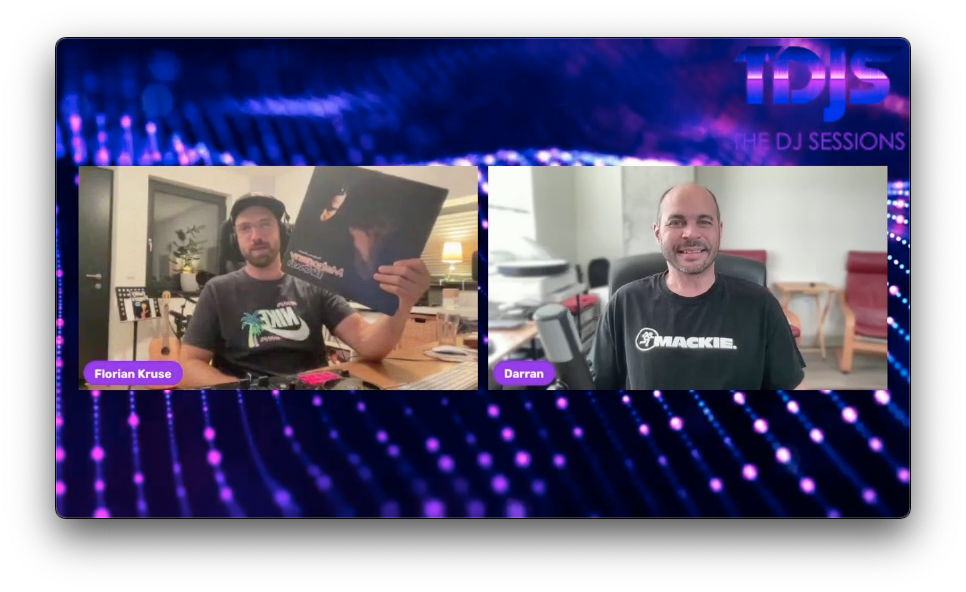
Florian Kruse: Nordic Soul, Global Underground, and Staying True to Sound on the Virtual Sessions 9/13/23
Shownotes
Florian Kruse: Nordic Soul, Global Underground, and Staying True to Sound
In this inspiring Virtual Session, The DJ Sessions host Darran Bruce reconnects with Hamburg-based producer and DJ Florian Kruse to discuss his new album Nordic Soul, its remix package, and his upcoming feature on a Global Underground compilation. Released on his 40th birthday, Nordic Soul represents a deeply personal journey shaped by years of work, collaboration, and creative experimentation. Florian describes the challenges behind finishing such a project – from coordinating schedules with collaborators to preparing remixes and building a release campaign – and the relief of finally celebrating the album’s release.
Drawing inspiration from early influences like Moodymann’s Mahogany Brown, Florian weaves nostalgic elements into modern arrangements, including interludes and radio-style textures that create a narrative across the album’s 17 tracks. He emphasizes his philosophy of finishing everything he starts, even if some tracks sit on the hard drive for years before finding their missing piece.
The conversation highlights his collaborations with vocalists and live musicians, his blend of software and hardware tools like Logic and Roland machines, and his openness to exploring styles outside house and techno, from acoustic projects to commercial work. Florian also discusses the evolution of labels, the role of PR in promoting music, and the challenges artists face in balancing creativity with social media pressures.
With reflections on defining success, mentoring new talent, and adapting to an industry where visibility often overshadows artistry, Florian underscores the importance of staying true to one’s sound while continuing to grow.
Show Notes –
Host: Darran Bruce
Guest: Florian Kruse
Location: Virtual Studios, Seattle WA & Hamburg, Germany
Overview:
Darran Bruce reconnects with Florian Kruse to talk about his Nordic Soul album, the remix package, Global Underground release, and his perspective on balancing creativity with industry realities.
Topics Covered:
- Release of Nordic Soul on Stone Free Berlin and its remix package
- Inspiration from Moodymann’s Mahogany Brown and nostalgic textures
- Philosophy on finishing tracks and revisiting ideas years later
- Long production journey behind the track Rhythm Speech with Kevin Knapp
- Use of Logic, Ableton, and Roland hardware in production
- Past projects including Kruse & Nürnberg, Wiretapper, and The Ground
- Work outside club music including commercials and acoustic collaborations
- Upcoming release on Global Underground limited vinyl compilation
- Favorite labels: Ausmusic, Diynamic, Bedrock, TAU, Spectrum
- Reflections on PR agencies, costs, and the role of promotion
- Defining success: rebookings, strong albums, and sustained careers
- Industry challenges: royalties, remix payments, and social media pressure
- Advice to new producers: avoid trends, focus on your own style
- Personal life: sharing music creation with his son and family time
Call to Action:
Follow Florian Kruse via linktr.ee/floriankruse for music, news, and tour updates.
Discover more exclusive interviews and live sessions at thedjsessions.com.
Florian Kruse on the Virtual Sessions presented by The DJ Sessions 9/13/23
About Florian Kruse –
There aren’t many people that can say that they have devoted their entire life to electronic music, Florian is most certainly one of them. DJ, producer, lecturer, plus label owner? Yes, Kruse has ticked all the boxes.
His passion for music began in his hometown in Northern Germany. An avid reader of Frontline magazine, and later the Raveline, his love for electronic music was born at 14, when he bought his first turntable. Early influences included legends such as Moodyman, Herbert and Steve Bug. At 16, Kruse invested in his first sampler, a mixer and a keyboard. With music in mind, he made the natural migration to Hamburg in 2002, where he studied Audio Engineering, and later taught at SAE.
Long time in the game, he started his music career in 2007, with his first vinyl release on Stockholms, Heya Hifi. Since then, Kruse has only grown as both a producer and a DJ. With Stel Vassiloudis and Nils Nuernberg, he became project Wiretappeur, with releases on Bedrock and a remix for label head honcho John Digweed. Nils Nuernberg quickly became his partner in crime, and together became the production duo Kruse & Nuernberg, their hypnotic Deep House sound making appearances on Liebe*Detail, Exploited, and Rejected. In 2008 they started their own label, Save Room Recordings.
A focus on his own productions, Kruse plunged into a solo career with a release on Anjunadeep, working together with his older brother Vincenzo and one of his longtime idols Lisa Shaw. Followed by releases on Noir Music, Poker Flat Recordings, Stil Vor Talent, Joris Voorn’s GREEN imprint, Kompakt, Last Night On Earth and Suara and remixes by Noir, Eagles & Butterflies, Joris Voorn, Pleasurekraft, Coyu, David Morales and the list of releases and remixes goes on. After a couple of feature tracks with singer / songwriter Hendrik Burkhard Florian and Hendrik started a LIVE project presenting ‘TheGround’ with an album (Dediction) in October 2017 on Steve Bug’s Audimatique label.
With a long time passion for house and techno that dates back to the early years, Kruse is first and foremost a DJ, taking his signature sound to world renowned clubs. Now settled in the German capital, Berlin, a true hub for electronic music, with regular DJ appearances at the city’s infamous underground clubs.
In 2023 Florian released ’Nordic Soul’, his 3rd album afterKruse & Nuernberg -“Let’s Call It A Day”in 2012 and The Ground – “Dediction” in 2017.
About The DJ Sessions –
“The DJ Sessions” is a Twitch/Mixcloud “Featured Partner” live streaming/podcast series featuring electronic music DJ’s/Producers via live mixes/interviews and streamed/distributed to a global audience. TheDJSessions.com
The series constantly places in the “Top Ten” on Twitch Music and the “Top Five” in the “Electronic Music”, “DJ”, “Dance Music” categories. TDJS is rated in the Top 0.11% of live streaming shows on Twitch out of millions of live streamers.
It has also been recognized by Apple twice as a “New and Noteworthy” podcast and featured three times in the Apple Music Store video podcast section. UStream and Livestream have also listed the series as a “Featured” stream on their platforms since its inception.
The series is also streamed live to multiple other platforms and hosted on several podcast sites. It has a combined live streaming/podcast audience is over 125,000 viewers per week.
With over 2,400 episodes produced over the last 12 years “The DJ Sessions” has featured international artists such as: BT, Youngr, Sevenn, Wuki, Scott Slyter, Simply City, Micke, Netsky, Rich DietZ, Bexxie, Boris, MJ Cole, Flipside, Skeeter, Bissen, Katie Chonacas, Hollaphonic, Lady Waks, Arty/Alpha 9, Miri Ben-Ari, DJ Ruby, DJ Colette, Nima Gorji, Kaspar Tasane, Andy Caldwell, Party Shirt, Plastik Funk, ENDO, John Tejada, Hoss, DJ Sash U, Arkley, Bee Bee, Cozmic Cat, Superstar DJ Keoki, Crystal Waters, Swedish Egil, Martin Eyerer, Dezarate, Maddy O’Neal, Sonic Union, Lea Luna, Belle Humble, Marc Marzenit, AthenaLuv, Maximillian, Inkfish, Kidd Mike, Michael Anthony, They Kiss, Downupright, Harry “the Bigdog” Jamison, DJ Tiger, DJ Aleksandra, 22Bullets, Carlo Astuti, Mr Jammer, Kevin Krissen, Amir Sharara, Coke Beats, Danny Darko, DJ Platurn, Tyler Stone, Chris Coco, Purple Fly, Dan Marciano, Johan Blende, Amber Long, Robot Koch, Robert Babicz, KHAG3, Elohim, Hausman, Jaxx & Vega, Yves V, Ayokay, Leandro Da Silva, The Space Brothers, Jarod Glawe, Jens Lissat, Lotus, Beard-o-Bees, Luke the Knife, Alex Bau, Arroyo Low, Camo & Crooked, ANG, Amon Tobin, Voicians, Florian Kruse, Dave Summit, Bingo Players, Coke Beats, MiMOSA, Drasen, Yves LaRock, Ray Okpara, Lindsey Stirling, Mako, Distinct, Still Life, Saint Kidyaki, Brothers, Heiko Laux, Retroid, Piem, Tocadisco, Nakadia, Protoculture, Sebastian Bronk, Toronto is Broken, Teddy Cream, Mizeyesis, Simon Patterson, Morgan Page, Jes, Cut Chemist, The Him, Judge Jules, DubFX, Thievery Corporation, SNBRN, Bjorn Akesson, Alchimyst, Sander Van Dorn, Rudosa, Hollaphonic, DJs From Mars, GAWP, Somna, David Morales, Roxanne, JB & Scooba, Spektral, Kissy Sell Out, Massimo Vivona, Moullinex, Futuristic Polar Bears, ManyFew, Joe Stone, Reboot, Truncate, Scotty Boy, Doctor Nieman, Jody Wisternoff, Thousand Fingers, Benny Bennasi, Dance Loud, Christopher Lawrence, Oliver Twizt, Ricardo Torres, Patricia Baloge, Alex Harrington, 4 Strings, Sunshine Jones, Elite Force, Revolvr, Kenneth Thomas, Paul Oakenfold, George Acosta, Reid Speed, TyDi, Donald Glaude, Jimbo, Ricardo Torres, Hotel Garuda, Bryn Liedl, Rodg, Kems, Mr. Sam, Steve Aoki, Funtcase, Dirtyloud, Marco Bailey, Dirtmonkey, The Crystal Method, Beltek, Darin Epsilon, Kyau & Albert, Kutski, Vaski, Moguai, Blackliquid, Sunny Lax, Matt Darey, and many more.
In addition to featuring international artists TDJS focuses on local talent based on the US West Coast. Hundreds of local DJ’s have been featured on the show along with top industry professionals.
We have recently launched v3.1 our website that now features our current live streams/past episodes in a much more user-friendly mobile/social environment. In addition to the new site, there is a mobile app (Apple/Android) and VR Nightclubs (VR Chat).
About The DJ Sessions Event Services –
TDJSES is a 501c3 Non-profit charitable organization that’s main purpose is to provide music, art, fashion, dance, and entertainment to local and regional communities via events and video production programming distributed via live and archival viewing.=
For all press inquiries regarding “The DJ Sessions”, or to schedule an interview with Darran Bruce, please contact us at info@thedjsessions.
Transcript
[Darran]
Hey everyone, welcome back to another episode of the DJ Sessions presents the virtual sessions. I’m your host Darran and right now I’m sitting in the virtual studios in Seattle, Washington and coming in all the way from Hamburg, Germany, we have Florian Kruse. Florian, how’s it going today?
I’m good, thank you. Yeah, thanks again for coming back on the series. It was an awesome time the last time you were here and you’ve been up to so much more since then.
Let’s jump right into things. The biggest thing that you’ve been doing that just came out, the album Nordic Soul and the remix package. Tell us all about that.
[Florian Kruse]
Yeah, it’s like almost a year ago, the first single came out. And yeah, month by month, we’ve been on the way to releasing the album in March, on March 3rd this year, which was my 40th birthday. So luckily, that was sitting on a Friday.
So perfect. So I was out with the label last year. And we’ve been for dinner and then making plans for the album, working on this for, I don’t know, one and a half years already.
And then we’re just like making plans and stuff. And I had a look into the calendar and was like, 3rd of March, my 40th birthday, perfect match. So let’s do this.
And yeah, so it’s like some time ago, March. But now, last Friday, the remix bundle got released. And we had like one remix from the date of releasing the album every single month.
And now the whole package came out last Friday.
[Darran]
Nice. What an accomplishment. I mean, I saw the picture on Instagram, you’re in the studio.
You’re kind of like at the bottle of champagne saying it’s finally released. I know that feeling when you accomplish something that you’ve been working on for such a long time. I mean, you don’t understand the stress and pressures that are happening.
And then the release, once it’s like, project’s done. I just got off of almost an eight month hiatus because I was moving and I wanted to let the dust settle from that. Had to redo the whole studio, looking at new events, all that fun stuff.
And just having that moment of just, this is awesome, calm, peace. And then you started all over again.
[Florian Kruse]
I mean, it’s like the creative part, it’s like a small part. You’re creative in the studio, you do the track, and then you do the arrangements and stuff. But everything that is following, that’s the work.
Doing the pre-masters and sending it to the mastering studio, looking for remixes, making the stems ready so they can remix the tracks, organizing everything with a release schedule of collaborating artists, for example. We had to delay the album a lot just due to the release schedule of the other people who are collaborating with me on the album, because everyone has a manager, everyone has plans and needs space for other releases and stuff. So it was pretty tough doing all this.
And then, of course, getting more and more important, the social media part, doing little videos, teaser videos, stuff like that. Yeah, so like you said, it was a big release for myself, also getting the piece. Now it’s out, you know?
Now it’s out in the world. People can listen to it. And we finally made it, yeah.
[Darran]
What label was that released on?
[Florian Kruse]
It’s called Stone Free Berlin, and it’s a label from Berlin, obviously. It’s like business partners and friends of mine who run this. They had some great artists before, like Joplin, for example, a very rising artist, a girl from Berlin.
Yeah, she’s doing amazing at the moment. And then also Verboten Berlin, it’s also a cool live act, very musical stuff. Yeah, they had plenty of releases on the label.
So for me, it was like the perfect match, actually.
[Darran]
Nice. What’s the main inspiration behind you making music?
[Florian Kruse]
The main inspiration for the music? Basically, it’s like the love for electronic music, and also my roots. I just remember my older brother, he’s eight years older than me.
I think I talked about him the last time we had this interview. And he was my big inspiration, because he showed me house music and everything. So I still remember all the nice old records.
For example, this one here, it’s like Mahogany Brown from Mooney Man, one of my first albums I bought. This is also still a big inspiration for the Nordic Soul album, because Mooney Man was using those little intros, like little noises and radio kind of things. Someone’s tuning the radio, stuff like that.
And yeah, I took this as an inspiration from the past and created something new, like maybe influences of today.
[Darran]
And you produce, you DJ, how many tracks do you produce in a month? And how many end up being released on average?
[Florian Kruse]
I’m not the kind of guy who’s starting something and not finishing it. So I’m more the type of guy, if I start something, I want to have it finished, to produce it until the end and make a full arrangement and stuff. But yeah, I think like, how many percent, maybe 60, 70 percent is getting released, 30 percent stays on my hard drive.
But it’s like, also, you know, sometimes two years later, you come back to an idea you were working on. And yeah, there’s still a chance to get them released later on.
[Darran]
What’s the longest time you’ve ever spent, consecutively spent, working in the studio on a track?
[Florian Kruse]
Sometimes it takes like more than a year to finish a track, really.
[Darran]
But you didn’t spend one year in the studio working on that one track.
[Florian Kruse]
No, no, no, no, no, it’s not like that. But like, revisiting the session. Because yeah, like, especially this one track, I think it’s like one of the most successful tracks of the album.
It’s called Rhythm Speech. And this track is, I don’t know, I think I started in 2019 or something. The idea.
And then there was still one piece missing and couldn’t find it. There was just thinking and sending it to other people. And they said, yeah, it’s amazing.
But like, something’s missing. And in the end, it was just like a spoken vocal. And I met a good friend of mine at the Winter Market in Berlin, Kulturbrauerei it’s called.
And his name is Kevin Knapp. And he’s from San Francisco. He’s doing amazing as well at the moment.
Like, hi, Kevin. Yeah, and he luckily he like sent me some ideas he had to the track. And that was the missing piece, really.
So yeah, sometimes a year. But most of the times, when I start a track, I finish it within weeks, I would say like three to four weeks.
[Darran]
Now, are you a hardware or software producer or both? Both. What are some of your favorite pieces of gear or programs to use?
What do you use?
[Florian Kruse]
Like, I work with Logic. Maybe I’m old school using Logic, but I still think it sounds good, you know, and I don’t want to say it sounds better, but it sounds good. And yeah, I also use Ableton every now and then, but more for for live performances, stuff like that.
And then and I just looked to the left, because you can’t see it. There’s like my IRA series from Roland. So I have a lot of stuff by Roland.
I have the TV3, TR8, the MX1, VT3. I have like a Mackie mixer from back in the days. Mackie, yes.
And that was like a very old mixer. I bought it when I was 16 years old. I still have it and it still sounds great.
So you can really rely on those machines.
[Darran]
I was downstairs at my local grocery store, like really downstairs, an alley over across the alleyway, the local Whole Paycheck. And it’s an inside joke. We got a store here called Whole Foods and it’s like really high end food.
But we call it Whole Paycheck because it costs so much. But I was there and a guy was wearing a Roland shirt that said TR808. And I’m like, that’s a good piece of gear.
So that’s awesome. And so obviously you’re an Apple guy because you’re using Logic. I used to work for the company.
I love Logic. I love the sequencer in it. I think that was great.
The sounds, the tools you had. I was actually a certified trainer to train people how to use Logic 7. That was kind of awesome.
I wasn’t a musician. I just showed them how to use the interface, tips and tricks and things to do. But I love that program.
It’s still rock solid.
[Florian Kruse]
Yeah. And I think everyone has a different way to work with it because there’s just not one single way how to do it. There are plenty of ways to start a track, to work with MIDI, with audio and stuff like that.
And that’s when I do collaborations with people, I sometimes see, oh yeah, okay, you do it this way. Oh, that’s interesting.
[Darran]
I think it was Logic 10 that they made it where you could actually make your tracks, but then also use live instruments and play with it live as well. Like Ableton Live. I was away from the company at that time.
But when it was released, it was like, that was a huge thing that you could now do a live performance using Logic.
[Florian Kruse]
Yeah. Before it was impossible. It was just like cracking if you open a plugin or something.
Like an instrument. You could hear it.
[Darran]
Do you sometimes make music completely out of your own genre that never gets released?
[Florian Kruse]
Yes. It gets released, but not under my name.
[Darran]
That was unique. I love it when guests almost predict my next question I was going to ask. And I was going to say, do you have any other aliases than Florian Kruse under which you release music?
[Florian Kruse]
I mean, it’s not like I don’t have other aliases anymore. I had a deep house duo called Kruse and Nuremberg, but my name is involved, the last name. And then I had a project called Wiretapper, also with a good friend from Greece, Stelios Vassiloudis, and also my Kruse and Nuremberg partner, Nils Nuremberg.
And then I had another project called The Ground. And yeah, for this project, we were only playing live. So I was using all those Roland machines, and then he was singing and playing some keys live.
And yeah, it was like a real live performance. But I was not talking about those things, because those projects are all electronic and all like house music in different dresses, maybe, or something between house and techno. And I also do music for documentaries, for commercials sometimes.
I just did music for a commercial for Jägermeister, you know Jägermeister? Maybe. And it’s running on TV, like I think next month, so it’s just like a small ad.
And it’s just like a drum kit, like a live play drum set, and a guitar. That’s it. Yeah, so very simple, but totally different to what I normally do.
[Darran]
Do you play acoustical instruments as well? Are you trained in other forms other than like, you know, hardware and software production? Is that a guitar I see behind you over there?
[Florian Kruse]
Yeah, so I practice the guitar for a while now, and also play the drums, like every Friday is my drum lesson. But yeah, if I do something like in the professional way, I just like call a studio guitar player, for example. Because I’m in the business for a long time now, I have a lot of friends playing only the guitar, or only the piano, or only like…
Of course, they can do it way better than I can. I just use their skills.
[Darran]
And with some of that music that you make outside of your known genre, what styles would you say those would be? I mean, are you way over here to drum and bass and happy hardcore, and then like nobody ever sees that? Or is it like house, and then you go to deep house, or progressive house?
[Florian Kruse]
Yeah, yeah, yeah, that’s like, yeah, yeah, yeah. I don’t, I don’t like, yeah, I mean, in January this year, I was just like, we had a weekly meeting for, I don’t know, eight or nine weeks. And it was just three musicians, a piano player, a guitar player, and myself.
We’re just like coming together for two to three hours jamming every Monday or Tuesday was. And so we started like eight or nine tracks. And now we’re just like trying to finish them, you know, but this is like, it’s very different.
It’s like, it’s not really, it’s more, it’s a mixture of electronic music and acoustic music. And we’re now like looking for some vocalists and stuff. Yeah.
[Darran]
Nice. Hen, you have a release coming up with one of my favorite, favorite, I don’t know, is it a label? I don’t know.
But this is my first, first person I ever heard or bought of electronic music, a compilation of electronic music was Paul Oakenfold’s 007 Global Underground. Yeah. And that got me hooked on on John Digweed, Sasha, Danny, all of them.
And this is like early 2000s, like 99, 2000. And you have a Global Underground release coming out. Tell us, tell our DJ sessions fans about that.
[Florian Kruse]
Yes. Global Underground contacted me a couple of months ago asking if I have like any unsigned tracks, like new music. And so I worked with them in the past.
I did a remix for Ilke Klein, for example, on Global Underground. And I was really like, very honored to be asked to like, maybe, yeah, add a track to this special compilation they’re putting out in November. And yeah, and I said, I said, five or six tracks, and they signed one of the tracks to this vinyl release.
It’s a limited vinyl, it’s a colored vinyl. It’s like, I think five, five or six artists on it. Also, like, artists I like a lot.
So it’s a big honor as well to be mentioned in the same. Yeah, on the same release with them. And then there’s like a fashion line coming with this compilation, as you can already pre-order T-shirts for it and stuff like that.
And then there’s a digital release as well. So every single track on the various artists is coming out as a single release digitally before.
[Darran]
Congratulations on that. I mean, that’s just to be in the, if I was a producer, it would be an honor to be on the Global Underground. Maybe next would be like Ministry of Sound.
[Florian Kruse]
Yeah.
[Darran]
You know, I mean, but Global Underground, I think, like, it just holds such a special place in my heart, because that’s where I got my start buying. I mean, it was so funny, the Paul Oakenfold disc was sitting up by the register at the record store, and I just kind of picked it up. I’m like, what’s this?
A double disc, and it’s electronic music, $20 for a disc. Normally discs, you know, it was $14.99, $15.99 US. And it was $20.
And I’m like, what’s this? I put that in. If that was a cassette tape, I would have burnt it out probably in the first month and a half.
I played that, you know, but then, you know, trusting that label, that brand, just top of the line. I mean, I think you can still put in the Sasha one today, and people wouldn’t even know. They thought it was something that was current.
It just came out yesterday.
[Florian Kruse]
Yeah, totally. It’s like timeless. And also like so much effort they put into the design of the CDs or vinyls.
You remember, like Nick Warren, for example, presenting Global Anagram presents Nick Warren, for example. And then you had this, it was called Lima, I think. And then with the pictures from Lima, with the party scene, and then some like stories from the party scene in Lima, and the story of him and stuff like that.
So you just got more than just the music. You always had a story to it. And then you could picture it.
I still have like some of those old CDs. Yeah, I’m a collector. So I have vinyls and CDs.
[Darran]
So what is your current top five record labels that you see over and over again, releasing great tracks? If you could go one, two, three, four, five.
[Florian Kruse]
Yeah, yeah. I mean, it’s changing, you know, because like some of them changed the past over the last couple of years, I would say. But still, there’s some I could mention.
Like one is a label I really liked back in the days when they were releasing Deep House. It’s called Ausmusic. It’s run by Will Saul.
And this is like a top label. And they’re just like doing great at the moment. I really like the special spice of their releases and the music.
You can not really predict what’s coming next. That’s what I like about it. And then of course, Dynamic is still like they’re sitting here in Hamburg.
So the moon with his Dynamic label is doing great. And I can always find music. Yeah, on this label.
What else? Bedrock is still a label I really like. Also, like from back in the days until today, they’re still putting out great music.
Maybe I can mention some smaller labels I really like as well. Well, yeah, I mean, that’s not really… It’s like also guys from Hamburg, Edana Twins, they have a label called TAU.
T-A-U, TAU. Yeah, yeah. They put out great music as well.
It’s a mixture between Melodic House and Techno, what I play at the moment, and Indie Dance. And it’s always a surprise what they come up with. It’s not really predictable.
And then last but not least, the label of Joris Voorn. It’s called Spectrum. I really like the melodic side of this label.
[Darran]
Nice. What is the most important things that record labels should do for their artists? And are they doing a good job with that?
[Florian Kruse]
Yeah, yeah, yeah. That’s a very good question. I think it changed a lot because some of the labels out there, there’s a main focus of the label owner, you know?
Like you have, for example, Steve Bach is running the label Poker Flat Recordings since ages. And this label has a specific sound. You know what you get if you buy a Poker Flat Record.
So even if it’s from different artists, they pretty much sound the same on this label, because the label is looking for the sound. People like to like the label maybe, and then they produce into this direction, probably. I don’t know.
But I think Steve is also a friend of mine. I think he’s the one who’s getting the most out of it, running the label, having the sound, and then the focus is on him. Most of the labels have one big name behind it.
Oliver Kuletsky, for example, Steve for Talent, or Ein Musik with Ein Musiker. Yeah, and it’s really hard to get out of their shadow, you know? Yeah, sometimes.
[Darran]
Is there something you would like to say to new and up-and-coming producers to watch out for when it comes to making their career successful?
[Florian Kruse]
You mean some advice?
[Darran]
Some advice, yeah.
[Florian Kruse]
Yeah, I would actually have a look. I would not follow trends too much. I would not produce stuff like Afterlife is sounding at the moment, just because it’s totally hyped and everyone likes this sound on the dancefloor at the moment.
You should go with where your heart is, you know? What you feel. Because there’s this one moment when the light is reaching you, it shines on you, and then you are standing there with your type of music, your genre, your specific sound, and then it’s your moment.
But if you try to copy what someone else did before, then you won’t be better than him. That’s my advice, yeah. That’s really great.
Stick to your own style and to your spices in your music.
[Darran]
And this is a big one that a lot of over the years, with the advent of social media coming into play and how to manage social media and people having to do their own social media, what measures do you take to actively promote yourself, your releases, and your career? Do you have a PR person that you’re working with, or is that an important asset for a DJ to have if they want to kind of break through to that next level?
[Florian Kruse]
I used to work with PR agencies, yes. I’m trying new ones every now and then. Also for the album, I was working with someone.
I think if you have something big upcoming and you feel like, yeah, this could be a door opener for my career, then you should find someone good and then start working with this person. Maybe you get some advice or some recommendations by friends or other DJs around you. That helps a lot because I think it’s very tricky to find the right one.
There are so many people out there pretending to deliver the best outcome for you, and then in the end, they don’t really know what they’re doing.
[Darran]
Yeah. I recently was talking to one of the, I’d say one of the world’s most popular in the electronic music scene. She does a lot of other stuff.
I won’t name drop her, but her price tag was $5,000 upfront and $5,000 a month. I’m sure she’s good. I’m sure she’s going to get your name out there.
Her company’s going to get your name out there. How can an independent artist afford something like that? What is the value add?
Is it somebody just taking your money and running with it? I recently was talking with a company that I was going to bring on board to do some work for me. They’re like, yeah, you can give us $25,000, but we aren’t going to guarantee any results for you.
I’m like, why am I giving you 25 grand then?
[Florian Kruse]
I mean, I get it.
[Darran]
You’re not guaranteed a home run just because you’re spending money and getting your name out there, but hopefully we can put together a deliverable that says we will get you this much for this price or we will get you X amount of things for this price. It’s very interesting in that world of PR of who can do what, who can pull what strings and who knows who. How would you define success as a DJ producer?
Would it be a Beatport top 10 hit, a sold out tour? What are your thoughts on this?
[Florian Kruse]
I mean, back in the days, I would say a Beatport number one in a specific genre, for example, would be a goal. But it changed a bit. I think nowadays it’s more important to play shows, good shows as well, and to get rebooked at the same venue.
I think the rebooking is also a very important part, not just play in the club once in a lifetime, just try to play there once in a year or every six months or something like that. I think it’s more important to get into gigs and touring and stuff like that. I mean, I’m not touring as much as I did years back or times before COVID.
I still suffer a bit from the COVID time. But yeah, this summer was pretty good, actually. So I’m very satisfied with this.
For an artist, it’s also a goal to create an album, for example, that’s important for me personally.
[Darran]
If you could change one thing that bothers you in the electronic music scene, what would that be? And how would you go about changing it?
[Florian Kruse]
Oh, there are actually two things that come up to my mind. So we have time, right?
[Darran]
Yeah, we’ve got time.
[Florian Kruse]
One thing is the way artists get paid for doing the music. Because I don’t think that every music producer in the electronic music scene is willing to perform every weekend somewhere in the world. There are some people, they’re more like the shy type of person, but they’re very good producers and they maybe do the best music out there.
But they don’t get the amount of money that people get to do music and then play DJ shows at the weekends. So I think the producing part and the way we get paid for royalties, or even licenses and stuff like that should be better, even for streams, for example. And so you can make a living out of the producing and not only out of a mixture of being a DJ and a producer.
That’s one thing that bothers me, because it was better back in the days, it definitely was better. You got paid for remixes. Nowadays, it’s like a label comes up, should be an honor for you to do a remix for a label, you know, like that’s now the strategy or the marketing they come up with.
But everyone else in this chain gets paid. So if there’s someone doing the artwork for the release, gets the normal amount. And then someone who’s doing the press text for the release, he gets normally paid.
And the promo service, they get a fee for everything. And the DJ is the one who’s normally signing a standard contract, paying half of everything, and then being lucky, getting a few hundreds out at the end. So that should be changed.
In a way, I don’t know how, but we should change it. And then the other thing is that social media nowadays is more important than the art, the piece of music itself. That’s another thing I’m worrying a bit about.
But maybe it’s like the new world, I’m in this business for a long time. So I have to go with the time as well. But yeah.
[Darran]
No, I’ve heard that, you know, the new, it’s not so much based, I mean, you could have somebody really talented, who doesn’t do social media, and nobody knows about them. Then you use Mediocre, and they have 150,000 followers on Instagram, and 28,000 followers on TikTok, and they’re making funny videos, they’re doing all this stuff. And they’re getting booked at every show around the world.
And that’s one of the first things that I tell my resident DJs is, hey, if you really want to get booked to play out of our city, you know, you got to increase the socials, because what’s going to set you apart, if you’re here in Seattle, and you are you, there’s probably 10 of you in another city that they know they can go to. And they don’t have to fly them in, they don’t pay rider, they don’t pay all that fun stuff. You know, you can get them probably 50 to 100 bucks, American dollars in their home city, and they’re going to be able to bring their home following to which is going to bring them to the bar and have their friends buying drinks, you know, and they can play the opening acts.
What’s that dynamic look like? And how does somebody build that social following? And then you got to just sit there and be online all the time and networking and talking with people and getting ads and all.
It’s a very different play, I think, than it was, you know, I mean, you started in 2007, right?
[Florian Kruse]
Yeah, yeah, more or less. Yes. Yeah.
I mean, I DJed before, but this was like, my first vinyl release. And yeah, like internationally, playing internationally, I started in 2007.
[Darran]
Yeah, I mean, I’ve been nightclubbing for 32 years, and I just recently turned 49. So maybe 33 years. But, you know, basically, you know, seeing that change of, you know, how technology has changed the way we communicate the way we can collaborate the way, you know, industry moves, and then all of a sudden, seeing social media come into play, and adding that into the mix.
And, you know, almost having to have people hire social media managers, you can’t sit there and just text and talk and do everything all day long. You know, it’s just…
[Florian Kruse]
Yeah, yeah. Yeah, I just had the case I was playing at Sonne, Mond, Sterne festival. And, yeah, most of the other DJs around me, they had like a social media manager with them, like doing or even like a film team, you know, with like, two or three cameras, like one from from the dance floor, and then one behind and stuff like to make like interesting content for later.
[Darran]
Yeah.
[Florian Kruse]
And yeah, it not even cost a lot of money. It’s also like, I feel like, I mean, if always someone around you, you know, like you can’t really focus on on the set, like back in the days when you were just like focusing on your on your what you’re playing. And now you you in every break, you feel like I should do a video for later, because other than nobody will know how it was, like I need to post in my stories and everywhere.
And you’re just like a little bit distracted from your normal flow and set.
[Darran]
Well, and here’s the other thing that I’ve heard the downside of social media will not only social media, but technology, mixing with social media, you have that person in the crowd with a phone that’s taking pictures or taking video. Yeah. And if all of a sudden I go like this, and somebody catches me from the wrong angle, it may look like I’m picking my nose.
And then they put that out there. And that picture goes viral. And it made it look like I was picking my nose on stage when really I was just going like this, you know, just just rubbing some sweat off my face or whatever it is, they capture with, you know, thousands of people go and snap, snap, snap, snap, snap, snap, snap, snap with their phones.
And one of those go viral. And you got that PR nightmare of like, Well, is that a good thing that it looks like I’m picking my nose or is a bad thing? Yeah, I’m picking my nose, you know, and it might get 50,000 hits, you know, you know, 50,000 likes or, or angry face, whatever it is, but, you know, it’s just a huge dynamic shift of how do you conquer that beast?
You know, and I know a lot of I put it I put myself into the old school realm and a lot of old school people like, I don’t I don’t mess with it. But then eventually kind of have to cave in and go, Okay, I got to get my Instagram up, I got to get my tick tock up. I got to be on Twitter, I got to be posting out there, even if it’s just my releases.
But, you know, there is something I told my own crew, I said, you know, you got to follow what’s called the 8020 rule. You got to be 80% personal. Like, like, when I say personal, like, check out the hot dog I’m eating, or look at this play, look at this cool thing, and then go release, release, release, you know, so personal, the business was you got to build that dynamic, character that people want to get interested in, come back and watch and follow, you know, and make that happen.
So it’s very interesting. It’s a fickle, it’s not a fickle, it’s a very funny, interesting dynamic on social media.
[Florian Kruse]
Yeah, absolutely. And I don’t think if it’s like good for mental health, you know, like having this in your in your back head all the time that you produce music, they feel like, okay, I shouldn’t forget about like, making content for social media. So how can I and then you started thinking, okay, which angle is good to film me doing music?
Okay, this one I had last time. So maybe this time I go from there. And then you know, you’re just like, again, distracted from what you wanted to do.
You wanted to sit down, just do music. And this is like, also the fast world we’re living in, you know, like, everyone’s on the phone doing everything all the time, like you can’t even stand at the traffic sign without taking out your your phone and just like, scrolling quickly, and then okay, it’s green. You know, and that’s like, very stressful for your brain or for the brain for my brain, especially.
I can’t speak for other people. But that’s what I feel. So every now and then I really need like a small break from this.
Like, when I go on vacation, I just in the summer again in Sweden, in the nature. And this like really brings me that it takes like almost a week to get like away from it. You know, like sometimes after a week, I forget like where my phone is located at the moment.
So I’m like, Oh, where did I put it? This is like normally not happening in normal life. Totally understandable.
Yeah.
[Darran]
So speaking about getting away, you mentioned earlier, just switching gears here. You have children.
[Florian Kruse]
Yes, two children, two kids. Yeah.
[Darran]
Are they allowed in your studio?
[Florian Kruse]
Yes, they are. They’re invited. Yeah, my son, he’s like, he already has like 50 or 52 tracks done.
Yeah, I mean, small pieces, you know, but like, I think like one or two times a week, you’re gonna sit down here for one to two hours and do music together. So I yeah, he started playing guitar at the age of five. And now we’re going together to learn the drums every Friday, because the guitar player changed, like, he was too old.
And now a new one’s there. And he said, like, he can’t teach kids under 10. It’s too, for him, it’s too heavy.
Yeah. So and yeah, it’s, it’s hard to find the right teacher, you know, like, definitely should be someone. Yeah, you have a good feeling with, you know, so and then my son said, Yeah, but I would like to learn the drums too.
So okay, that’s great. So let’s switch. Yeah, yeah, yeah, he’s invited.
So the this like, electric drum set there, like, it’s like, more or less we’re sharing it. Is it a is it a Roland V drum? No, no, it’s from Elisis.
I don’t know how you say it. Yeah.
[Darran]
Would you recommend a career as a producer slash DJ to young kids? And what are the pros and cons about that?
[Florian Kruse]
Definitely, especially when you’re when you’re young, it’s great, you know, to travel around the world. I mean, when my when I was 15 years old, I remember my teacher was asking everyone in the class, what are you thinking you’re going to be when you’re when you’re grown up? And I was like, back then, I was saying that I want to be a DJ flying around the world.
[Darran]
You actually said that?
[Florian Kruse]
Listening to my, so yeah, so I would still recommend it. And then to like, learn about cultures and stuff like that. I’m still there.
I’m still here.
[Darran]
I’m still here.
[Florian Kruse]
Oh, yeah. Okay. Like a freeze.
[Darran]
You froze for a second too. Welcome to technology. It’s all good.
You know, is there anything else you want to let our DJ sessions fans know about before we let you go?
[Florian Kruse]
What else? What can we I don’t know. Please listen to the Global Underground stuff.
Listen to my album if you find the time. And if you can take a moment, just like, don’t skip it. Just listen from the very beginning until the very end.
Maybe you have like a road trip or something where you can just like, let it run from track one to track I don’t know, 17. Yeah, track 17. Yeah, because I have many interludes.
I think it’s like, I don’t I’m not sure. Is it 17? 17 tracks?
I think yes. Yeah. On the Global Underground or the Nordic Soul?
No, the Nordic Soul. Because I was, I mean, it’s, you know, an album is a story and you put the tracks in a row, you know, like, and you think about how can I make it interesting? If someone listens from the very beginning until the end.
[Darran]
Awesome. And where can people where’s the best place to send people to to find out more information about you?
[Florian Kruse]
It’s my link tree, actually. Yeah.
[Darran]
You mean that link right there?
[Florian Kruse]
Yes. That was good. Thank you for that, Darran.
[Darran]
Totally. Well, it’s been a pleasure having you on the show. And we’re talking with you in the future.
Wish you good success on the Nordic Soul and remix package just released. And thank you again for coming on the DJ sessions today.
[Florian Kruse]
Yeah, thanks for the second invitation here.
[Darran]
You’re welcome.
[Florian Kruse]
Have a good day. I go to bed now because it’s late, but you have a full day in front of you.
[Darran]
On that note, don’t forget to go to our website, thedjsessions.com. Find us on TikTok, Twitch, Twitter, Facebook, all the places. X now is what it’s called, formerly Twitter.
Thedjsessions.com, where we have 600 news stories a month, guest interviews, exclusive mixes, contests, and more, all at thedjsessions.com. Go there, follow us, find us out. That’s Florian Kruse.
I’m Darran, coming to you from the virtual studios in Seattle, Washington. He’s coming in all the way from Hamburg, Germany. And remember, on the DJ sessions, the music never stops.
Latest Shows
Latest News


