Live Streaming DJ Sets Copyright Explained
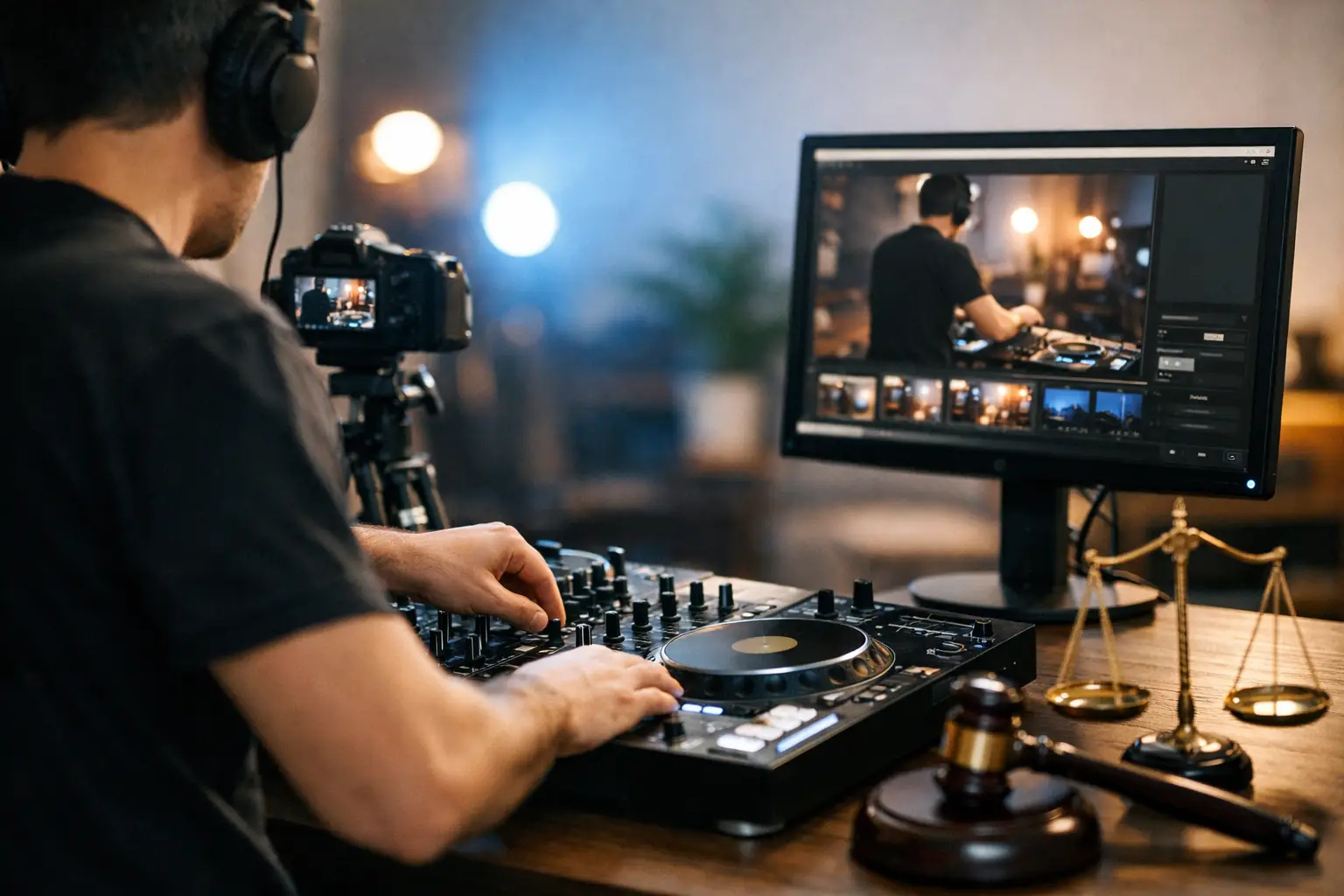
A DJ can crush a set for an hour, build the room, lock the groove, and then watch the stream get muted, blocked, or cut mid-drop. That is the reality of live streaming dj sets copyright. The problem is not that platforms hate DJs. The problem is that a livestreamed DJ set usually involves copyrighted music owned by multiple parties, and most creators do not control those rights.
For dance music culture, this gets messy fast. A club set, a rooftop session, a festival stream, or a studio broadcast can feel like promotion for the artists involved. Sometimes it is. But copyright law does not run on vibe. It runs on permissions, ownership, and licensing structures that were mostly built long before livestream culture became a core part of electronic music discovery.
Why live streaming DJ sets copyright gets complicated
A DJ set is rarely one piece of content with one owner. It is usually a chain of tracks, edits, acapellas, remixes, samples, and transitions. Each track may carry at least two major rights buckets: the sound recording and the underlying composition. The recording is often controlled by a label or master owner. The composition is often controlled by songwriters and publishers.
That means when you livestream a DJ set, you are not just broadcasting your performance. You are also publicly using a stack of copyrighted works that belong to other people. If your set includes ten tracks, you may already be dealing with dozens of rightsholders. If it includes bootlegs or unofficial edits, the situation gets even shakier.
This is why DJs often get confused by the gap between live performance norms and digital distribution rules. In a physical venue, the club may already have public performance licenses through performance rights organizations. That can cover music played in the room. It does not automatically mean the same music is cleared for a livestream, replay, on-demand archive, podcast version, social clip, or OTT app distribution.
The biggest myth: “I bought the track, so I can stream it”
This is probably the most common misunderstanding in the scene. Buying a track from a download store or subscribing to a DJ pool gives you access to use that music in certain ways. It does not transfer copyright ownership. It also does not usually grant broad livestreaming rights.
Owning a file is not the same as owning the rights to broadcast it. A lot of DJs learn that the hard way when a stream runs clean during soundcheck and then gets flagged once the platform’s detection system recognizes a track.
The same goes for the old assumption that giving credit solves the issue. Crediting the producer or label is respectful, and in dance culture it matters. But credit is not a license.
What platforms actually do with DJ streams
Most major platforms use automated content recognition. If the system matches your stream to copyrighted music in its database, a few things can happen. Your audio might get muted. Your stream might be blocked in certain countries. The archive may be removed after the fact. In some cases, the entire livestream can be interrupted or your account can receive strikes.
This is where expectations need to stay realistic. Platforms are not applying one universal rule to every track, every territory, and every rightsholder. One label may tolerate a song in a livestream clip. Another may block it instantly. One artist may welcome exposure. Another may have distribution policies that trigger takedowns automatically.
That is why two DJs can play similar sets on the same platform and get completely different outcomes. It depends on the tracks, the ownership chain, the platform’s licensing deals, and the rightsholders’ enforcement settings.
Live streaming DJ sets copyright and archived content are not the same thing
There is also a major difference between going live and keeping the set available afterward. A live broadcast may slip through or be treated differently by a platform’s systems. The archive is often where trouble starts.
Once a set becomes replayable on demand, it starts looking a lot more like a permanent piece of distributed media. That raises the stakes. Rights that may be tolerated in a live context are often not tolerated for long-term hosting, reposting, clipping, monetizing, or syndicating.
For media brands, promoters, and artist channels, this matters a lot. A stream is not just a stream if you also want to turn it into evergreen content, short-form clips, audio-only versions, or multi-platform distribution. Every added use case increases the need for actual clearance.
What DJs, promoters, and media platforms can do
There is no magic sentence you can put in a video description to make copyright disappear. The real answer is risk management and rights strategy.
If you are a DJ streaming casually, the lowest-risk move is to understand that mainstream platforms may flag copyrighted music and to plan around that reality. If you are a promoter or media outlet producing performance content at scale, you need a more serious framework. That can mean working directly with labels, artists, distributors, or rights administrators to secure permissions where possible.
In dance music, relationships matter. A lot. If you are featuring original-producer sets, label showcases, or artists playing their own catalogs, your path is usually cleaner than if you are broadcasting open-format sets packed with commercial releases from dozens of unaffiliated rightsholders. It is not always simple, but it is more workable.
Some platforms and brands also build content models around pre-cleared music, direct artist participation, or bespoke agreements for featured sessions. That takes effort, but it is how you move from crossing your fingers to building something sustainable.
When remixes, bootlegs, and unreleased tracks raise the risk
Electronic music culture runs on edits, IDs, dubplates, and unreleased heat. That is part of what makes DJ sets exciting. It is also part of what makes copyright even more unpredictable.
An official remix may have one rights chain. An unofficial bootleg may have no clear authorized chain at all. An unreleased track may belong to an artist who wants exposure, but the label deal may not be finalized. A mashup can combine multiple copyrighted works in a way that multiplies the risk instead of spreading it out.
So yes, underground exclusives can make your stream feel special. They can also create rights questions nobody in the room is prepared to answer once the platform starts scanning.
Monetization changes the conversation
A lot of creators ask whether a stream is safer if it is not monetized. Sometimes that can affect how aggressively people perceive the use, but it does not erase infringement concerns. Copyright questions do not disappear just because you are doing it for exposure.
At the same time, once sponsorships, ads, memberships, ticketed access, or branded content enter the picture, rightsholders may take a much harder line. A monetized DJ stream can look less like fan culture and more like commercial exploitation of copyrighted music. That does not mean it cannot be done. It means the business side has to match the ambition.
For established platforms with large archives and recurring programming, this is where professionalism matters. If you are building a serious media footprint in electronic music, copyright cannot be treated like a last-minute technical problem. It is part of the production strategy from day one.
A practical way to think about copyright before you go live
Ask a simple question first: whose music is in this set, and what uses do we want after the stream ends? If the answer is vague, that is your warning sign.
A set from an artist performing mostly original material is one thing. A guest mix built from major-label releases, classic anthems, and unreleased edits is another. A one-time livestream for real-time fan engagement is one scenario. A show you want to archive, clip, repurpose, and distribute across apps and streaming channels is a very different one.
The more control you need over the content life cycle, the more rights clarity you need up front. That can feel less exciting than booking talent or building visuals, but it is what separates a momentary stream from a durable media asset.
The scene is still figuring this out
The frustrating part is that dance music has always thrived on curation, reinterpretation, and shared energy. DJ culture is built on playing other people’s records in a way that creates something new in the room. Livestreaming brought that energy online, but copyright systems have not fully caught up with how the culture actually works.
Still, hoping the rules will bend is not a strategy. The smarter move is to build with eyes open. Understand the rights layers. Know the difference between live play and on-demand distribution. Treat platform tolerance as temporary, not guaranteed. And if you are serious about creating lasting DJ media, invest in permissions, artist relationships, and formats that can survive past the live moment.
Because in this space, the goal is not just to go live. It is to keep the music moving without getting the signal cut.





Comments
This post currently has no comments.