How to Grow Your DJ Fanbase Online With Purpose
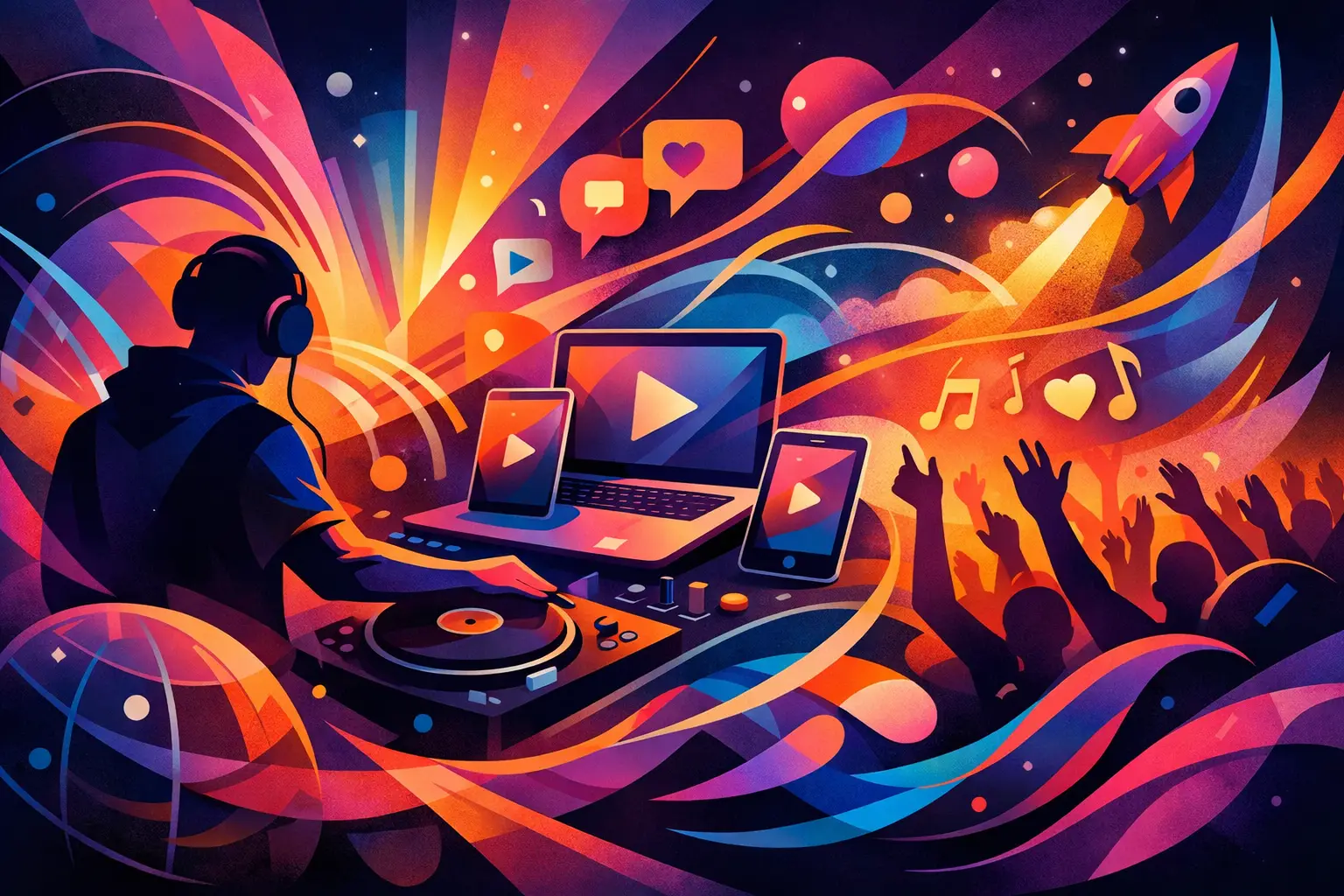
A great 60-minute set can earn applause in a packed room. Online, it can disappear by breakfast if nobody knows why they should come back for the next one. That is the real challenge behind how to grow DJ fanbase online: not getting a random spike in views, but turning discovery into recognition, recognition into trust, and trust into a community that shows up.
The DJs building lasting momentum are not necessarily posting the most. They are making it easy for people to understand their sound, remember their personality, and find a reason to participate. Your online presence should feel less like a pile of clips and more like a living extension of the dance floor.
Start With a Sound People Can Describe
Fans rarely follow a DJ because of a genre label alone. “House DJ” is too broad. “Techno DJ” can mean a hundred different things. The strongest online identities give listeners a clearer handle: rolling warehouse techno with 90s vocal moments, sunset house built for rooftop energy, bass-heavy UKG for late-night drives, or left-field club cuts mixed with familiar hooks.
This does not mean trapping yourself in one lane forever. It means creating enough consistency that a new listener can recognize the world you are building. Your visual choices, track selection, captions, set locations, and even the way you speak on camera should reinforce that world.
Ask a few trusted listeners how they would describe one of your recent sets without using your own words. If their answers are scattered, your brand may need a sharper center. If they all describe a similar mood, energy, or setting, you have something fans can repeat when they introduce you to friends.
Build Content Around the Music, Not Around Algorithms
Short-form clips can put your name in front of new people, but a clip is a doorway, not the venue. The goal is to use quick content to lead fans toward fuller experiences: complete mixes, livestreams, event dates, interviews, tracklists, and direct community spaces.
Pull several moments from every set rather than treating each performance as one post. A strong transition, a crowd reaction, an unexpected classic, a new unreleased track, or a quick explanation of a programming choice can each become its own piece of content. Give the clip context. Instead of posting “new mix,” tell people what they are hearing and why that moment matters: “The room changed when this break hit,” or “This is the track I use when I need the dance floor to reset.”
Do not force every post to be a performance clip. Fans connect faster when they can see the person doing the selecting. Share crate-digging finds, soundcheck routines, your pre-show ritual, a story behind a record, or a quick reaction after a memorable gig. Keep it connected to your DJ identity. You are not trying to become a lifestyle creator. You are giving the music a human face.
Create repeatable series
A recurring format gives people a reason to return. It can be as simple as a weekly 20-minute after-hours mix, a monthly local-artist spotlight, a Friday track ID session, or a recurring “three records I cannot stop playing” video. Consistency matters more than overproduction.
Name the series, use a recognizable cover style, and publish it on a schedule you can actually maintain. A weekly series that runs for six months will build more trust than an ambitious daily plan that disappears after two weeks.
Treat Long-Form Sets as Your Proof of Work
A short clip may catch attention, but a full mix tells fans what you can really do. It demonstrates pacing, taste, technical control, and whether your musical point of view holds together beyond a 20-second drop.
Record sets with intention. Give each one a premise: a peak-time club run, a warm-up for a specific city, a deep-house reset, a festival-ready hour, or a mix centered on local producers. A premise helps listeners choose the right moment to press play and makes your catalog easier to revisit.
Good audio is non-negotiable. Viewers will forgive a raw setting if the music sounds clean, balanced, and deliberate. Video quality should be good enough to establish atmosphere, but do not wait for a massive production budget. A distinctive location, thoughtful lighting, and stable framing can carry a performance far.
Live media platforms also matter because they put your set in a context fans already trust. A feature on an established electronic music channel such as The DJ Sessions can introduce your sound to viewers who are actively looking for DJ performance content, while adding a credible media asset to your own library. The opportunity only works if you promote it before and after the appearance. Borrowed attention becomes your audience when you give people a clear reason to follow you next.
How to Grow DJ Fanbase Online Through Community
A fanbase is not an audience that occasionally taps like. It is a group of people who feel included in the story. They reply, save mixes, bring friends to shows, request tracks, and recognize each other in the comments.
Make participation part of your content. Ask listeners which city should inspire the next mix. Let them vote between two opening records. Invite track requests for a livestream. When someone gives a thoughtful response, answer it like you are speaking to a real person, because you are. A fast, specific reply can turn a casual listener into someone who returns every week.
Livestreams are especially effective when they have structure. Announce the time clearly, give the session a theme, talk to the chat at natural points, and leave room for surprise. Do not spend the whole stream asking people to follow. Give them a memorable musical experience first. The follow is more likely to happen when the set feels like an event rather than background content.
Build an owned contact channel as well. Social platforms are useful for reach, but their rules and distribution change constantly. An email list, text community, or membership space gives your most committed listeners a direct way to hear about mixes, shows, releases, guest appearances, and tickets. Offer something worthwhile: early access, tracklists, a monthly private mix, or first notice for local events.
Collaborate Where Audiences Actually Overlap
The right collaboration is not simply a bigger name. It is a shared audience and a believable connection. A b2b set with a DJ in a neighboring lane, a guest mix for a local promoter, a producer interview, or a label spotlight can all work when the crossover makes sense.
Think beyond DJs. Dancers, visual artists, photographers, vocalists, venues, radio hosts, and nightlife collectives all shape electronic music culture. Featuring them gives your content more texture and introduces you to communities that already care about the same scene.
When collaborating, make the handoff obvious. Tag participants, share clips each person can post, mention where listeners can find the full set, and keep the energy going after launch. A collaboration that ends with one photo is a missed opportunity. A collaboration that produces a set, a story, several clips, and an upcoming event can create weeks of useful momentum.
Use Data Without Letting It Flatten Your Taste
Pay attention to what people save, replay, comment on, and watch past the first few seconds. Those signals are more valuable than a vanity view count. A clip with fewer views but a strong comment section may be telling you that a real community is forming.
Review your content once a month. Look for patterns in track moments, post times, video formats, cities represented in comments, and the set themes that hold attention. Then test one change at a time. If vocal-house clips perform well, that does not automatically mean you should abandon the deeper sound you love. It may mean vocals are an effective entry point into your broader musical world.
The trade-off is simple: chasing every trend can grow reach while weakening identity. Refusing every current format can protect identity while limiting discovery. The smart middle ground is using modern distribution tools without letting them choose your taste for you.
Give Every New Fan a Next Step
When someone finds you, the next move should be obvious. Your profile should quickly tell them what you play, where to hear a full set, when you perform live, and how to stay connected. Pin a standout mix or performance. Keep your event information current. Make your best work easy to find instead of burying it under months of posts.
Most importantly, keep showing up with a point of view. The DJs people remember online are not just uploading music. They are documenting a sound, a scene, and a relationship with the crowd. Build that relationship one set, one conversation, and one returning listener at a time.
Latest Shows
Latest news
Gallery
-



Comments
This post currently has no comments.