Do DJs Actually Play Live? Yes – But It Depends
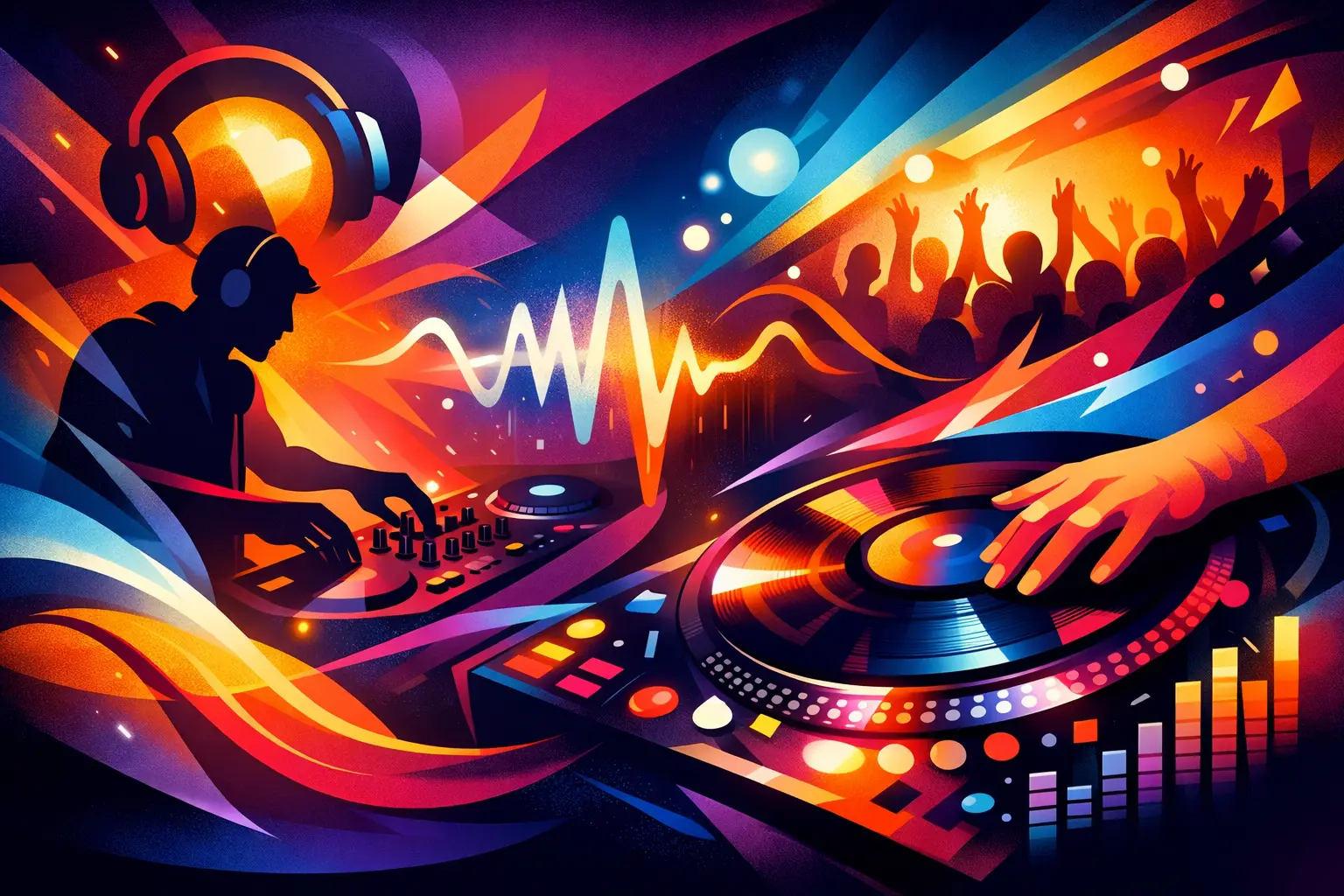
You can spot the debate from across the room. A DJ raises a hand, the drop hits, the crowd loses it, and somebody near the bar says it – do djs actually play live, or are they just pressing play? It is one of the oldest arguments in electronic music, and like most old arguments in dance culture, the real answer is more interesting than the cheap version.
The short version is yes, many DJs absolutely perform live. But “live” in DJ culture does not always mean the same thing it means for a rock band, a jazz trio, or a singer-songwriter with a guitar. A DJ set is its own performance language. The skill is often in selection, timing, transitions, crowd reading, energy control, live remixing, and technical execution in the moment. Sometimes that means deep hands-on work every minute. Sometimes it means less than fans imagine. Most of the time, it lives somewhere in between.
Do DJs Actually Play Live? What “Live” Really Means
If you judge DJs by the standard of “Are they creating every sound from scratch onstage?” then most DJs are not live performers in that sense. They are usually playing finished tracks, whether those are their own productions or music from other artists, and arranging those tracks in real time.
But if you judge DJs by whether they are making real-time decisions that shape what the audience hears, then yes, they are often very live. A strong DJ is constantly choosing what comes next, deciding when to mix, how long to ride a groove, when to loop a phrase, when to cut the bass, when to swap energy, and when to throw the whole plan out because the room wants something else.
That matters because dance music performance is built on control of momentum. The best sets do not feel like playlists. They feel like conversations between the booth and the floor.
What a DJ is actually doing onstage
A lot of non-DJs assume the whole job is loading track A, loading track B, matching tempos, and waiting for applause. Modern gear does make some parts easier than they were in the all-vinyl era, especially with sync features, visual waveforms, and cue memory. But easier does not mean automatic.
A real set can involve beatmatching, phrasing, EQ blending, gain staging, effects control, looping, hot cues, stem separation, acapella layering, and split-second troubleshooting when gear or audio behaves badly. Even in a clean digital workflow, a DJ is managing transitions so the energy feels intentional rather than clumsy.
Then there is the part software cannot fake – reading the room. A DJ can walk in with a planned crate and still abandon half of it after ten minutes. Festival crowds, rooftop crowds, underground warehouse crowds, and livestream audiences all respond differently. The set that crushes at 1:30 a.m. in a packed club may fall flat in a sunset stream or an early support slot.
That is where experienced selectors separate themselves. They are not just arranging songs. They are steering attention.
Mixing live is not the same as producing live
This is where a lot of the confusion starts. Fans hear “live” and imagine drum machines, synths, samplers, controllers, and musicians building tracks on the fly. That does happen in electronic music, but it is usually called a live set rather than a DJ set.
A live electronic act might trigger stems, play keys, manipulate hardware, rebuild arrangements, or perform original material in a more open-ended way. A DJ, by contrast, usually performs by mixing existing tracks together. Both are valid. Both can be exciting. They are just different disciplines.
Plenty of artists do both, and that can blur the line. One night they play a club set on CDJs. Another night they perform a hybrid show with synths, pads, and sequencers. The audience sees one artist, but the format changes the performance.
Why some DJ sets feel more “live” than others
Not every DJ performance involves the same amount of real-time manipulation. That is not a scandal. It is format.
An open-format club DJ taking requests, jumping genres, and reacting minute by minute is making nonstop live decisions. A touring techno artist may have a more structured journey, but still be building transitions and reshaping tension in the moment. A festival headliner playing to pyro cues, video timecode, and a tightly managed production may have less freedom than fans assume, because the show is designed to hit specific moments.
That is where the “press play” accusation sometimes comes from. In some big-stage environments, parts of the set may indeed be heavily pre-planned. There may be pre-edits, fixed sequences, or sections that need to land at exact times for visuals and broadcast coordination. That does not automatically make the performance fake. It just means spectacle can reduce improvisation.
The trade-off is real. A looser set may be more spontaneous. A locked-in show may deliver bigger audiovisual impact.
The truth about pre-recorded sets
Yes, pre-recorded DJ sets exist. They show up in some livestream contexts, some radio situations, some branded content, and occasionally in live event scenarios where production demands or risk management take priority. During certain periods of livestream culture, plenty of audiences learned that not every “live” broadcast was fully happening in real time.
That said, it is a mistake to assume all polished sets are fake. Skilled DJs can make difficult work look easy, especially if they know their music inside out. Clean transitions do not prove a set was pre-recorded. They might just prove the DJ is good.
The more useful question is not “Was every second improvised?” It is “Was this a genuine performance for this audience, in this moment?” If the artist is making choices, shaping energy, and responding to context, that is performance. If everything is fixed and the booth is basically theater, fans can usually feel that too.
Why the best DJs still earn it every night
In electronic music, credibility comes from consistency under pressure. It is easy to judge a clip. It is harder to hold a room for two hours, follow a weak opener, adapt to bad monitors, deal with a weird sound system, and still create a set people talk about the next day.
That is why the question do djs actually play live misses part of the craft. The real issue is whether the DJ is contributing something human that could not be replaced by a playlist. The answer, with great DJs, is obvious. Their timing is different. Their restraint is different. Their risk tolerance is different. They know when not to drop the obvious track. They know when to stay in the pocket instead of chasing cheap reactions.
And when you watch enough sets, whether in clubs, festivals, or performance platforms like The DJ Sessions, you start to notice that the strongest artists bring identity even before the audience knows why. Their transitions have personality. Their pacing has intent. Their choices tell you who they are.
So, do DJs actually play live?
Yes – often, absolutely. But they do not all perform live in the same way, and they are not all being judged against the right standard.
A DJ is usually not “playing live” like a drummer or guitarist. They are performing live through curation, mixing, layering, timing, and crowd control. Some sets are highly improvised. Some are semi-structured. Some lean too hard on pre-planning. Most fall somewhere in the middle, where preparation meets reaction.
That middle is not a weakness. It is the art form.
If you want to understand whether a DJ is really live, stop staring at the play button and watch the room instead. Watch how the set breathes, how the energy shifts, how the crowd gets pulled forward or held back, how one track becomes the next without losing the story. That is where the real performance lives, and once you hear it, you usually cannot unhear it.
Latest Shows
Latest news
Gallery
-









Comments
This post currently has no comments.