Darran Bruce Talks The DJ Sessions, Pioneering Live Streaming, Passion, And More – EDMTunes 2/20/26
We recently chatted with one of the pioneers of music streaming as we know it today.
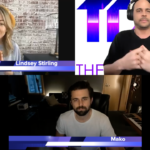
What do you do when Life hands you an opportunity you simply cannot afford to decline? Well, you take it. I say this, because sitting down with a true architect of the digital music age was exactly that. With 35 years in media and nearly two decades of that time devoted to his very own platform, today’s guest is one of the original trailblazers of internet music as we know it: the one and only Darran Bruce.
Having navigated roles at firms like Fox and Apple and growing up, how he describes it, “with a camera in his hand“, he is a man you may not know by name, but you certainly do by his monumental goals. Darran is the unstoppable force behind ‘The DJ Sessions’—a title that, in its elegant simplicity, belies its status as a sleeper hit.
Bruce began live streaming on the internet in — believe it or not — 2009, a time long before Martin Garrix’s ‘Animals’, The Chainsmokers’ ‘Roses’, or the mainstream explosion of Skrillex. To put that in perspective, while we were still glazing Lady Gaga’s ‘Bad Romance’ and sharing DJ Earworm mashups on a darker-blue version of Facebook with the penguin and shark emoticons, Darran was already testing and stressing unlimited data plans from different services to move large amounts of data around the World Wide Web.
In other words, what were you doing in 2009? Because this man was making history. And as has been his way of tackling life, he was ten years ahead of the curve, already experimenting with a format almost everyone and their mothers would adopt in 2020, mid-Lockdown. He now hosts The DJ Sessions constantly, with guests of the calibre of Ferry Corsten, Paul Oakenfold, and Dave Dresden. With different formats which include rooftop, silent sessions, and mobile parades around Seattle, he has built an empire from the ground up, and is now eyeing the next path all of us will take in ten years.
Ladies and gentlemen, here is our chat with a global legend of the stream, Darran Bruce.
Table Of Contents
- A Background on Darran and The DJ Sessions
- Experience: Darran’s Weapon of Choice
- Notable Guests and Memories
- Why The DJ Sessions Lives Gracefully After 17 Years
- Closing Reflections
The Interview
(Please note, the bolded text represents a question, while the paragraph(s) following it represent Darran’s answers.)
First off, thank you so much for coming. How have you been, man? What does your life look like these days? Let’s do a bit of a throwback to see how you’ve got to where you now are.
It’s been a wild ride! I’ve been producing The DJ Sessions for almost 17 years now, but my background in film and television goes back over 35 years. I started in public access when I was 18, eventually moving into broadcast television in the early 2000s, executing shows for major network outlets like Fox and NBC. It was an awesome time, but then podcasting emerged. I realized digital distribution was wider than local broadcast. Suddenly, the audience potential was massive.
By 2009, we were pivoting into live streaming. We had early partnerships with Ustream and Livestream, but things got serious in 2018, when we became one of the first DJ-partnered live streaming shows on Twitch. We weren’t the very first, but we were a featured partner, which meant we got placed on the front page. Honestly? I wasn’t ready for that kind of attention. We blew up. This was years before live streaming DJs were a thing. Back then, people laughed at it; they didn’t take it seriously. They’d ask, “Why would I want to watch a DJ online?” and I’d say, “Have you ever listened to a radio show? It’s the same concept, just with a video feed.”
Fast forward to 2024, and I hit a brick wall. I dropped the ball, disappeared off the face of the Earth. I guess I’m allowed to do that, everyone needs a break, but what I thought would be a couple of weeks turned into eight and a half months. I didn’t sit in this chair I’m sitting in now for nearly a year. No emails, no social media, nothing. I was at a total standstill.
Then, in May of 2025, I sat back down and said, “It’s time to get back to work.” I looked at everything and readjusted the strategy and the branding. Now, we are focused on heavy international partnerships with names like MN2S, Riverside Studios, and Origami Management. Mackie is still one of our longtime supporters. On the U.S. side, we’re working with Relentless Beats, they’re doing over 500 events a year with the likes of Live Nation and Insomniac.
So, looking at it from the numbers side, we’ve produced more than 2,700 episodes over 17 years, and we’re ramping up, our latest PR just went out… We’re in the middle of a Phoenix out of the ashes story. We’re pushing 60 to 100 hours of content a month: live interviews, exclusive mixes, and our new Mobile Sessions event series. Our mobile app is relaunching on Roku, Amazon Fire, and Google Play, with Apple TV coming soon. We’ve added an internet radio station and a dedicated music section on the site – not a store, but a place to highlight artists. The site now translates into 100 languages with full show notes and transcriptions. We’re positioned for the future, and we’re ready for it.
You can tell you’re a pro at this. One question and we ran through the entire past, present and future of the brand! Now, let me ask you this: going back to 2009, you moved into live streaming when it was still a very “weird” concept. What did you see in the future of music that everyone else was missing?
It’s crazy looking back. We had jumped from broadcast TV to podcasting right when everyone was getting into video podcasts. At that time, YouTube was very limited -you could only upload 15-minute clips, and our broadcast shows were 30 minutes. I didn’t want to chop them into “Part 1” and “Part 2,” so we actually missed the YouTube boat initially.
However, I was working for Apple at the time the video iPod launched. The stores had the hardware, but no video content to show them off. I figured out how to get our episodes onto the iPod, went to the higher-ups at Apple, and knocked on the door. I asked, “How do I get into the iTunes store with video?” And, as if the stars had aligned, the guy told me, “Darran, wait until Thursday. I can’t tell you what’s coming, but wait.” That Thursday, they launched the (then) brand-new iTunes podcast section.

We debuted at #48 out of 50 in our genre, and then we started to grow. We went from 1,000 downloads a week to 300,000. We eventually hit #23 in the iTunes podcast charts and got featured in the “New and Noteworthy” selects. So I realized that broadcast TV cost me money and limited me to certain local markets, whereas I could put a file on a GoDaddy server and it was suddenly worldwide.
Then, in early 2009, I was at Winter Music Conference. A friend in our condo said, “Darran, I’m thinking about live streaming my DJ sets.” Back then, bandwidth costs were astronomical. I was running internet radio stations and just a server to handle that kind of traffic through Akamai would have cost $3,000 a month. But he told me about Ustream-live video for free. I was skeptical. I’m a Mac guy, and everything back then was built for Windows, requiring clunky software to communicate between the two. But I went home, fired it up, and it was cloud-based – right through the browser.
I played with it all summer. I had ITV (broadcast) and ITV Live. I produced this smorgasbord event, and during the post-production, I realized the easiest segment to produce was the 35–45 minutes where the DJ played while I reset the room. I had a lightbulb moment: What if I started a show just featuring DJs streaming live? Easy production, multi-cam environment… no brainer.
I lived in a small one-bedroom apartment, so I couldn’t do it there. One night, a friend called and said, “Darran, I’m coming over, and we’re doing The DJ Sessions. I’ve got two bottles of wine.” I told him I didn’t have any gear, and he said, “I’ll DJ from my laptop.” We started it up-you can still see that episode on our site-and an hour in, I had the headsets on, rocking out. I got up to go to the bathroom, took the headsets off, and it was dead silent in my apartment. That was crazy! I was inadvertently running a social experiment. I felt like I was in a nightclub, interacting with people in a chat room, but the nightclub never existed, we were all far apart, yet vibing so close by.
The next week, I moved my bed out, moved the cameras and lights in, and called it the new studio. A few months later, I booked Dave Dresden (of Gabriel & Dresden). I’d interviewed him at WMC and asked if he’d do a set. He came over, we had 15 people crammed into my apartment, and I knew I was onto something. This was two years before Boiler Room ever hit the scene.
We eventually got kicked off Ustream when IBM bought them and started charging $2,000 a month. Then GoDaddy kicked us off for the fifth time because we were pulling 50 terabytes of data on a $15 hosting account. They advertised “unlimited,” but I guess we pushed their boundaries of unlimited! [laughs]
We pivoted to Twitch in 2018. They immediately partnered us and put us on the front page. Before 2020, if I mentioned Twitch to a DJ, they’d ask, “What’s Twitch?” and I’d have to explain that Amazon owned it. When 2020 hit and the world shut down, suddenly everyone knew what Twitch was. It shifted our brand to a news format. Now, I can interview a DJ in Tokyo or South America via Zoom without them ever needing to fly myself or fly them to Seattle. We’re pushing toward 150 to 200 hours of content a month.
Everyone can make it now. Start out once a week, choose how long you want each episode to last, and then choose the day of the week you’re going to disseminate, distribute on, and then stay constant. Research your subject, there’s a million books and a million different resources on how to do a podcast, how to do a show. You can do a show right here now, you don’t need expensive gear, a simple smartphone and I have 48 megapixels and three cameras in my hand with great audio. You can spend a little bit of money if you want to just do audio, or a $50 light and green screen in the back if you want to go AV.
You know, I was going to ask about the greatest barriers you faced starting out. I was hoping to hear something like, “Oh, trying to convince people our show was good,” but it seems your experience was quite different, like you had the crowd from early on.
Yeah, the biggest barrier-and it’s funny because I’ve been playing with video cameras since I was six and doing this professionally since I was 18-is that technology was never the hurdle. I just turned 51, so I’ve grown up alongside the tech. The real barrier was the persistence needed to see my brand grow from a local name to an international one.
I grew up in the MTV generation. Back then, getting your video played on MTV meant you were a superstar-whether you were Madonna or some tiny indie band. That’s the approach we take with The DJ Sessions. We want to bridge the gap: featuring the brand-new up-and-comers while showcasing the legends. We want people to say, “I found this guy on The DJ Sessions ten years ago, and now he’s headlining Tomorrowland.”
But the actual hardest obstacle? It’s both burnout, and the fact that people downplay your effort and think that what you do is easy. You know, to sell my show, how do you condense 35 years of experience into a 30-second elevator pitch? I’ve lived a life-I’ve had relationships, jobs, back surgery, and periods of deep burnout. If you push yourself too hard without staying healthy, that burnout can put you in a shell of depression that is incredibly hard to crawl out of. And no one will come to save you, because you were doing an easy thing to begin with, right?
Right now, the day-to-day operations at TDJS are all me. I’m wearing so many different hats. I’m the project manager, the executive producer, the host, the editor, the marketing guy – everything. I just got out of a massive burnout period, and I’m hoping I can go another five to seven years before the next one. By then, hopefully, I’ll have a team to leverage the workload.
And then there’s the financial side of it. People always wonder how an operation this size is funded.
Exactly. Since day one, this has been funded out of my own pocket. We’ve had sponsors and partners, but this isn’t a $300-a-month hobby. Our sponsorships can range from $50,000 to $150,000 a year. To put that in perspective, this is a $1.5 million-a-year operation funded by me. I didn’t have an inheritance or Bitcoin luck. Most people would ask, “How the hell are you pulling this off?”
But doing it this way taught me how to work on a budget. Sometimes, when you have too much money, you just throw it at problems without learning. I’ve seen people spend $10,000 on something I eventually learned to do myself for $20 a month. Money is a factor, but it shouldn’t be a pain point for someone starting out. If you have a cell phone, you have a camera and a recorder. You can start there.
On the flipside, the grind is real though. Last night I was up until 2:00 AM dealing with people in the UK and EU because I have to be on their time. In those cases I’m getting four hours of sleep a night. That’s the sacrifice.
I guess when it comes from passion and it fuels you as a person, it’s worth it. But four hours of sleep isn’t sustainable forever! Take it from me that I always slept few hours and never grew in height. [laughs]
It’s all about staying organized. I used to keep physical binders of to-do notes-I’ll probably make a book out of them one day-pero now I’ve gone completely digital. I use tools like Calendly to manage my interviews so I’m not “skitter-battered” or all over the place. I have a library of 500 questions I can pull from to tailor an interview to any artist.

In the morning, it’s tea, then emails. I check for “red flags”-my top priorities. If I leave my desk for three days, I’ll have 400 emails across 16 different accounts because I run other companies outside of this. Bringing on a Virtual Assistant and working with Additive Music PR has been a huge help.
People need to realize that the entertainment world is “pay-to-play.” There are a million people doing this for free. How do you stand out? You climb the ladder. If you put $10,000 into yourself, you’re in a higher tier. If you put $100,000, you’re at the top. I use a pyramid analogy: everyone at the bottom has an “idea,” but only a few actually pick up a camera, and even fewer actually produce a pilot.
In broadcast television, you have FCC quality checks and station managers. In “podcast land,” it’s the Wild West-anything goes. But if you want to be in magazines and get real write-ups, you have to invest. There are no “overnight successes.” You don’t see the long hours and the hardships. My goal is to eventually have a $50 million-a-year operating budget. I’ve still got time.
Not only time, but you’ve also got a heck of a lot of experience, which I believe helps you a lot. Maybe out of 10 problems that can get to standard people like me, who have only dipped their toes in communications, maybe nine of them you already have solved because you know how to get through them, and only one is a real struggle.
I’ve learned that if someone puts a hurdle in my way-usually a “no”-there is always a way to get to a “yes.” I’ve noticed a difference in professional culture, too. In the EU, people are more likely to reach down a ladder and pull you up. In the States, sometimes they’ll stomp on your fingers to keep you from passing them. I’m not trying to offend anyone, it’s just how I’ve seen things happen over years of working with everyone.
A great example of the “yes” mentality: In June 2024, I was interviewing Martin Eyerer from Riverside Studios in Berlin. I had never been to Berlin, but he invited me to join them for Rave the Planet. They had a double-decker semi-trailer nightclub truck. I didn’t even hesitate. Two days later, I had my airfare and hotel booked. I traveled halfway around the world alone to meet them.
We took number one in the world on Twitch for seven hours that day. That partnership turned Riverside Studios into one of our featured sponsors. Now we’re planning to go back four times a year. We’re working with MN2S in the UK, Origami Management in Italy, and planning for IMS Ibiza and ADE. You miss 100% of the shots you don’t take. You’re going to get “no’s”, from the source, or even from gatekeepers, but eventually, you get a “yes.”
Woah, I’ve lost track of time! These are the conversations I live for in journalism-the deep dives, not just the “what’s your latest track” fluff.
That’s exactly why I love the long-form format. I’m actually looking to start a daily 15-minute news segment to supplement the long interviews. I saw an article recently about the “death of the long-form article” in electronic music. Everything is written for a two-minute consumption cycle now, often churned out by AI.
That’s why I strictly do video interviews. You get the true reaction, the audio, the body language. We get artists in the comfort of their homes when they’re off tour and just want to chill for an hour. That’s how you build a real relationship. When I see them later at a festival, they remember me. There are no shortcuts. The DJ Sessions is where the music never stops, and we’re going to keep growing through the pitfalls and the trials.
Next up: You’ve had countless guests, but which ones pop into your head straight away as the most fun or memorable over the years?
Ooh, I love this question! I often ask my guests to name an up-and-comer or a favorite artist, and I know they hesitate because they don’t want to get in trouble-they don’t want their friends coming back later saying, “Hey, you should have said it was me!”
Honestly, every episode since the inception of The DJ Sessions has been a blast. Although I don’t really go back too much to revisit old episodes, unless they were specials or some sort or rare edition. That said, Dr. Fresch gets total props in my head, he played in the back of our mobile studio, and that was a hoot. He’s so cool; I interviewed him once in the mobile studio and once on-site at Decadence with Relentless Beats.
But for me, the fun comes from pushing the barrier. I don’t treat a show like, “Okay, that’s one in the can.” I have a quota of 60 hours of content a month. If I finish show one, I think, “Okay, 59 more to go.” Every single one has to have the same energy, the same scheduling, and the same focus. By the end of the month, if I hit 61 hours, I know it was an awesome month. That is how I approach it. I’ve set my life up so I don’t need a 40 or 60-hour-a-week job to survive, though the “rocket ship” is really just taking off now with this 2025-26 rebrand.
I love that mindset. Is there one specific moment where life surprised you with something fun and good? I mean, you’ve told us many stories, yet I think one must stick out!
There’s one I tell all the time from around 2013. It was a Friday night, I was sitting at home, and a resident DJ from my show posted on Facebook saying he was hosting an after-party but needed gear. I lived 15 minutes away, so I told him, “I’ve got gear, I’ll bring it if I can get in for free.”

I get there, set up, and it’s a phenomenal party-maybe 50 or 60 people in a tight space. This DJ comes on and he is just killing it. I don’t remember the tracks, but I was right there next to the booth, just grooving and dancing, grooving out to the night, those “dance like nobody’s watching” moments. No drugs, no nothing, just the high from the music itself and the moment and the connection.
Fast forward to Sunday. I’m at my studio for a booked interview. I hadn’t looked the artist up online, so I didn’t know his face. One of the few times that I ever did that. There’s a knock at the door, the promoter walks in, and the DJ follows. He looks at me and goes, “Hey! I know you!” And I go, “I know you!” He says, “Dude, were you the guy dancing next to the booth at that small party on Friday?” And it hits me. I go, “Are you fucking Anthony Attalla?” He goes, “Yeah!” and I just told him, “Dude, that was one of the best sets I’ve ever seen.” I had no idea I was hanging out with him at this tiny party in Seattle, treating him like a normal human being with zero starstruck energy. That is the foundation of this show: treating everyone like a person.
That’s a point that not that many people talk about, when you treat artists like real people and not like stars. Guys, you’d be surprised at how often they feel much more comfortable and welcome than if you treat them like rockstars.
I have a huge heart for the underdog. We started The DJ Sessions to highlight Seattle DJs and show the world who was hot here, though it grew into national and international celebrities. We can’t take every submission, but we just launched our internet radio station to syndicate more shows.
Our platform is built to help artists, and we don’t charge them a penny. No fee for interviews, no fee for hosting mixes, no affiliate links. If someone clicks a link in our music section, it takes them straight to Beatport or Apple Music. We give them a full bio page with “weight” and internet credibility. It’s not just a static profile; it’s an interview, a mix, and a syndicated live stream. When an artist asks their fans, “How did you find us?” and the fan says, “I saw you on The DJ Sessions,” that’s the win.
We want it free for the artist and the end-user. To keep the lights on, we look for sponsors who understand our “shotgun” approach. Instead of a “laser beam” approach where a sponsor pays $4,000 for one episode, they pay for the 100 hours of content we pump out. That $4,000 becomes $40 per episode, but it hits a much broader, massive market over time.
Many platforms have come and gone over the years. I bet many programs preceded you, and many rose to fame and then dried out over these 17 years you’ve been online. What is the core principle that keeps your show alive, especially when you just told me you can pick up the pace after months of silence and still retain a close following?
I have a perspective most don’t. In 2020, I got 200 calls from people asking how to live stream. For years I gave away 98% of my info for free until I realized there was no reciprocating energy-everyone just wanted to do their own “look at me” show. They didn’t understand programming or statistics. Newbies would go live at midnight on a Friday and get zero viewers because they were competing with every other DJ on the West Coast, also going live at midnight on a Friday. They all wanted the prime hour for their quick fame, but in doing so, they inadvertently depredated each other, all competing for the same timeframe. I tell people: go live at 3:00 PM on a Friday. Go live on a Sunday afternoon. Don’t compete with the noise, do your own thing, even when it comes to choosing a time to stream.
People get into podcasting and hit a wall. I tell them: go buy the “Dummies” series-Podcasting for Dummies. Read the damn book! It’s a $30 investment. Before, I just gave 98% of my info away; now I give 97%, and even that is becoming rare. I realized I was just setting up my competition and they weren’t giving any love back. So I guess, part of keeping my show alive has also been learning to keep groundbreaking stuff or shortcuts to myself, instead of giving it away to those who just want to use me.
You’ve mentioned that you’re always thinking about what’s next, things most people aren’t touching yet. So while the world condemns gatekeeping, I think I justify it in your case. You can’t make history if you’re giving away the research and hard work, you know?
Exactly. The DJ Sessions has traditionally been 10 years ahead of everyone, so you can bet innovation is a true part of what we do. In 2009, when DJs only had Myspace, I was telling them to build their own sites. On our site, there is always something new. If you come in the morning, at lunch, at dinner, or at midnight, there is a new interview, a new mix, or a new news story. We publish 720 news stories a month. We want people to come to our site, not find us on any of the socials. You’re limited to what you can do on the socials, even Twitch puts their own commercials in users’ stuff. On a website you’re free to do your own thing, and polish every single detail. Which also allows us to, once again, innovate.

We’re moving into XR and AR. I was talking about this years ago, and no one is talking about this now! Some venues did it back in Pandy (Lockdown) and forgot. And props to whatever Roblox is doing and Fortnite, but aside, everyone just forgot about something that can be a huge asset today, not tomorrow, today. Imagine a blank room where you put on AR glasses and the space transforms into a custom venue. Or buying a “VR shirt”-you wear a blank shirt to an event, but anyone with the glasses sees you wearing a custom DJ Sessions wardrobe. People walking down the street would see your avatar’s hat and shirt. Nobody is thinking of that! They think I’m just a “livestream guy.” No, I’m future-forward.
So, we wanna be a one-stop shop, and again, we aren’t Sony, we aren’t Universal, we aren’t some big, major, multi-billion dollar company. We’re just doing this independently, from my office on Capitol Hill in downtown Seattle. But we have affiliations and partnerships, I have people that I work with who do some of the back-end work. Lots of stuff going on over here. That’s what keeps me motivated.
That’s so cool, I love that vision. Well, a bit of a change in topic now, as a man who spends so much time around music, what do you listen to in your off time? Do you ever feel the need for complete silence?
Easy. SomaFM: Groove Salad. Downtempo, ambient, grooves. I’ve been a fan since 2002. It’s my background for everything, and it brings me calm, peace and focus. May not be what you’d expect from me, but that’s my comfort space right there, hats off to Rusty Hodge, the director. But if I had to take one genre to the grave? Soulful House. Soulful, sexy house with a live bass guitar and horns. You have to move to it. It’s the counter-balance to the crazy energy of my work.
Big fan of laidback music, I’ll lend it an ear I promise. Final question now, my signature one I’d guess: If you could travel to the past and meet your past self, any number of years, five, 10, 15, however many years you find interesting, and you come across yourself from the past, what’s one thing that you would tell them?
“Don’t worry about the money. Just keep putting your best foot forward.” If it was about the money, I’d be working a corporate job at Amazon, Apple, or Google.
I’ll leave you with a little story: in 1995, I was 21, and the Final Four was in Seattle. I was working in public access still back then. My limo driver took us to the back door of the Four Seasons Olympic for a bathroom break. We walk in, and the security guard tries to hold us back because a celebrity is entering, but I convinced them that I was going to my room, whatever, I went in, between all these guys waiting for said celebrity. There was someone in front of me but I didn’t know who they were. I walk into the lobby and realize I am standing directly behind Jack Nicholson. People are shoving comp cards in his face, yelling, “Jack! Jack! Jack! Sign this!”
He’s ignoring everyone. We get to the middle of the lobby, and I just touched his shoulder and said, “Excuse me, Mr. Nicholson?” He stops. The whole room opens up like a breakdance circle. “Can I just shake your hand?” He turns around, takes his glasses down, and shakes my hand. We did this cool handshake-I just mimicked whatever he did-and he looked at me and said, “Take it easy, kid. You’re gonna go far.” Then he put his glasses back on and went to the elevator.
So, for a word of advice to my younger self? I’d show him that experience over and over again and say: Take the shot. You’ll get a lot of “nos,” but eventually, you’ll get a “yes” from a Jack Nicholson, and that’s what makes the difference.
You know, I graduated high school when I was 17. I could have gone to college right then, but I wouldn’t have known what the crap I wanted to do. I would have blown it off. Instead, I went in my mid-20s with a drive and a focus. I went to college at 26, and I knew exactly what I wanted: a business degree so I could run a corporation. I didn’t want to just be the talker, I wanted to understand what the accountant was saying, what the banker was saying, and how to execute a marketing plan versus an advertising plan. You’d be amazed how many people don’t know the difference.

People who don’t know me often accuse me of being arrogant or cocky, but once they get to know me, they realize I’m just very confident. In a world full of people lacking confidence, that can come off wrong. But competence breeds confidence. I’ve been playing racquetball since I was four. I’ve hit a ball 80,000 times. When I get on a court with someone who’s played 20 times, I know how to place my shot. I’m confident because I’ve practiced. The same can be said about The DJ Sessions, that’s why we produce so much content. We don’t just do one show a week; we produce hours and hours. I want to duplicate this model and help others achieve their goals. My mentor did that for me, and now I have an international brand.
It’s incredible to see that level of focus. It really shows that it all started from a very grounded place.
It did. And I wouldn’t change anything. There have been tears, lost jobs, and money issues. About five or seven years ago, people thought I was making a quarter-million dollars a year. In reality, I was disabled, coming out of back surgery, on food stamps, and didn’t know how to pay rent. I thought to myself, “Well, I must be doing a great job if the world thinks I’m rich when I’m actually broke as a joke!”
My advice to anyone is: don’t give up. Seek help. Imitation is the best form of flattery, but what are you going to do once you get behind the mic? What sets you apart? I have DJs tell me, “I’m better than that guy making $150,000 a year.” Okay, but he’s out there and you’re in your bedroom. What’s the barrier to entry you’re going to break?
That really resonates with me. I’m 25 now, but I’ve been simmering my own music career for 15 years while working in press. This last bit of advice is something I’m applying to myself right now. I appreciate your time and these answers, Darran. Opportunities like this don’t come through too often.
My pleasure!
-End of interview-
Final Words
This was such a unique and grateful experience. Having spoken to someone with the mind of Darran, you can start to understand how their dreams have transitioned to a reality: it’s the sheer will to move mountains to get to your dreams. Darran founded TDJS in 2009, and has stuck with it through thick, thin, and even burnout. And that is something most certainly rare in today’s society.
Thanks so much for this chat Darran, it was lovely to meet you, and get to know your entire impact on the industry firsthand. You can always check out our latest interviews, and stay tuned to our page for breaking news and views from the Dance corner of the world.
The original interview first appeared on EDMTunes
Latest Shows
Latest news
Gallery
-



Comments
This post currently has no comments.