Best Camera for Live Streaming DJ Sets
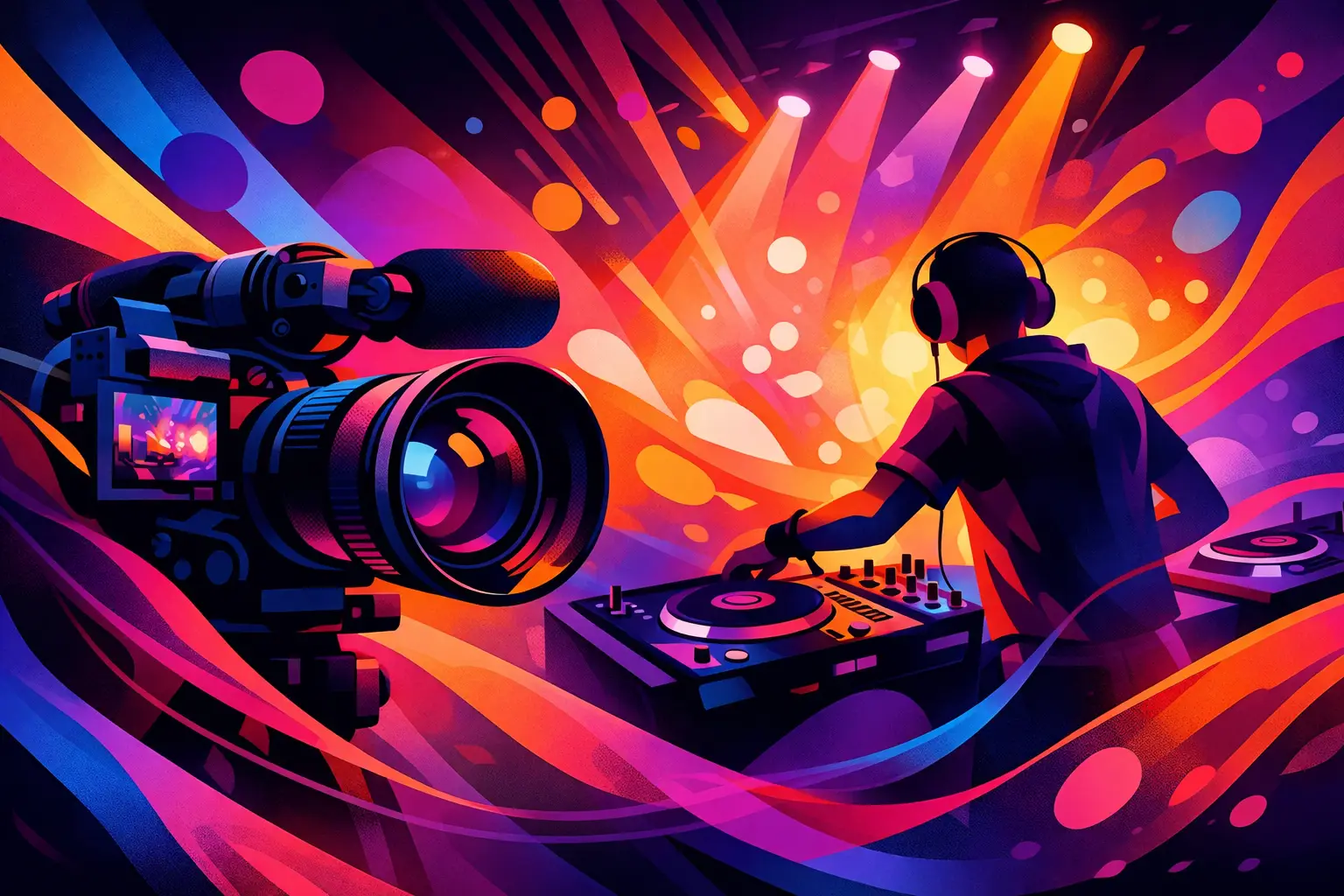
A DJ set can sound massive and still lose people fast if the video looks flat, dark, or choppy. That is why choosing the best camera for live streaming DJ sets is not just a gear flex – it is part of the performance. In a scene built on energy, movement, lighting, and personality, the camera has to keep up with the music and the room.
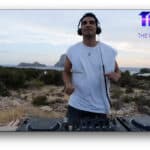
The right choice depends less on hype and more on how you stream. A rooftop sunset set, a dark club booth, a home studio session, and a multi-camera interview-performance format all ask different things from your gear. Some DJs need a simple plug-and-play camera that stays sharp for two hours. Others need cinematic depth, clean low-light performance, and enough flexibility to grow into a more serious broadcast setup.
What makes the best camera for live streaming DJ sets?
For DJ streams, the big four are clean HDMI output, strong low-light performance, reliable autofocus, and no overheating during long sessions. If a camera cannot hold focus while your hands move across the mixer, or if it falls apart when the lighting shifts from blue to red to near-black, it is going to fight your set instead of support it.
Resolution matters, but probably not the way social media says it does. Plenty of great DJ streams still look excellent in 1080p when the lighting, framing, and bitrate are dialed in. A 4K-capable camera gives you more room to crop and future-proof your setup, but for most live platforms, stability beats spec-sheet bragging rights.
Audio integration matters too, even if your main sound is coming from a mixer into an interface. You want a camera that plays nicely with capture cards, switchers, and streaming software. The best setup is the one that does not create extra friction ten minutes before you go live.
Best camera for live streaming DJ sets by setup type
If you are just getting started, a good webcam can still do work. The best modern webcams offer solid sharpness, easy USB connectivity, and almost no setup pain. They are ideal for bedroom streams, casual sessions, and DJs who want to focus on performance rather than camera menus. The trade-off is obvious – webcams usually struggle in low light, flatten the image, and give you limited control over the look.
For most DJs serious about streaming, a mirrorless camera is the sweet spot. This is where image quality, lens choice, and low-light performance jump forward in a real way. Cameras in the Sony ZV-E10, Sony a6400, Panasonic GH5, and Canon EOS R50 range have become popular for a reason. They can deliver a polished stream without demanding full production-team complexity.
Sony bodies are especially strong if your streams involve movement and changing light. Autofocus is usually reliable, and Sony’s ecosystem offers plenty of lens options for wide booth shots or tighter artist framing. If you want a camera that works well in a studio and can also travel to an event, Sony is often the safest bet.
Panasonic cameras are a favorite for creators who want more manual control and strong video features. The autofocus can be less forgiving depending on the model, so they tend to reward operators who know how to lock in a composition and manage focus intentionally. For fixed-angle DJ sets, that can be completely fine.
Canon often lands well for creators who want friendly menus and clean color out of the box. Some models are stronger for streaming than others, so the details matter. If you are choosing Canon, make sure the model offers clean output and does not run into recording or power limitations that get annoying during long sets.
Action cameras sit in their own lane. A GoPro or DJI Osmo Action can be a smart second angle, booth cam, or crowd-perspective camera, especially in tight spaces. As a main camera, they can work, but they tend to struggle more in darker environments and can make your stream feel less premium if overused.
The top picks that make sense right now
The Sony ZV-E10 is one of the strongest all-around choices for DJs who want to level up fast. It is compact, relatively approachable in price, and delivers strong autofocus with solid image quality. Pair it with a wide lens and a dummy battery, and you have a camera that fits home studios, event spaces, and mobile sessions without much drama.
The Sony a6400 is still a workhorse for live content. It has a proven track record, excellent autofocus, and a dependable look for streaming. It is not the newest thing on the market, but that is part of its appeal. A lot of streamers know exactly how to build around it, and that kind of reliability matters when you are running a live show.
The Panasonic GH5 remains a strong option if you want serious video control and already understand your way around camera settings. It is especially useful in multi-camera workflows and content environments where the camera is part of a broader production system. If you are a solo DJ who wants pure ease of use, it may feel like more camera than you need.
The Canon EOS R50 is a good newer option for creators who want clean visuals, a modern interface, and a straightforward path into interchangeable-lens streaming. It fits DJs building a polished brand without jumping straight into higher-tier pricing. As always, check your exact streaming workflow before buying.
If your budget is tighter, a quality webcam like the Elgato Facecam Pro or Logitech Brio can still get the job done. Just be realistic. These are convenience-first tools, not magic bullets for dark clubs or highly stylized visual branding.
Low light is where winners separate themselves
A DJ stream lives or dies by lighting. Clubs, lounges, and even home setups often look darker to the camera than they do to your eyes. That is why sensor size and lens choice matter so much. A larger sensor paired with a fast lens will usually outperform a cheaper camera trying to compensate with digital noise reduction.
If you are streaming in low light, do not spend your full budget on the camera body and ignore lighting. Even one or two well-placed LED panels can transform your image more than a body upgrade alone. The best stream setups balance the camera, the lens, and the lighting instead of expecting one piece of gear to do everything.
Wide-aperture lenses are especially useful for DJ sets because they help in darker rooms and create separation between the artist and the background. But there is a trade-off. If your depth of field gets too shallow, hand movements around the mixer can drift in and out of focus. For live streaming, a slightly more forgiving setup often works better than chasing the most cinematic blur possible.
Single-camera or multi-camera?
A single-camera setup can absolutely carry a great stream. If the angle is strong, the lighting is intentional, and the audio is locked, one well-framed shot beats three weak ones. This is especially true for DJs who are still building consistency and do not want technical problems distracting from the music.
Multi-camera setups add energy fast. A wide master shot, an overhead deck angle, and a side profile can make a stream feel much more alive. But every extra camera adds complexity, heat, power needs, and possible sync issues. If you are running your own stream, start with one excellent angle and build from there.
This is where established live content platforms have an edge. Brands that have spent years producing artist sessions know that consistency wins. Viewers come back for clean audio, stable video, and a broadcast that feels intentional every time. That matters more than chasing every new camera release.
What to avoid when buying
Do not buy based on megapixels. Still-photo specs are not the main story for livestreaming. Do not buy a camera without checking whether it supports clean HDMI, continuous power, and long-session reliability. And do not assume the most expensive camera is the best camera for your setup.
Also avoid underestimating workflow. Some cameras look great on paper and become annoying in practice because of overheating, poor USB support, awkward menus, or fragile ports. A livestream camera has to perform repeatedly, not just impress you in a review video.
The smart buy for most DJs
For most artists, the best camera for live streaming DJ sets is a mirrorless model in the Sony ecosystem, with the ZV-E10 or a6400 leading the pack. They offer the best balance of image quality, autofocus, flexibility, and real-world streaming value. If your budget is lean, start with a strong webcam and improve your lighting before making a bigger jump.
The move is not to build the flashiest rig on day one. The move is to build a setup that lets you go live consistently, represent your sound professionally, and give fans a visual experience that feels as dialed in as the set itself. When the camera disappears and the energy stays front and center, you picked the right one.


Comments
This post currently has no comments.