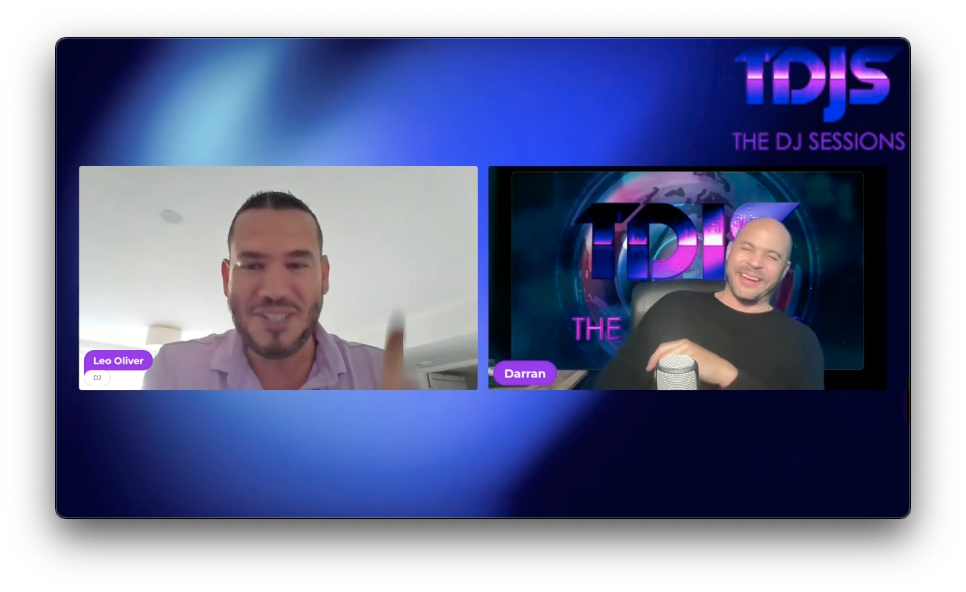
Leo Oliver – Tech House Momentum, Miami Culture, and Artistic Balance on the Virtual Sessions 12/4/25
Shownotes
Broadcasting from Miami during the height of Art Week, Leo Oliver shares a wide-ranging conversation that captures the intensity of modern club culture, career growth, and personal balance. Based in one of the world’s most active nightlife cities, Leo explains how Miami’s constant flow of art, music, and international visitors fuels both creativity and opportunity. His role extends beyond DJing, with multiple residencies across hotels, beach clubs, and nightlife venues that each demand a different musical approach and audience awareness.
Leo dives into his evolution as a producer, highlighting milestones that shifted his confidence and visibility. Releases on respected labels, including Black Lizard and an upcoming project with Glasgow Underground, marked turning points where industry recognition became tangible. Support from artists like James Hype and Tiësto reinforced his belief that consistency and authenticity matter more than chasing trends. His sound remains rooted in tech house, driven by high energy, groove, and positivity.
The discussion moves deeper into the realities of the industry, touching on management, label relationships, and the importance of having the right team. Leo emphasizes that effective management is not about instant bookings but long-term artist development, positioning, and access to the right environments. Mental health also plays a central role in his philosophy, as he stresses the importance of stepping away, staying physically active, and disconnecting from constant pressure.
Looking forward, Leo embraces emerging technology while remaining cautious, viewing AI as a creative tool rather than a replacement for human emotion. His outlook is clear: respect the craft, protect your well-being, and keep building with intention.
Topics
0:10 Miami Art Week energy and global nightlife culture
5:00 Building residencies across diverse Miami venues
10:00 Breakthrough releases and label recognition
15:00 Career-defining moments and artist support
20:00 Management, labels, and long-term growth
25:00 Networking at ADE and international exposure
30:00 Mental health, burnout, and balance
35:00 Respect for DJs and industry professionalism
40:00 Technology, AI, and future creativity
50:00 Vision for longevity and artistic integrity
Connect with Leo Oliver
Instagram: https://instagram.com/dj.leo.oliver
About Leo Oliver –
Hailing from São Paulo, Brazil, Leo Oliver seamlessly weaves the creativity and warmth of both Brazilian and Miami influences into his music.
His diverse musical identity reflects a rich tapestry of inspirations. Leo Oliver, who now proudly calls Miami home since 2015, has become a prominent figure in the city’s dynamic music scene. He has shared the stage with renowned DJs like Plastik Funk, Roger Sanchez, Angelo Ferreri, Barbara Tucker, Unomas, Robbie Rivera, Kvsh, and Kiko Franco.
Adding another dimension to his multifaceted career, Leo Oliver was a speaker on Revolution 93.5fm for two years, hosting guests such as Nervo, Sunnery James & Ryan Marciano, Benny Benassi, Plastik Funk, Sam Feldt, Sigala, Leandro Da Silva, Kungs, and more.
His radio show, “The Oliver Radio Show,” airs weekly, showcasing his passion for curating exceptional musical experiences.
With recent successful releases on Black Lizard Records, Leo Oliver continues to evolve and inspire, his global journey in music serving as a testament to the universal language that unites us all.
About The DJ Sessions –
“The DJ Sessions” is a Twitch/Mixcloud “Featured Partner” live streaming/podcast series featuring electronic music DJ’s/Producers via live mixes/interviews and streamed/distributed to a global audience. TheDJSessions.com
The series constantly places in the “Top Ten” on Twitch Music and the “Top Five” in the “Electronic Music”, “DJ”, “Dance Music” categories. TDJS is rated in the Top 0.11% of live streaming shows on Twitch out of millions of live streamers.
“The DJ Sessions” is listed in the Feedspot directory as one of the Top 60 EDM Podcasts.
It has also been recognized by Apple twice as a “New and Noteworthy” podcast and featured three times in the Apple Music Store video podcast section. UStream and Livestream have also listed the series as a “Featured” stream on their platforms since its inception.
The series is also streamed live to multiple other platforms and hosted on several podcast sites. It has a combined live streaming/podcast audience is over 125,000 viewers per week.
With over 2,700 episodes produced over the last 16 years “The DJ Sessions” has featured international artists such as: Matt Staffanina, The Midnight, Felix Sama, Jens Lissat, BT, Plastik Funk, Redman, Youngr, Dr. Fresch, Ferry Corsten, Robert Owens, Darude, Herbert Holler, Meecah, YORK, Martin Jensen, Sevenn, Amber D, Joey Riot, Drove, Martin Trevy, Thomas Datt, Siryuz & Smoky, Simon Shackleton, SurfingDJ’s, Jacob Henry, Rïa Mehta, Vintage & Morrelli, Joachim Garraud, Mizeyesis, Drop Out Orchestra, Dave Lambert, Tom Wax, Kenn Colt, Nathassia aka Goddess is a DJ, Joni Ljungqvist, mAdcAt, Wuki, DiscoKitty, Handshake in Space, Thaylo, Moon Beats, Barnacle Boi, IAMDRAKE, Spag Heddy, Scott Slyter, Simply City, Rob Gee, Micke, Jerry Davila, SpeakerHoney, Sickotoy, Teenage Mutants, DJ Mowgli, Wooli, Somna, Gamuel Sori, Curbi, Alex Whalen, Netsky, Rich DietZ, Stylust, Bexxie, Chuwe, Proff, Muzz, Raphaelle, Boris, MJ Cole, Flipside, Ross Harper, DJ S.K.T., Skeeter, Bissen, 2SOON, Kayzo, Sabat, Katie Chonacas, DJ Fabio, Homemade, Hollaphonic, Lady Waks, Dr. Ushuu, Arty/Alpha 9, Miri Ben-Ari, DJ Ruby, DJ Colette, Nima Gorji, Kaspar Tasane, Queen City Hooligan, Andy Caldwell, Party Shirt, Plastik Funk, ENDO, John Tejada, Hoss, Alejandro, DJ Sash U, Arkley, Bee Bee, Cozmic Cat, Superstar DJ Keoki, Crystal Waters, Swedish Egil, Martin Eyerer, Dezarate, Maddy O’Neal, Sonic Union, Lea Luna, Belle Humble, Marc Marzenit, Ricky Disco, AthenaLuv, Maximillian, Saeed Younan, Inkfish, Kidd Mike, Magitman, Michael Anthony, They Kiss, Downupright, Harry “the Bigdog” Jamison, DJ Tiger, DJ Aleksandra, 22Bullets, Carlo Astuti, Mr Jammer, Kevin Krissen, Amir Sharara, Coke Beats, Danny Darko, DJ Platurn, Tyler Stone, Chris Coco, Purple Fly, Slantooth, Dan Marciano, Johan Blende, Amber Long, Robot Koch, Robert Babicz, KHAG3, Elohim, Hausman, Jaxx & Vega, Yves V, Ayokay, Leandro Da Silva, The Space Brothers, Jarod Glawe, Lotus, Beard-o-Bees, Luke the Knife, Alex Bau, Arroyo Low, Camo & Crooked, ANG, Amon Tobin, Voicians, Florian Kruse, Dave Summit, Bingo Players, MiMOSA, Drasen, Yves LaRock, Ray Okpara, Lindsey Stirling, Mako, Distinct, Still Life, Saint Kidyaki, Brothers, Heiko Laux, Retroid, Piem, Tocadisco, Nakadia, Protoculture, Sebastian Bronk, Toronto is Broken, Teddy Cream, Simon Patterson, Morgan Page, Jes, Cut Chemist, The Him, Judge Jules, DubFX, Thievery Corporation, SNBRN, Bjorn Akesson, Alchimyst, Sander Van Dorn, Rudosa, Hollaphonic, DJs From Mars, GAWP, David Morales, Roxanne, JB & Scooba, Spektral, Kissy Sell Out, Massimo Vivona, Moullinex, Futuristic Polar Bears, ManyFew, Joe Stone, Reboot, Truncate, Scotty Boy, Doctor Nieman, Jody Wisternoff, Thousand Fingers, Benny Bennasi, Dance Loud, Christopher Lawrence, Oliver Twizt, Ricardo Torres, Patricia Baloge, Alex Harrington, 4 Strings, Sunshine Jones, Elite Force, Revolvr, Kenneth Thomas, Paul Oakenfold, George Acosta, Reid Speed, TyDi, Donald Glaude, Jimbo, Ricardo Torres, Hotel Garuda, Bryn Liedl, Rodg, Kems, Mr. Sam, Steve Aoki, Funtcase, Dirtyloud, Marco Bailey, Dirtmonkey, The Crystal Method, Beltek, Darin Epsilon, Kyau & Albert, Kutski, Vaski, Moguai, Blackliquid, Sunny Lax, Matt Darey, and many more.
In addition to featuring international artists TDJS focuses on local talent based on the US West Coast. Hundreds of local DJ’s have been featured on the show along with top industry professionals.
We have recently launched v3.3 our website that now features our current live streams/past episodes in a much more user-friendly mobile/social environment. We have now added an “Music” section, site wide audio player, transcoding, captions, and translation into over 100 languages, There is also mobile app (Apple/Android) and VR Nightclubs (Beta in VR Chat).
Transcript
[Darran]
Hey everyone, welcome back to another episode of the DJ Sessions Presents the Virtual Sessions. I’m your host Darran right now and I’m sitting in the virtual studios in Seattle, Washington and coming in all the way from Miami, we have Leo Oliver today on the DJ Sessions with Origami Management and Black Lizard, the record label. How you doing today, Leo?
I’m great, Darran. Thanks for having me. Absolutely.
Super excited to be talking with you. We had a great chat before the show. There’s a lot of stuff we’re going to dive right into today.
You are in Miami, one of the hotbeds for nightlife, culture, design, fashion, going out, looking good all year long. You know, but right now there is an event happening in Miami. Can you tell us what’s happening right now down there in Miami?
Because I’m blown away.
[Leo Oliver]
I should be down there right now. Yeah, yeah, you should. You definitely should.
So this is the Art Week of Miami. We call it Art and there is plenty of expositions, shows, DJs, artists, everything. Everybody is here.
So it’s super fun. It’s one of the busiest weeks of the entire year in Miami. So people go crazy, a lot of traffic, but the parties are amazing, amazing.
[Darran]
You know, it was funny that and I told you this pre-show, but this show, the DJ Sessions actually got started and the idea and the concept got put into my head at Winter Music Conference in 2009. So if I remember anything about what that was like on that time of my week, being there for Winter Music Conference back then, I can only imagine what it’s like now. Super jelly of you right now, man.
Super jealous. I want to be there right now. I want to hop on a plane tonight and fly out there if I didn’t have to work tomorrow.
But anyways, you know, we’re here to talk about you and what you’re up to and you do some projects and events there in Miami as well. Let our DJ Sessions fans know about that because I didn’t know. I didn’t read that in your bio and I’m like, what?
Pool parties? Nightclub nights? What?
[Leo Oliver]
So I do have several residencies, right, and projects that I’m taking care of. I’m directly responsible for that. So for example, I have every Saturday at Esteleste in Brickell, which is a major hotel.
I do play as residency as Kiki on the River or Boho House or even Faena Hotel. Saturdays, Sundays at Joya Beach. So several clubs, projects, different styles that can work it out with us.
So if you guys, if you DJs there are coming to Miami, let me know. You know, hit me up so I can always at least refer you to another place or put you on my own projects.
[Darran]
And you know, I am definitely going to be planning on coming out there. Now that I know what you do, I want to be out there twice, a minimum twice with my international travels and other national travels. Miami is now on the map for the DJ sessions.
We’re going to be working together in 2026 and for the future. I’m super excited for you on that. Now, are your nights theme nights or is there a general overall theme or is there a theme to the event space itself that takes place?
If I went to one of your events, what would I expect to see? Is every one of them different?
[Leo Oliver]
Everything is different. The venues are super different. Some of them are restaurants, others are beach clubs.
For example, Ojoia is a beach club. You actually dance in the stand, you know, looking at the stars. So it’s unbelievable.
You also have the hotels, the old structure of a hotel ready to support, you know, different types of parties. So it’s, you have plenty of options. That’s why I’m saying like we get DJs from every background and we bring them together.
It’s amazing. Super cool. It’s Miami vibe, you know, like everything goes.
[Darran]
Nice. Yeah. I just, when I was there, I can just picture you said it’s crazy.
It’s traffic, it’s packed, but the parties are everywhere. I remember Winter Music Conference being like that. Like it was just, it was just crazy.
I mean, it was like, yeah, it was, I can’t.
[Leo Oliver]
Miami Music Week, it’s a little bit different because we have Ultra in downtown. So in the middle of Miami, you have a festival for what? 200,000 people, 250,000 people, like that.
So it’s a little bit different because of that. But now it’s the Art Week and then you have every type of event happening everywhere, everywhere. Expositions, panels, you know, artists painting walls and everything.
So it’s crazy, you know, all over the place. That’s why it’s so cool. It’s the best.
[Darran]
Well, let’s talk about something cool and shift a little bit more towards you and talk about this new release that you have coming out on Glasgow Underground this month. Tell us a little bit about that release and what’s that all about?
[Leo Oliver]
Yeah, so I’m super happy that that happens because I, my latest remix was through Leonidas Records from Leonidas Cuba, right? A friend. And I released this track called Money.
I made like an A.I. video. It was a blast. It was amazing, tech house vibe music.
That caught the attention from Sam, the A.I. from Glasgow Underground. So they go, hey Leo, you know what? Why don’t you send us a few stuff?
Let’s see if it works out, if we like it and we can release it. I was blown away, you know? I sent everything to Sam and he was like, dude, this is perfect.
I’m going to get introduced to you to Kevin McKay and he’s going to put the hands on your track and we’re going to release it. Probably it’s not going to be in December. Probably we’ll have to postpone this to Q1 2026.
But still, for me, I was like, wow, that’s amazing. So Kevin McKay is actually, you know, putting the hands on my track. I was so happy.
[Darran]
I saw you had the video up on your YouTube for Money. I’m going to check that out in a little bit. 100% A.I. generally. Is that the track you’re releasing or is that? No, this Money, it’s already released.
[Leo Oliver]
So it was released with Leonidas, Leonidas record from Leonidas. The new one is called See You Dance. Yeah.
And it’s coming on Glasgow Underground.
[Darran]
Okay. Okay. I was going to ask you, can you drop the name of the track yet?
You know, sometimes things get hush hush. And you mentioned, do you gravitate towards Tech House? Is that your genre?
[Leo Oliver]
That’s my main core. My main feeling is towards Tech House.
[Darran]
And if you could describe your music in three words, how would you describe it?
[Leo Oliver]
Hype, energy, positive vibes, let’s put it together. Yeah.
[Darran]
Awesome. And if you had, I get this question sometimes on when I get interviewed, people ask me, Darran, what’s your favorite episode you’ve ever done? And I’m like, all 2700 plus of them.
But I know it’s an unfair, sometimes it’s an unfair question, but I asked artists this a lot. If you had to pick one of your productions as your most favorite one, which one would that be? And what’s the thought behind it being your favorite track or something you said?
Well, I mean, what you’re doing right now with Glasgow Underground sounds like a milestone. I mean, that’s the one I remember that forever when that first happened. But before that, was there anything that really one track that really stood out to you the most and said, I’ve worked on this, I put it out, I got these accolades, or this really was a changing point in my life or career, anything that pops into your mind?
[Leo Oliver]
Yeah, well, I usually answer, it’s the next one, right? Like, which one’s the best is the next one’s coming. It’s always like that.
However, knowing your rules. So yeah, I did my first track that I released with Black Lizard was called President’s House from the one and only Roland Clark. So I bought the right, right, to use the President’s House vocal in One Tech House, and I made like a tech house version of it.
And it was a blast. It was great to see the response of the DJs, everybody playing my track, hitting top 10 on Beatport. For me, this was like, oh my god, oh my god, I made it.
That was me. And it was great. So that was the turning point of my career that I saw that I could actually play with a big guy, you know, like, hey, hold on a second, you know, I’m getting good at this.
[Darran]
It is awesome when you realize you step into a different, like you said, ballpark or a different field of play and your perspective changes, and the creative talent that you move up the chain with, and the people you talk to. I mean, I started out doing interviews and doing live DJ sets with local talent. And it was a few, it was when the concept got born, you know, to, at Winter Music Conference, I interviewed Dave Dresden.
And Dave Dresden came to us, that was in 2009. And Dave Dresden was coming to Seattle, I reached out to his PR person said, hey, he’s coming to Seattle, can I get an interview with him here? And would he be willing to play a set on my show?
And that was the first time I ever had went from local DJs to an internationally recognized DJ at that time. And I went, wait a second, I’m on to something here. This is two years before that other DJ show that everyone knows around the world that starts with a B and has an R in it started.
Yeah, I don’t give free promos in my show. But we were doing that two years. Yeah, yeah, they were doing it two years before they were.
And, you know, but really, the caliber of the game that I’ve elevated myself to working with industry professionals. And it’s so interesting that they’re really cool people. They’re really nice and genuine and down to earth.
There’s not a lot of ego, or crap that gets in the way. And I’ve met so many people over the years, I’ve been grateful to actually be able to do what I love, which is be an executive producer and talk to people and share behind the scenes electronic music, facts, figures, get to know people type stuff. It’s really awesome.
So I can definitely understand when you elevate yourself into that next ballpark.
[Leo Oliver]
But yeah, I have a similar history about that. And I dropped names all over. But one of my tracks that I released with G Mafia, a record label from Brazil, got support from Tita Lau and James Hype.
It was unbelievable. The feedback that I got from this track when they play, so they play here in Miami during Miami Music Week last year. It was unbelievable.
So James Hype played in the middle of space in the middle of it. He actually played my track. I was like blown away.
Everybody like texting me and sending me like, where the hell I buy this track? I need it. I need it.
And I was like, Oh my god, you know, like, for me, it was unreal. Unreal. And when I, of course, I tried to talk with him and he messaged me.
Super cool guy, super down to earth. Hey, bro, keep going. You’re on the right track.
Keep going. You know, keep defending yourself. It’s awesome.
That’s what we need. That’s what we need.
[Darran]
Yeah, it’s interesting when you go viral in a moment that you’re not expecting yourself to go viral in. And then you start blowing up. You’re like, what are you talking?
And you don’t know what’s happening out there. And then all of a sudden you wake up and your inbox is flooded. You know, your messages are going up.
You know, that’s just awesome. And you work closely still with Black Lizard, which is also managed by Origami as well. Correct.
How does that relationship come to be?
[Leo Oliver]
So I’m an old friend of Leandro, right? But the most important thing in the message that I want to pass it on is that when you have someone looking at your career, looking at you as an artist kind of point, right? A management artist changes everything.
So if you are someone like me, like, oh, I was starting to release producing tracks and you want to step up, get someone to take care of your career. It doesn’t mean that you’re going to get booking. That’s not it.
You know, it takes care of you as an artist. You know, you have a view of having a good relationship with the team, you know, getting to know people. We invited to the right place is be on the right place.
So attending events like ADE, Miami Music Week, you know, important things to do. So this is what they will help. And this is amazing.
The return is unbelievable.
[Darran]
Well, you know, you couldn’t have said that. That is exactly what I try to tell people when they get in this industry. You got to understand you’re going to have to pay money to play and get the right people.
It’s not about paying for gigs and paying for stage time or paying people to play your tracks. It’s about getting the right people in place to do it. I remember sitting on the couch years ago with a DJ by the name of Apollo Mojo.
Does that sound familiar to you? No, I don’t know if he’s still in the game or not, but I was sitting with the couch and he go, so you own your own record label. He goes, yeah.
What I he goes, but I failed when I first started my first record label because I I was the DJ and then I tried running the label and I both miserably failed at both because I couldn’t do both things at once. He said the best decision I ever made was to hire somebody to manage my label and then let me do the DJ. And he goes, now it’s taken off and it goes and it blows away.
I just brought on and this is you’re the first to hear. This is the first being said in the show. And those people have been going to our site and checking it out.
But this is the first I said it because I just secured the deal today. I’m bringing on additive PR. You may have saw their bumper and the run and the run.
And the guy’s name is Greg Sawyer. And he’s going to start doing our PR for us. And he has a, he was working for, he worked for defected records for 15 years doing their PR.
So we’re super excited about that partnership, working with him and what he brings to the table. Greg, you’re watching the show. What’s up?
I’m glad to be on board with you. I couldn’t do all this myself. I already wear 17 hats of doing what I do.
And you know, worried about technical stuff, worried about website stuff, worried about social media stuff that I’m good. I can get PR knock on doors. But if you have somebody with that Rolodex that can get you said right into the right places at the right time with the right people and have their strength come and help you out, but that costs money.
Trust me, Greg ain’t cheap people, but he’s worth every damn penny.
[Leo Oliver]
In this world, networking, it’s everything. Having the right connection. It’s worth everything.
That’s it.
[Darran]
That’s what we need. And you said that this is your first year at ADE. Everyone knows, I don’t, I don’t ever shut up about it because I loved going there in 2022 was blown away.
2023 came back. Now we’re at last year. I went to Riverside studios for rave the planet.
That blew my mind. 350,000 people descended on Berlin for a day for eight hours. We’re on the back of a double-decker semi-truck with two bars and a nightclub sound system.
There’s 25 of these trucks driving around through Berlin over and over. I mean, we stream live took number one in the world. That’s enough about me.
We’re here to talk about Leo though. But the people I even met in Berlin, when I was there just on the ground through Riverside, so professional, so nice, so amazingly cool and awesome. And I am planning to go over to Italy next year and do something with origami on the ground as well.
Leandro, if you’re watching, yes, I’m coming your way. You got the email in your inbox. Yeah, we’ll go over there.
But, um, you know, you did, you were at ADE this year, as I mentioned, and you actually got to make an exclusive mix for the DJ sessions. Thank you very much for that. I love crossing those and putting those up the site, listening to those.
It’s such a magical time over there that I don’t want to say if you’re serious about the electronic music industry game, if you’re going to save your money up and go to one event, go to ADE. I mean, at least experience it, at least so you have it under your belt and then go somewhere else. You know, just the internet, the city of Amsterdam alone in itself is beautiful.
I mean, I work for three days and then I take three and a half days off to just hang out in Amsterdam all weekend long. But what was your experience like there being your first time?
[Leo Oliver]
For me, I wasn’t expecting the amount of network that I brought from there. So I spoke with ghost producers, club venues owners, actually producers, DJs, every single type of service that, you know, attends music events or music culture, singers, you name it. So I came back with so many contacts, so many people to just text in the next day and say, hey, let’s put that idea together, you know, let’s start a collab, let’s do something, you know, it was unbelievable.
So I’m definitely going to be there next year and in the after, because it’s one that you cannot miss. That’s for sure.
[Darran]
Yeah. It’s just, it is, it’s like you said, networking. I got myself, instead of printing out business cards, I got myself a digital card so I could just tap it to everyone’s device and it would send my information over to them and then they could send their information back and it tells where we met, who they are and everything.
And I just, I probably, yep. Is that a popple? Yeah.
Just touch it. I’m going to promote it so you can get some. It’s called dot card.
Oh, it’s a dot card. Okay. Yeah.
You just tap it and that’s it. Just tap it. Everyone.
The funny thing is, you know, people come up and they try to take it from you, like your hand, like, no, that cost me 20 bucks. Give me that back. But I also got the bracelet too.
So I can just tap the bracelet. That was kind of cool too. But yeah, just using that kind of stuff is just, is just key for networking.
And that’s the biggest other thing is networking with other people from around the world. And now, I mean, this show concept here started in my living room and we would invite the DJs to come over and play in our studios and our mobile studio. You’ll love that.
Basically go to our site, check out the mobile sessions and what we do there. You’ll, you’ll love that. If you’re ever in Seattle, we’ll get you on it.
But you know, when, when we started doing more stuff online you know, obviously Pandy hit and everyone in the world jumped online and started doing live streaming. And my conversation, instead of saying, Hey, I do a live streaming DJ show and it’s on Twitch. And people would say, who would want to watch a DJ live online?
And what’s Twitch? Well, 2020 kind of solved that problem for me that everybody in the world jumped online. But that was my issue is that everyone jumping online, I go, well, I, and I’m not a DJ.
I play one on TV, but basically everyone jumping online, it elevated that conversation. Now it’s like, Oh, there’s a DJ show. I get it.
I watch DJs online. Oh, I have a DJ show. Everyone set themselves up and knows how to now use a camera and get good audio and good lighting and produce a product that you put out that I had to change my show format a little bit.
And I changed it more to an interview news format rather than just the music still there, but a lot now, but people were comfortable. I tried doing zoom interviews like this pre 2020. Yeah.
No, no, no, no. People weren’t ready for it. I would have, they weren’t really ready for it, but now they are.
And now we’re excited. We’re re branding coming Phoenix out of ashes kind of story here for 2026 and working with companies like origami and yourself and Leandro and the other artists and getting those exclusive mixes from places like 80 and you’re sending them over and go, Oh, these live on the DJ sessions is awesome. But again, back to you and your career, what you’re going on with and working with black lizard and the other labels, what’s the most important thing that a record label should do for their artists and out there as a whole, do you think record labels are doing a good job of that?
[Leo Oliver]
So I do have my own record label, but it’s still super small, right? Don’t put much focus on it. And same as your, your friend, I don’t expect big things for now.
However, working with all these different, uh, uh, record labels, I don’t know if there’s something, some noise.
[Darran]
It’s the music playing in the track. It’s part of the song that’s playing. No, it’s okay.
It’ll go away. I know I have that happen too. Sometimes I’m like, it’s the end of the track.
It’s part of the song that’s playing.
[Leo Oliver]
It goes, did I say something? Yeah. Sorry.
So, uh, I, I have the privilege to work with several different record labels, right? Some from municipal halls. So I have the pleasure to release with bigger labels already.
So now Glasgow underground black lizard. So I think that the most important thing would be distribution, right? So making sure that we’re there.
And once you have the heat, once you have your music at a central level, you need to make sure that they got your back basically. Right. So they will help you or support you in order to expand or to grow even more.
So for example, if someone comes back and asks for do a remix or a collab or something related to that track, the record label is responsible to take care of it. Right. I mean, you cannot fall down the artist’s label, like laugh and then, okay, what I do now?
You know? So I think that’s the main thing that I expect at least from a record label. That’s why it’s so important to work with someone that is serious.
And I have someone like black lizard, these guys are amazing, like monthly reports on their track. What’s going on? You know, always someone, you know, talking with you like, Hey, do you have something new?
Can we release something else? You know, do you have something for us? Okay.
Asking you for more business because they know the result that you can get. So that will be the advice.
[Darran]
You know, do you ever get fed up with making and playing music and what are your coping mechanisms? Or what do you do to get into back into that Wu song moment? If you do get like a writer’s block or a block, like, Oh, I just got to take a break.
I can’t do this. How do you get yourself back into the game? The reason I asked this is I just came off.
Well, not recently, but in may of this year, it was August of last year till may of this year. I completely disappeared, took a break. I was like 16 years of doing this.
Where do I go? What direction am I taking? What am I doing with this brand?
What’s happening? I just, I, what I thought was going to be a couple of weeks turned into a couple months and then turned into eight and a half months. I didn’t social media.
I didn’t sit in this chair for eight and a half months almost. And I knew that I had to snap myself back into it. And when I did, it took a little time to get that machine back up and running.
Does that ever happen to you? And what do you do to cope with that?
[Leo Oliver]
Their mental health is something that I take very seriously. You know, I’ve seen some very famous DJs, close friends that was completely burned out. Like I cannot do this anymore.
And we have famous cases of other artists that we know, right? That the case was even more serious than that. So I take mental health super, super serious.
I try to put on my schedule, my agenda to always have this time for me and what I do in my personal time. I like to do sports. I like to, you know, hang out, to disconnect from this world.
I actually go, sometimes I go to listen to some music that is completely unrelated to electronic music. I go, I’m Brazilian, so I like samba, for example. Go to listen to some samba, you know, like nothing to do with electronic music.
Well, we do have some references, but it’s a different vibe, you know? So I like to do this type of thing. I play tennis, I do gym or whatever.
But I try to remove the obligation of having something ready or to be on time or to deliver something or to create, create, create. This is crazy. If you’re in this path, get out of it because you’ll go nuts.
That’s for sure.
[Darran]
I can relate to that 100% because in 2022, when I came back out and started this new version, I was booking interviews and I had started with three days a week, but I left my interview scheduling open from nine o’clock in the morning till five o’clock at night. And I think in a period of about six or seven months, I did 137 interviews and that was just on three days a week. And then I came in and that was like in August, I said, I got to revamp the system.
And I then, I added an extra day, I added a Thursday. And then I said, I have two interviews a day, one at 10 AM and one at 1.30. I got eight slots a week. It keeps going.
I wasn’t eating lunch. I lost weight. I went from 183 pounds down to 165.
And then that was the thing is like, I just got to that point of burnout, had to jump back up. But one of the things you brought up there about mental health that I like that you’re a very good, I hope there’s more messaging about that getting out there is that the dopamine effect of the rise of you’re in front of thousands of people. And then you could be at the airport by yourself waiting for the next flight.
[Leo Oliver]
The problem, the problem is not having the interview. This is the fun part. You know, the problem is not playing the plane to be in front of the stage in front of everybody.
This is awesome. The problem is the after that you have to work on it, that you have to create, that you need to go to the studio, that you have a deadline to deliver the goddamn track. You know, like you have a deadline, give me a deadline, deadline.
It’s like, no, I don’t, I don’t want to give a deadline. You know, I don’t work like this. Inspiration doesn’t come like that.
It’s not like that. I’m going to sit down and not be creative like this, you know? So that’s the point.
Oh yeah. I completely agree with you.
[Darran]
Yeah. You know, and sometimes, you know, I have mentors. I have people that I’ve worked with over the years, but who, you know, I could go to a long list of people.
I’ve been in this game for 30 plus years. Started in public access, into broadcast, into podcast, into live streaming. Now we’re looking at the future of virtual reality and augmented reality, where that’s going to be going.
But who has been your biggest influence when it comes to your career as an artist and why?
[Leo Oliver]
So there are a few DJs that I’m, I know them personally. So they helped me a lot, right? Some big names.
So for example, Nervo, the Nervo Twins, they’re amazing. You know, they’re super nice. I’m a super good friend of them.
And I like the advices that they give, you know, like the way that they treat us, they talk to us, they share things, what they are looking for, what’s going on in the industry besides, you know, behind the scenes and everything else. So this is great. In terms of inspiration, I always said that I was a Tiësto fan since I was 12 years old.
I saw Tiësto and Armand Van Buren growing and I was with them all the time. I was listening to their music. So those are the type of inspirations that I have.
And outside the industry, I always like rock music. So for example, Pier Jam, you know, this type of influence, you know, Ramones and everything else. So I always really, really got me in my attention, what they do and what they present with the movement.
So those are the type of inspirations that I have.
[Darran]
Yeah. You know, it’s interesting. I grew up as my first show that I worked on in 92, right out of high school was a hip hop music television show.
And I worked on that for a number of years and I always had two different worlds. I had my friends that were in the top 40 hip hop kind of over here and then in the grunge and rock and roll. But then I was more into the nightclubs at night doing the underground electronic music stuff, you know, that wasn’t popular at all.
It was very underground then in 92, at least here in Seattle. But I mean, it was, you know, it was very still underground. It wasn’t commercial at the time to see that rise of electronic music come.
The interesting part is for the first time in like 30 years or something like that, there wasn’t a hip hop song charting on the Billboard top 40 or top, I think it was top 40. And it was like, hmm, that’s interesting. But now I’ve been reading articles with some of the bigger names coming out and saying, where’s the state of like, I don’t use the moniker EDM.
I try to stay as far away from EDM as possible. I will say electronic dance music or just electronic music. But where is that bubble at now?
And when you have big, big companies coming in, these corporate conglomerates coming in and commercializing the sound, a lot of them are saying it’s going to drive back down to these underground events, because you just can’t keep shelling out $250, $300 a ticket per day, per day, per event, per event. And then it kills your local scene because you have these big events come in and so much money. Then the locals don’t, they go, I’m saving for the big show.
I’m not helping support the local artists. You know, so we’re really excited that we’re going to be launching a night here in Seattle. It’s a very unique concept.
It falls right into the wheelhouse of the DJ sessions and what we do. Go to our site. You can pretty much put a picture together.
He’s going to incorporate that. He’s going to incorporate that. And he’s going to incorporate that.
And the only person I probably pulled off is Darran because he’s stupid enough to try it, you know, but that being said, you know, it’s just, you know, this kind of state of the industry where it’s, that’s going to be interesting to see where it goes down the line. But yeah, your influence is, I mean, I grew up in Seattle. I mean, this is the home of Nirvana, Soundgarden, Pearl Jam.
My brothers were in a punk rock band growing up, you know, I mean, I grew up with music, kind of, you could say a musical family in a sense. My parents were musicians, but my brothers were, I just picked up the video camera. Dad told me never to play with.
My brother’s got guitars and rack mounts and gear and stuff and synths and all that fun stuff. But that being said, you know, who has been the most inspirational person you’ve ever met, say backstage, that maybe turned into a lifelong friend or acquaintance that is like, I remember I was backstage. I shook this person’s hand.
I wanted to go. Any stories like that, anyone that comes to mind that really has made an impact on your life?
[Leo Oliver]
So Leandro is a good friend, right? It’s even hard to talk because he’s such a good friend, you know, he’s also Brazilian and we know each other forever. You know, we work together.
He helped me a lot with my career. So it’s even hard to tell, like, hey, yeah, it’s Leandro. But he’s always there.
He’s a guy that I know that I can pick up my phone and say, Leandro, I need this. Or can you give me advice on this? And he was always going to be there.
You know, so this is the type of relationship or friendship that we look in this industry. And trust me, it’s hard. It’s hard to get someone like this.
Trust me when I tell you that there are a lot of people that seems to be super friendly, super cool. But when you turn your back, then it’s a different story. So, yeah.
[Darran]
Well, you know, they say that about the difference in the U.S. market versus the European market. I’ve seen a meme out there once. I don’t want to, I’m not trying to put one on blast or say one’s better than the other anyway.
I don’t want to get in trouble. Please don’t take my picture and go. He said bad shit about the United States DJ market.
No, I’m not saying. But it’s like I saw this meme once and it had two ladders and the European ladder, European ladder is pushing the DJ up. The U.S. ladder is trying to pull them off the ladder. You know, it’s like, wait a second, two totally different mindset shifts there. And I’ve seen that going over to Europe a number of times now. At least I’m not an expert on it.
But the camaraderie, the helpfulness, the genuine nature of the game, it’s just not backstage. I’m sure it happens out there. But anyone I’ve ever met has been totally cool and has wanted to work with me and I wanted to work with them.
And there was no, let’s take advantage of this.
[Leo Oliver]
Let’s do this kind of attitude. Look what happens with the DJs, with the French DJs, with the Italian DJs. It’s one and then comes another and then comes another and another.
And they’re helping each other. You know, so if history is saying this, oh, there’s something that’s not. Something wrong here, right?
I mean, everybody is helping each other. So Martin Garrix, Avicii, Sebastian Ingrosso, Stevie Angelo, Axl, you name it, Afrojack. Well, why?
Right? The other DJs are not. No.
Yeah. You know, but they have to help. They know that it’s good for the industry.
At least in my view. I’m also, I don’t want to start a rumble here, but at least this is my view. You know, we could help each other more.
[Darran]
I always love it when I’m talking with the guests on the show and we almost, either they answer the next question or they set themselves up for my next question. I don’t send out questions beforehand. So you don’t know what I’m going to ask next, but it almost goes right into what we were talking about is if you could change one thing that bothers you about the electronic music scene, how would you go about changing that?
[Leo Oliver]
I think to be more open in terms of collaboration, actually helping, you know, sharing what works for you, share to the other, you know, don’t wait for the other person to just hit a wall and fall down. So then you pick up or laugh about it, you know, no, help it. Go be proactive in terms of, Hey, this is helping or this is, this is positive.
You know? The other thing that bothers me, but like crazy, it’s when professional DJs go and play like for nothing or doesn’t charge to play or get getting like events just because they think that the name will be enough. This kills me, man.
This is like, you know, like for me, this is the disrespect for the profession as a whole. They need to be put in check. Hey, why did you do it?
No, don’t do it. You know, like value yourself. You have a value.
You spend a lot of money doing everything that you know, charge something. The owner, the club owner, the promoter, they need to do, they need to understand that there’s a value behind it, right? So this is one of the things that I would definitely change.
Like if you play for free, you don’t play anymore.
[Darran]
You know, it’s a little tough because there isn’t a DJ union out there that regulates this. And people can cross that line all the time and say, you know, everyone says, especially in the homie hookup kind of circle of, you know, you keep seeing the same people booked at the same clubs, at the same clubs, at the same people, same people, but they don’t understand that’s their homies and they’re giving their homies the hookup and the homies, they don’t take pay. So when a DJ comes and says, Hey, I want 250 bucks for my set.
They’re like, get out of here. I’m going to book my homie for free. You know, it’s like, wait a second here, you guys, that’s the one thing that with the DJ sessions that was founded, that’s founding principle mission statements is that always open tables always will be, you know, we work with anyone.
You don’t have to be superstar to get on the DJ sessions. You can be an up and coming DJ is just right out of the box. As a matter of fact, at my event that I’m my event series that I’m doing, I’m toying with the idea that our in-person DJs that play live at our event, hint drop right there that play at our event.
They will, they cannot have been playing for more than five years. We want fresh, new, younger talent in the game, giving them an opportunity. And we can provide a lot of opportunity in multiple ways, not just three DJs a night playing on the stage because we use a silent disco technology and I could have up to seven DJs playing at the same time if I wanted to.
No kitty, this is not for you right now. Come here. Come here.
Come here. Come here. Come here.
Come here. There we go. That’s Doja the disco cat, by the way, making his famous appearance on the show.
No, don’t touch the blue screen. So anyways, you know, you’ve been playing since about 2000, correct?
[Leo Oliver]
I started when I was 15 years old. Yeah. So I started playing, yeah, 2000.
Let’s put it 2000. Yeah. Okay.
[Darran]
Well, that’s what it said on your website.
[Leo Oliver]
So I don’t get in trouble because it was earlier.
[Darran]
Yeah. If you could take what you know now and go back 25 years in music history or go forward 50 years in music future, which way would you go and why?
[Leo Oliver]
No, hold on. If I take my mentality of today.
[Darran]
Today, what you know today, but went back in history 25 years ago or go forward in history 50 years, which way would you go and why? I think I will go forward. Yeah.
[Leo Oliver]
I’m curious about the future.
[Darran]
What are some of the things you think you might see going forward in the future? I’m curious about to see where AI is going to go. Hopefully we don’t go to the Terminator route, but you know, I love my chat GPT assistant all the way.
I use it for a lot of back end paperwork, contract creation, all that fun stuff. I don’t make music with it. It doesn’t make my shows.
We toyed with the idea of having AI avatar is like I could kick him in the show and be like, Hey, Leo, I’m going to ask him today. Our AI avatar says hello. You know, like a max headroom kind of thing.
I just dated myself there. But I mean, what, what do you think you’re, what are you excited to see the future rollout? I’m a guy like me, AR, VR.
I’m excited to see where that’s going to go for the future of events. But what about you?
[Leo Oliver]
So you don’t use AI yet, but I am, I am already using AI to produce, right? So as a matter of fact, one of my new tracks, I have a second alias that only produce Afro house, right? And under this alias, I’m already using AI, including for voice.
I know this is polemic. I know people say that it’s not real. No, but I believe that in the future, we can see what’s going on with K-pop, right?
The kids on K-pop, everything AI generated. So I’m already starting to play with it. And the result, I was surprised.
Great, great. I love it. And even the vocals like super perfect aligned.
I’m really, really happy about it. And I’m about to try it out. I’m actually going to release this track, this new track.
I’m looking for a record label to, you know, want to join me for them. It’s still risky, right? Because for example, Spotify is removing everything that is AI related and vocals, blah, blah, blah.
So there is still this discussion around it, but I’m willing to try. I’m willing to kick off to be the, not the first, but to be there, you know, when these things go up.
[Darran]
Yeah, it’s going to be very interesting. I mean, I would, I would be interested to find out what it would be like if I could create an AI avatar of myself, plug my questions in, have it watch my shows and read all my files and my interview style, and then be able to say at 1.30 pop in. And your interview is my AI avatar, not me directly, but it’s my voice and everything.
I mean, the tools I love using AI for, it’s going to help us expand with our brand because right now you can go to our website and you can translate our website internally into over a hundred different languages. And one of the things I use AI for too, is to transcribe my shows. So, you know, you can get a complete transcription of the shows, translate our website into your language, and at least read along knowing what’s going on in English.
I also have the closed captions that are done in AI. My show notes are done in AI. Something I’m looking forward to is doing AI voiceovers.
And so when you click on say Italian or Brazilian on the website, it will not only be Brazilian captions, the voiceovers will be in Brazilian as well or Italian or German or French.
[Leo Oliver]
I could have an interview with you, speak in Portuguese and you would understand me and I would understand you and speak in English.
[Darran]
I think that would be really, really awesome to do eventually, you know, to have that happen. That’s where I look at using AI as a tool. I’m not using other people’s work to create work.
I’m pumping my own work in it, but then bringing out a much more richer product, a much more diverse product. And, you know, I try to push the envelope on things. Most people will be like, I do the show in English.
My show is staying in English. That’s what you got. It’s like, no, I want to have my show in multiple languages so I can syndicate in different platforms and other radio stations or stations or websites around the world.
[Leo Oliver]
You’re expanding the reach. Exactly.
[Darran]
You can enter in China. Exactly. It’d be interesting to hear what it sounds like, my interviews would sound like in Chinese or Japanese.
Because that’s another push for 2027. We’re going to start going that way, that side of the world. You know, it’s going to be US and UK and EU moving forward for 2026.
But then I want to come back and go the other direction from being on the West Coast here. It’s not too hard. Just skip right over and go over to Bali and Australia and Thailand and Tokyo and those places and then come back and do this kind of thing.
I have big plans. But talking about getting out there and promoting yourself, what measures, what do you do to actively promote yourself, your releases and your career? Do you work with a PR company to do this or do you do this all on your own?
I do. I do.
[Leo Oliver]
I do have a PR company in Brazil. They’re not limited, but they are focused on the Brazilian market. I release everything in Portuguese, so it’s a different vibe.
But this is just one of the things. I do a lot of marketing too, as you can imagine. You have something that you can invest in YouTube, Instagram or whatever, Facebook ads, whatever.
And I try to be as vocal as possible as soon as I have something to talk about. I’m releasing something, an event or if I have a DJ coming with me to play or whatever, I try to be as vocal as possible to be there.
[Darran]
Yeah, I do want to say I apologize to all the Brazilians out there. I totally screwed up and I said, yeah, they speak Brazilian when they actually do speak Portuguese.
[Leo Oliver]
It is a Brazilian type of Portuguese. We forgive you.
[Darran]
Now, do you become a different person when you get on stage or are you a different person off stage or is there a… I got Leo on the interview now, but when I get Leo on stage, Leo’s like…
[Leo Oliver]
It’s hard not to, right, Darran? Because can you imagine? Even if it’s a small crowd, everybody’s looking at you.
Everybody wants to know what’s the next track, what you’re going to play, the feeling, the vibe that you… It’s all about energy. You’re connected with people at that period of time, so you have to represent what you’re doing, right?
We’ve seen some organic house DJs playing, you know, all dressed up, lighting candles and all this stuff because their energy, their feeling, right? But they represent what they’re into. I play tech house, so I need to push it, you know?
If I’m not playing tech house, I’m playing sexy house. So I need to…
[Darran]
Is sexy house an actual genre?
[Leo Oliver]
Well, we call it sexy house.
[Darran]
It’s nowadays.
[Leo Oliver]
Sexy, we just launched it here. Okay, so vocal house, let’s put it that way. Low BPM, you know, vocal house.
[Darran]
Well, I’m glad you brought that up a little bit because I think I was talking with Reno the other day. I hope I said that right because he’s watching the show. You know, he brought up the other day that now that, like he says, he was talking about Pioneer, you know, they’re releasing the ability to have your decks connected to the internet.
And he goes, that probably wasn’t really a smart idea because now people, when they come up, they’re going to force us to get more requests at the DJ booth. And you can’t say, I don’t have that anymore because they’ll be like, you can download it though. You can download it.
It’s right there. You’re connected to the internet. How do you see that dynamic playing or changing the playing field from a crowd participation or audience response kind of thing happening?
Do you think more requests are going to happen and it will kind of interrupt the actual DJ flow process, the retelling process?
[Leo Oliver]
I go more in that vibe. So I always compare this with a painter, right? So if you see someone doing a painting, you’re not going to stop the person to say, hey, can you put some black here?
Can you add some color over here? The DJ is the same. The DJ is an artist, right?
So respect the artist. Respect what he’s doing. He’s building.
He got an empty canvas and now he’s building his So it’s fine to ask. Fine. I mean, we’re not going to be an asshole and say, hey, no, I don’t want it.
You know, get out of here. Someone do, but I don’t, right? But still, okay.
Thank you for your input, but you can follow your vibe. You know, that’s at least what happens here in the US, right? In Miami.
We do have some requests, especially when people come asking for something completely unrelated. Like, look, excuse me, but this is not the vibe of the place. It’s nothing, you know, and I’m doing my work here.
So please respect the professional, the artist performing. If you like it, great. If you don’t like it, I’m sorry that that’s me.
You know, I hope you can enjoy someplace else. Yeah.
[Darran]
You know, after being, having a long career, about 25 years in the game, what is your take? And I’ve seen this happening more and more with the bigger nightclubs coming out. It’s going to be one of our main staples for our nights here in Seattle.
Yes. Another hint being dropped, but what is your take about cell phones on the dance floor? Oh my God.
I mean, I remember a day in the club when the DJ booth was up here. You didn’t see that you were dancing in the club. Then the DJ booth came down here and you were still dancing in the club.
Now you got people, they’re doing this.
[Leo Oliver]
And the backstage, and the backstage. And backstage, everybody wants to be in the DJ booth. Yeah.
[Darran]
And it’s like, whoa, you know, I didn’t, you know, so I see these clubs now saying no cell phones or no cell phones on the dance floor. Those kinds of things. I even saw a video the other day that I bring this up because I thought it was funny as hell.
This girl sitting in front of the DJ booth and she’s on her phone like this and the DJ goes. Yeah. Tiny music.
[Leo Oliver]
I think Adam Portwright did that. And the girl goes.
[Darran]
I’m like, don’t come up and crowd the front of the stage and then be on your phone texting, you know, it’s like, I think people, people forget to have fun.
[Leo Oliver]
You know, I think that this is not how you keep your memory. In my opinion, you know, it’s not recording that DJ doing that thing, how you keep your memory. So put your cell phone in your pocket.
Enjoy with someone. Have a dream. I don’t know.
Do something. Conversate. Yeah, exactly.
[Darran]
Get out of it. It’s funny. I was watching the movie Pixel, the one with Adam Sandler from 2015, and he’s having this talk with this kid and the kid goes, do you play video games?
He goes, yeah, I used to play video games. He goes, oh, what kind of video games you into? He’s like, we’re like old school Call of Duty old school.
He goes, no, like Pac-Man and Donkey Kong. You know, kid, when we had when we played video games, we had to go to a place called an arcade and there were girls there and we talked with our friends and hung out and had fun in that arcade rather than just sitting at home and playing by yourself. And I really, really was like back in 2015 in the movie Pixel talking about video games.
Now you’re bringing that phone with you to the club and you’re on your phone and you’re doing yourself and you’re doing your own. Here’s my life diary thing. Trust me, I’ve done it.
I’m guilty of it. I’ll take a snapshot. I’ll do some but you’re right.
I come from old school and I’ll put my phone in my pocket because I’m a video professional and I know damn well nobody’s going to sit there and watch my video for fucking 10 minutes going to put that out with shitty audio with bad video. Nobody’s going to sit there and go just like I told people in the world of live streaming DJing. Yeah.
Nobody sits there and goes like this and watches the whole, if it’s Macy Oplex or it’s a circle project, even a boiler room project, you just sit there and you’re just watching the DJ. Okay. You might watch the funny person in the background do something, but nobody just sits there and stares and watches the DJ set.
The interactivity comes in the chat room and going, Hey friend, it’s good to see you. But nobody, if somebody sat there and watched every DJ set that I ever did on my show, I’d be like, thank you. But you put it on, you listen to it and maybe you chat and say, Hey everyone, I’m here.
And that’s social and activity that I thought was really cool.
[Leo Oliver]
Society has changed right there. And so we cannot judge them. Right.
But like, if they want to have fun or, or enjoy themselves, record in the entire set with a bunch of heads in the way, that’s cool. Go for it. If it makes you happy, it’s do you, I do me, that’s fine.
But you know, that’s not what I recommend. I recommend you to have fun, enjoy, you know, phone in your pocket, go talk with a girl, with a boy, with someone, get an extra drink. If you don’t drink, get the, get a water, go for his being.
I don’t know.
[Darran]
I’m glad you brought up the extra drink part because again, I remember back in the day I was going to a nightclub and they would play movies as visuals on the TVs around the club. I came in one night. I said, Hey, cause I saw these guys and these guys are just standing there on the wall, like wallflowers.
And they’re just watching the movie, holding their drinking and watching the news. And I said, Hey, turn those movies off. It wasn’t even my nightclub night.
I just was a very regular. I said, turn those movies off and just put visuals on. Cause that way it’ll have people wanting to, they’re going to want to do something.
Guess what they’re going to do that. I’m standing here at my drink set. Let me go get another drink.
You’re killing your bar sales by playing enter the dragon. One of my favorite movies all the time. I just remember they were playing enter the dragon on the screen and I’m like, turn that off.
Don’t put that kind of crap on because you’re killing your drink sales. Yes. What happened after that?
Drink sales started going up right away, you know, and networking people started walking around and talking and doing a lot of fun stuff. But you know, again, that’s my experience. We’re here to talk about your experience and one of your most amazing experiences that you’ve continued doing for a while now and have had some amazing guests on the show is the Oliver radio show.
Tell us all about that and what, what got you to doing your own radio show and what it’s all about.
[Leo Oliver]
Back in 2022, I, I started being part of the revolution 935 here in Miami 935 FM. And my, my radio show that I used to have only for SoundCloud was called Oliver radio show. Right.
And as soon as I started doing a revolution, I started bringing some guests. So I had Nervo, Plastic Funk, Senator James and Ryan Marciano, Benny Benassi was as a guest. Super cool.
I have like a major, major guest and it was a blast. I, I spent like two years in, in revolution. And then after two, these two years, I decided to move away, you know, to start a new project and, and leave the radio station, but I continue to do so.
So I still have it available on SoundCloud. I still have available on 1001 track list. So if you want to hear it, it’s there still.
And of course I’m looking for a new syndication, right? A new place to start new.
[Darran]
Hey, guess what we’re launching for 2026. Another hint being dropped.
[Leo Oliver]
Yeah.
[Darran]
So that’s awesome. I always encourage if people, I mean, I’m the guy who started like, again, back in public access days, we had a video camera. You put it up.
That was all you had. You had broadcast television. And in order to buy a camera to put something on broadcast television, Whoa, you blew yourself out there.
Yeah. You’re there. You’re still there.
It’s just you’re like God eyes. You’re like burning bush. It’s all good.
No, it’s all good. But no, I mean, you know, to get it, to get on broadcast television, which I know, cause I had eight separate television shows approved to air on 12 stations at one point on the West coast that you have to clear so many rights and permissions and do all this stuff, paperwork back. And it wasn’t easy.
There was no YouTube back in the day there, you know, so you had to buy a camera starting camera price was probably like 15, 20 grand back then to make it broadcast quality. You couldn’t use a VHS camera to do it, but with public access, cause it was on cable, totally different. You could air a VHS tape on public access.
And that was our medium for years up until 2005. And if you didn’t have an idea, I mean, you might, if you could get on a radio station and syndicate yourself on a local radio, but yeah, that was very far and few between as well. Yeah.
Those opportunities, but I’ve always been a proponent. If people want to, if they have an idea and they want to start it up, I get asked this question a lot, especially in 2020, when people wanted to start up or podcast over the years, how much do I have to spend to get into doing a podcast? You don’t have to buy the best camera.
You don’t have to buy the best microphone you have now. I just got, I got an iPhone 17 pro max sitting around behind my back right now. I just got in the mail today.
Yeah. Three 48 megapixel cameras. Okay.
Get yourself a $50 USB mic, put this on a stand, get a ring light. And there’s your podcast series. If you don’t want to do video, just dialect attack it right into the phone, right here in your record, put it into a free recorder online, edit it up a little bit and pop it out.
And you can have your own show talking about your own topics and get it. I mean, this show started, I remember looking back in the way back machine, when I first built the new site that we have. And I saw the paragraph of the DJs that appeared on the show.
It was like this big. Now it’s like this big and this keeps growing. And we’re looking forward to growing further and doing your own show.
And some of those guests you mentioned Plastic Funk had them on. Benny Benassi had them on twice back in the day. He’s a fun guy, fun, fun guy.
This is right about when satisfaction had come out and yeah, that was some fun stuff. He’s really cool, cool. I got to reach back out to him.
But yeah, I mean, doing your own radio show and having that outlet. Is that something that we’re going to see the Oliver radio show continue on for future?
[Leo Oliver]
Oh yeah, absolutely. The response is amazing. You put together, you put it out like all the new stuff and friends who wants to promote their own track, they send it to me, they send the promos.
So it’s super bad for networking and people are following like some people. I just found out that someone from Germany, like heavy user from my SoundCloud, like 230 plays a day. There’s something like weird, what the hell?
Or it’s a driver or something like who follows me. So thanks for your hit. Nice.
[Darran]
Now, is it just the music only show or is there some interview component to it or anything?
[Leo Oliver]
So I did, it was only the show, the sets, right? So I DJ set and then the artist, the guest DJ set. Then I start doing some interviews.
So I did with Half-Life, with Plastic Funk, I did with the Nervo. But then I came back to the original format, just music, because sometimes talking in the middle of the set is too much. So the feedback that I got back then was like, let’s keep straight to music, you know, let’s keep straight to music, as much music as possible.
And if you see other artists like Thornpure, Clapton, all these guys, they keep their show like as clean as possible, let’s put it this way, like only music or try to be as much music as possible. So that’s why I’m following.
[Darran]
You know, that’s one of my longstanding features of my show. And I saw this happen because I started out and would play a lot with visual effects in my show in the background. When I first started, put the green screen up, put the funny stuff up, be really crazy and act on camera.
I mean, people would actually tune into the show to watch me dancing around for four hours going, what did this guy take? Because he’s just going for four hours, bouncing up and down and being energetic. But that was back in the day when I had to engage the crowd rather than just seeing a DJ going, yeah.
So I had to be kind of that animated character on the screen to keep it going. And it took a couple of DJs, they couldn’t, there was no room to read to know if they were playing a good set or not. But I had to be there dancing going, yeah, like that’s cool.
And then the viewers could say, there must be something going down over there because he’s having a lot of fun on the show. But you mentioned keeping the show clean. Now I see, you know, Twitch does all its animation stuff.
I don’t produce my content like that. I like a clean cut product. If there’s a DJ on my show, you know, you’re focused on the biggest thing I got to say out there, DJs.
Okay. I’m going to tell you this after doing a live streaming DJ show for 16 years, take the camera off of the boards. Don’t show the boards.
It doesn’t matter. Nobody cares about you moving a knob this far or this far returning this or doing it. Nobody cares about that.
I want to see you up and dancing around and moving and doing some fun stuff, but I don’t care about you moving a crossfader two inches or a knob, a centimeter. Wow. Look at that.
He turned the knob right at the right time. No, come on people. Yeah, no, it depends.
Come on. If you were doing, I made a living off of filming the damn DJ boards. Okay.
I mean, that was 90, that was 70% of the show. And it was the only time when I can actually take a damn break from dancing around for four hours. I’d put the board shot.
Okay. I can breathe now. Okay.
Speaking about all that though, if you could put one non-famous person in the spotlight, who means a lot to you, that’s not your direct family or direct friends, who would that be? And why?
[Leo Oliver]
I would bring someone who can advocate for some cause, for example, mental health, for example, we mentioned in the interview, right? So I would bring someone, a doctor or a psychiatrist or whatever, who can actually contribute to DJs and artists that go through this type of period. Okay.
What we could do, what we could have, some tips around what to do when I’m feeling like this or I’m feeling like that. So this is the type of thing that I think is valid. I mean, it brings value to people who would attend or who would watch.
[Darran]
Does anyone come to mind? Do you know anyone out there that said, I would like to have a doctor XYZ?
[Leo Oliver]
Not specifically, no, but something related to that, even exercising, nutritionist or something like that. I’m in the road 300 days per year. What could I do?
If I’m sleeping on planes and eating Burger King every single day, what to do?
[Darran]
I got a funny story about Burger King in Germany, by the way. Do I want to hear it? No, no.
The running joke was like, we travel all the way halfway around the world to go eat at Burger King. Are you serious, Darran? Yeah.
I want to have a burger. I want to have a Whopper right now.
[Leo Oliver]
Everybody has it. Especially when you’re drunk, right? You’re like McDonald’s, please.
[Darran]
I just had McDonald’s for breakfast today. But no, you’re correct. Safety and health and mental health is so key and important.
Funny enough, you bring that up and you’re a champion for that. I literally was on the phone, Kaylee, if you’re watching, was on the phone with my safety and security coordinator for my event series right before we brought on. And pretty much she’s the first person that I’m bringing to work with me on my new event series because that’s how important safety and security is to me in my events.
I want to start the hit in the ground running before I even talk to the DJs, to the promoters and start putting contracts out there. I want my security and my safety team on board at my events to make sure that things are moving well in a positive light. Hey, that worked.
[Leo Oliver]
Yeah, I’m trying something because it’s getting dark.
[Darran]
It’s 530 there, right? 540. We’re going to wrap it up here too.
We do have an exclusive mix from you from ADE. Thank you and the Origami team for putting that together. Super excited.
Check that on the site. It’ll be right behind this interview on the page. It’ll be all up there on our exclusive mixes section.
But you’re also going to be sending us an exclusive mix as well. Cannot wait to get that happen. I know there’s a lot going on in Miami this week.
Don’t worry about it. We’re going to get this from you and I’m going to probably be there soon enough. Wait, when is Miami Music Week?
Is that still in February?
[Leo Oliver]
It’s in March. It’s right after the F1.
[Darran]
Oh, the F1 races are in Miami?
[Leo Oliver]
Yes.
[Darran]
I was listening to Vegas a few weeks ago right before the F1 races were happening. That’s exciting stuff. To have F1 races stateside is pretty interesting.
I have a friend of mine, Gary, who’s all into F1 racing, crazy into F1 racing.
[Leo Oliver]
Right around the Hard Rock Stadium, so it’s beautiful. Oh, wow. If it’s inside, it’s super cool.
You can have a party actually watching the race.
[Darran]
I wish. And the thing is, I had to bail on my Vegas trip because I had something else, a case I’m working on that I got to mentally prepare for this case. I can’t come back so drained from being in Vegas for the F1 races.
I even booked, I had the hotel, I had my flight. I just said, nah, I need to be mentally prepared for what’s coming up. But on that note, is there anything else you’d like to let our DJ Sessions fans know before we let you go?
[Leo Oliver]
I think that the main one is my new release, right, with Glasgow Underground that is coming. So stay tuned for everything. I’ll keep you guys posted.
And that’s it. That’s it. If you guys are in Miami, look for me.
I’ll be around.
[Darran]
Where’s the best place people can find out more information about you when you’re in Miami, in Miami, and what to do in Miami?
[Leo Oliver]
It’s my Instagram, so dj.leo.oliver, right over here. So you guys can go check it out. I’m there.
[Darran]
Awesome. dj.leo.oliver, dj.leo.oliver on Instagram. Well, Leo, thank you very much for coming on the show today.
Pleasure having you. I know we’re going to be staying in touch, following up with you. I’m going to be putting some tickets on the books right now through Expedia, although they’re not one of our sponsors.
You may work for them, but I don’t. I got to book tickets for all that fun stuff. We’ll take care of it, though.
But Leo, thank you again, and thank the Origami Management team for having you here today. And I look forward to talking with you in the future. On that note, don’t forget to go to our website, thedjsessions.com.
Let me get this really cool QR code thing up right there, thedjsessions.com. We have over 700 news stories, exclusive mixes, like the one Leo’s going to be sending to us and the ones from ADE. We have live interviews, our merch store is there.
We have our new music section that’ll be going up. Our syndication radio player will be coming up. We have a VR nightclub.
How many people have a VR nightclub for their live streaming DJ show? I do. Maybe y’all should get one too.
Did you check out the Daft Punk thing? Did you see the Daft Punk thing? Oh, that looked amazingly cool.
I hope that gets more people wanting to do more VR stuff. But we also have a mobile app. Version 2 will be coming out here soon, but all that and more at thedjsessions.com.
I’m your host, DJ Aaron, and that’s Leo Oliver coming in from Miami for The DJ Sessions. And remember, on The DJ Sessions, the music never stops.
[Leo Oliver]
All right.
Latest Shows
Latest News


