INTERVIEW: The DJ Sessions – Vents Magazine 2/17/26
1.) We’re excited to have some time today with acclaimed pioneer of live stream DJ culture and founder of The DJ Sessions, Darran Bruce; greetings and salutations Darran and thanks for taking time from a busy schedule to speak with us and our ever-inquisitive readers here at Vents Magazine! Before we dive down the Q&A rabbit hole, how is the New Year finding you and yours?
New Year’s treating me well, thank you. I’m coming into it with that mix of gratitude and urgency you only get when you look up and realize you’ve been building something for sixteen years and it’s still accelerating. On one hand, I’m proud of how far The DJ Sessions has come, from a bedroom setup to a platform that now lives across our website, Twitch, Mixcloud, and a growing ecosystem. On the other hand, I feel like we’re stepping into a new chapter where the workload is bigger, but the vision is clearer than it’s ever been.
A lot of my focus right now is tightening systems so we can scale without losing the soul. That means better workflows, smarter publishing, and continuing to treat the archive like an actual cultural record, not just a pile of episodes. The New Year also has me thinking globally. We’re pushing harder into accessibility and translation, and we’re planning major travel and production, including a return to Europe with Berlin as a base. I want the show to feel more connected to the global scene than ever.
Personally, I’m in a good place. I’m energized by what’s next, and I’m staying grounded by remembering why we started. It was always about giving artists space to be heard, letting the music breathe, and building something that doesn’t disappear when trends shift. That mission still feels just as important now as it did on day one.
2.) Major kudos and accolades on the tremendous success of The DJ Sessions! Starting at the top – and for anyone late to the proverbial party – can you explain the VH1-Behind the Music origin story of The DJ Sessions?
The origin story is honestly pretty scrappy, which is why I still love telling it. The seed was planted at Winter Music Conference in 2009. I was there with friends and DJs, and the topic of livestreaming sets with video came up. At the time, I was already running internet radio off a server at my house, so the idea of streaming was familiar, but video felt impossible. The cost and technical requirements were ridiculous back then. Then I found Ustream, and suddenly there was a door cracked open.
I started experimenting that summer, figuring out workflows, testing gear, and learning what was possible. A lot of the software leaned Windows, and I’ve always been a Mac guy, so it was trial and error, plus a lot of late nights. Social media was also just starting to gain traction in a way that mattered, so I’d stream in the mornings, post about it, and slowly build a little gravity around the idea.
The real launch moment happened when my friend Alex Eagleton from Club Vibes called and basically said, I’m coming over. We’re doing The DJ Sessions. We streamed live from my apartment in September 2009, and I remember taking my headphones off after the set and feeling the silence hit. It felt like I’d been inside a club, but I was standing in my own place. That contrast lit a spark in me.
The next week I turned my bedroom into a studio and started inviting local DJs over. When Dave Dresden came through for a set and interview, it clicked at a different level. We were bringing serious artists into a tiny room and broadcasting them live, years before most people understood why that mattered. I didn’t know it would become a 2,700-plus episode platform, but I knew the concept had weight and I wanted to build it properly.
3.) The DJ Sessions can proudly boast a whopping 2,729 episodes to its roster – WOW and congratulations! Looking back on that impressive number, are there certain episodes and/or guests that stand out and which you are exceedingly proud of?
That episode count still blows my mind when I say it out loud. When you see 2,729 episodes, it’s easy to think in milestones, but for me it’s more like a timeline of relationships, scenes, and moments that would have disappeared if we hadn’t captured them. I’m proud of the big names because they validate the credibility of what we built. Hosting artists like Paul Oakenfold, Ferry Corsten, Netsky, MJ Cole, Darude, Crystal Waters, Jody Wisternoff, Amon Tobin, The Crystal Method, and Steve Aoki is a reminder that the platform earned trust at the highest level.
At the same time, I’m equally proud of the episodes where someone wasn’t a household name yet, but you could feel the future in the room. Those are the sessions that feel like time capsules. An artist sits down, the conversation is honest, the mix is fearless, and later you look back and realize you documented a turning point before the wider world caught up. That’s one of the most satisfying parts of doing this for so long.
There are also episodes that stand out because of context. A set is great, but a set paired with real conversation becomes something deeper. When an artist talks about why a sound shaped them, how a hometown scene built them, what it took to keep going, or what they’re building next, you’re capturing culture, not just content.
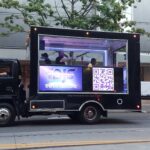
And then there are the format moments I’m proud of, like taking the broadcast out of the studio with Mobile Sessions or Rooftop Sessions. A rooftop episode can feel like a memory, not a recording. A mobile broadcast can turn a city into part of the story. Those episodes prove that The DJ Sessions isn’t a static show. It’s a platform that keeps finding new ways to document the energy around the music, not just the music itself.
4.) As we noted at the tip-top, you’re a true pioneer in the world of live streaming. What sort of changes have you seen in this specific culture over the years?
The biggest change in livestream culture is that the world finally caught up to what a lot of us were doing early. In 2009, livestreaming DJs with video felt like a weird experiment. Bandwidth was limited, platforms were clunky, and the idea of watching a set online seemed niche. You had to explain the concept constantly, and people would still look at you like you were describing a hobby, not a future.
Over time, the tech barriers started dropping. Cameras got better, internet got faster, and platforms became more stable. But culturally, it still wasn’t normal until much later. A major shift for us happened when we moved onto Twitch in 2018. We became a partnered show quickly, and suddenly we had front-page placements, serious live audiences, and a platform that understood live culture. Then 2020 hit, and livestreaming went from what it was to “how do I do that” almost overnight.
What I’ve seen since then is a split. On one side, streaming became a standard tool, which is great. It let artists connect directly with fans and build community without gatekeepers. On the other side, the attention economy got more intense. A lot of streams started chasing spectacle, gimmicks, or constant stimulation to compete. That’s not a judgement, it’s just the landscape.
For us, the evolution has been about building durability. Being a featured partner and ranking strongly is cool, but the real win is that we’re still here, still independent, and still building an archive that doesn’t vanish when an algorithm changes. That’s why our website matters as the home base, and why we keep expanding into things like translations, transcriptions, and multi-platform distribution. Livestreaming is now mainstream, but long-term platforms are still rare.
5.) The DJ Sessions has always felt heavy on substance and, thankfully, has turned its back on most of the bells and whistles which populate some other live stream shows. To what do you attribute this penchant for giving listeners actual substance in a straightforward and refreshing manner when listening to your program?
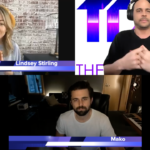
I appreciate you saying that, because it’s intentional. I’ve never wanted The DJ Sessions to be a fireworks show where the visuals distract from the artist. Electronic music is already powerful. The set, the story, the choices an artist makes in a mix, that’s the substance. So our format has always been about giving that room to breathe: uninterrupted DJ sets and real conversation.
A lot of it comes from how I was wired before The DJ Sessions even existed. I’ve been producing film and television since I was 18 and podcasting since 2005. That taught me that a good interview isn’t about showing off the host, it’s about creating a space where someone feels comfortable enough to say something real. When you combine that with a full mix, you’re not only hearing what they play, you’re understanding why they play it.
It also comes down to respect for the audience. I don’t assume people only have the attention span for highlights. I think people are starving for depth when it’s delivered in a way that doesn’t waste their time. The trick is to keep it human. If you approach every guest with curiosity, you can go long without it feeling bloated.
And the straightforward side of it is partly because I’ve always built this like a platform, not a one-off show. The archive matters. The structure matters. People should be able to discover an episode years later and still get value from it. That’s why we’ve been building out things like chapter markers and transcriptions, so someone can jump to what they want without losing the full story. Substance isn’t only what happens live. It’s what remains valuable after the moment passes.
6.) Prognosticating a bit, what do you envision for The DJ Sessions in the next two-five years?
The next two to five years are about turning The DJ Sessions into an even more complete ecosystem, while protecting what made it work in the first place. The big headline is scale. We’re building toward 60 to 80 hours of content per month and pushing beyond 100 hours as the system grows. But I’m not interested in scale that comes with burnout or diluted quality. The goal is more programming, more discovery, more access, and more consistency.
Accessibility is a major piece of that. The site is already reaching people in over 100 languages, and we’re treating captions, transcriptions, and translation as infrastructure, not a bonus feature. That expands the audience, but it also makes the archive more usable and searchable, which matters if you care about long-term cultural documentation.
Creatively, Europe is a huge focus. We’re planning multiple trips across the UK and EU with Berlin as a base, working in collaboration with Riverside Studios, and producing coverage around major moments like ADE, IMS, Sonar, and Rave The Planet. Being physically present in those environments changes relationships and storytelling in a way that remote production never fully can.
Back in Seattle, I’m developing a live venue concept that’s immersive and intentionally phone-free in the sense that we want people present in the room, while we capture the show professionally and distribute it through livestream and pay-per-view. It’s about bringing back the feeling of shared experience without pretending phones don’t exist.
And then there’s VR. We’ve been developing a VR nightclub beta in VRChat, and I see immersive spaces as the next evolution of how global dance communities gather. Over the next few years, I want TDJS to be a bridge between the roots of electronic music culture and the future of how it’s experienced.
7.) Who are some of the people who have inspired your own incredible journey over the years?
I pull inspiration from a mix of worlds: artists, builders, and the people who quietly keep scenes alive. On the artist side, I’ve always respected DJs and producers who build an identity instead of chasing a trend. The ones who can play a set that feels like a story, who can evolve without losing their signature, and who treat the craft seriously. Being around so many guests over the years gives you a front-row seat to what discipline actually looks like.
On the builder side, I’m inspired by people who create infrastructure, not just moments. Promoters who nurture local scenes, label owners who take real risks, managers who protect artists, engineers who make a room sound right, and creative directors who understand that presentation matters. That’s one reason we widened the scope to include industry professionals too. Scenes don’t survive on DJs alone, and I think those voices deserve visibility.
I’m also inspired by communities, not just individuals. Electronic music is one of the most universal cultures I’ve ever seen. You can put people in a room who don’t share a language, and the music becomes the common thread. That sense of connection is what keeps me motivated to keep building.
And honestly, I’m inspired by the early days, when everything was harder but the excitement was pure. Remembering that feeling of doing something before it was normal keeps me from taking any of this for granted. It reminds me to stay curious, stay hungry, and keep the door open for the next wave.
8.) Does it feel validating to have one of the top live-streaming series in the world in the form of The DJ Sessions?
It’s validating, but it’s not the kind of validation that makes you relax. It’s the kind that makes you feel responsible. When you’re consistently ranking well, when you’re producing thousands of episodes, when you’re reaching a large weekly audience, it tells you people trust you with their time. That’s the real currency.
I’m proud of the recognition, like being a featured partner and seeing the platform place high in the categories we exist in. I’m proud that we did it early and independently, because that matters historically. But the validation that hits me the most is when an artist tells me the experience felt respectful, or when a viewer says an episode helped them discover a whole new corner of the scene, or when someone goes deep into the archive and realizes how much history is sitting there.
The thing about a long-running series is that you don’t get to live in a victory lap. The moment you start thinking you’ve made it, you start falling behind. So I treat validation like a checkpoint, not a finish line. It confirms the direction is right, and then it pushes me to build the next layer: better accessibility, better discovery tools, more formats, stronger partnerships, and a bigger global footprint.
If anything, it makes me want to protect the core even harder. Because the easiest way to lose what’s special is to chase whatever is loudest in the moment. I’d rather keep earning trust than cashing it in.
9.) At the end of the day, what do you hope listeners of The DJ Sessions walk away with after any given episode? Is the goal to always impart knowledge while having a fun time in doing so?
I want listeners to walk away feeling connected, not just entertained. Entertainment is easy. Connection is the part that lasts. If you watch an episode and you feel like you understand the artist better, like you heard something that sparked curiosity, like you caught a story you can carry with you, then we did our job.
The music is obviously central. A great mix can change your mood, your day, your sense of what’s possible. But the conversation is what turns a set into a human experience. It can show you how an artist thinks, how they got here, what they care about, what they’re building next, and what the scene looks like from their perspective. That context matters, especially in a culture that moves fast and forgets quickly.
Is the goal to impart knowledge while having fun? Yes, but I’d frame it slightly differently. The goal is to make learning feel natural. When you’re genuinely enjoying a set and hearing a real conversation, you absorb things without it feeling like homework. You learn about production, touring, scenes, labels, history, and the mental side of being a creative person, but it comes through storytelling, not lecturing.
And I want people to feel like they’re part of something bigger. The DJ Sessions is built as a living archive and a living community. Whether you catch an episode live, discover one from ten years ago, or tune into what we’re building next through new formats, I want it to feel like the door is open and the music never stops.
Article was first published by INTERVIEW: The DJ Sessions – Vents Magazine 2/17/26 – 2/17/26
Latest Shows
Latest news
Gallery
-


Comments
This post currently has no comments.