Best Platform to Live Stream DJ Set in 2026
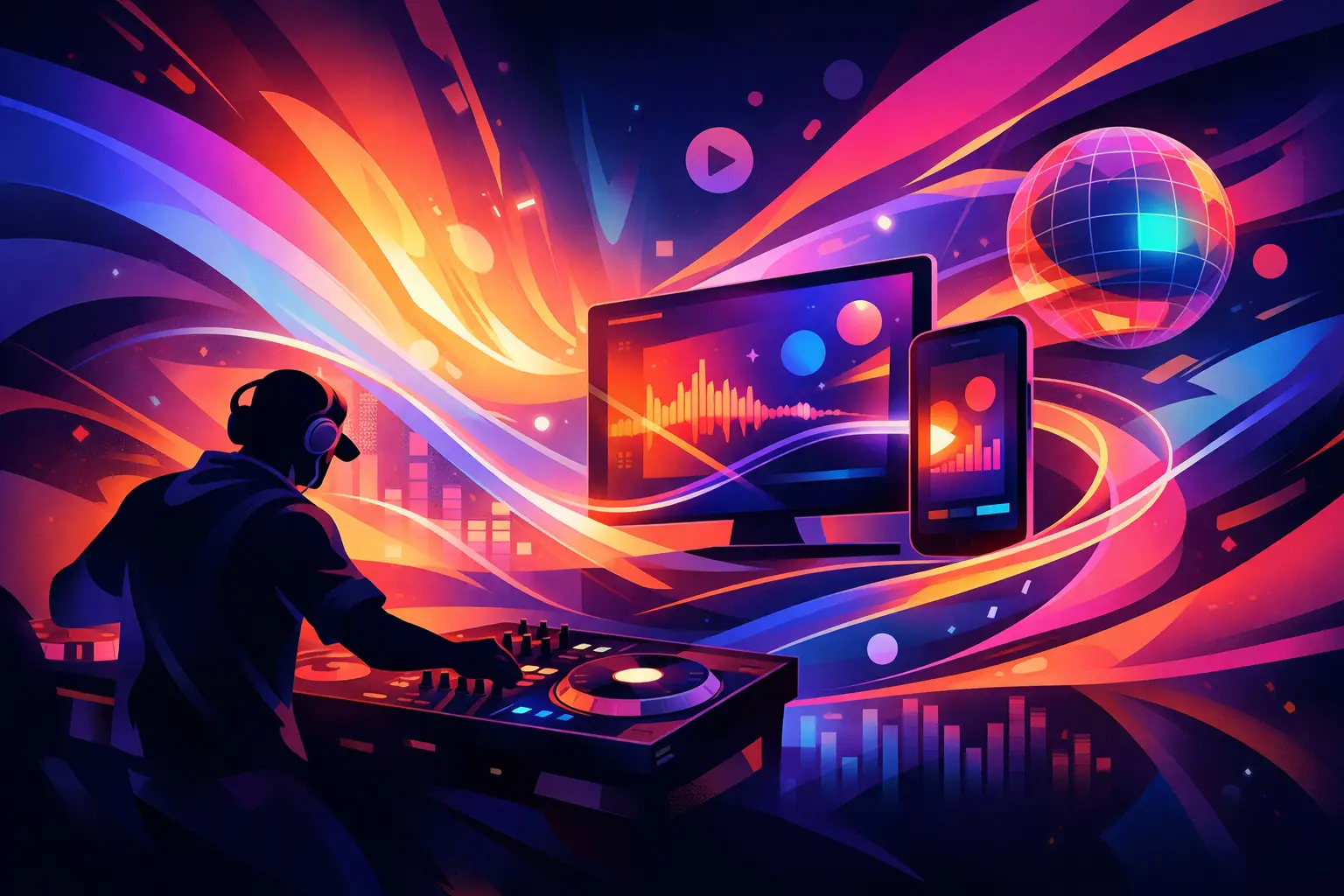
A great DJ stream can fall apart before the first drop if you pick the wrong platform. You can have a locked-in set, clean visuals, and a crowd-ready tracklist, but the best platform to live stream DJ set content depends on one thing first – what you want the stream to do for you.
If your goal is pure reach, one platform wins. If you care more about music tolerance, subscriber income, or building a branded home for your audience, the answer changes fast. That is why DJs who take streaming seriously do not ask, “What is the biggest platform?” They ask, “What platform fits my sound, my rights risk, and my audience?”
What makes the best platform to live stream DJ set content?
For DJs, live streaming is not the same as gaming, podcasting, or standard creator content. Music rights shape everything. A platform might have massive traffic, but if it mutes your stream, cuts your archive, or flags your set after the fact, that reach comes with a cost.
The real evaluation comes down to five factors: discoverability, music copyright tolerance, audio and video quality, monetization options, and long-term audience ownership. Some platforms are amazing for getting seen in the moment. Others are better for keeping your content alive and turning casual viewers into real fans.
That trade-off matters. Plenty of DJs blow up a stream on one platform only to realize later they cannot keep the replay online, collect useful audience data, or direct fans into a deeper ecosystem.
The biggest platforms and where they actually fit
YouTube is still the strongest all-around play
If you want the broadest mix of reach, search visibility, replay value, and long-tail growth, YouTube is hard to beat. It works especially well for DJs who think beyond the live moment and want each set to become an asset.
That matters because a live DJ set should not disappear after one night. On YouTube, your stream can keep pulling views days, weeks, and even months later. Fans can find you through search, suggested videos, clips, playlists, and collaborations. For artists building a serious brand, that is a major advantage.
The catch is copyright. YouTube is not the easiest place to stream unreleased edits, major-label tracks, or risky bootlegs without consequences. Depending on what you play, your stream may stay up with limited monetization, get blocked in some territories, or trigger claims on the archive. For open-format DJs and mainstream-heavy selectors, that risk is real.
Still, if you are strategic, YouTube remains one of the best answers to the question of the best platform to live stream DJ set performances with long-term value.
Twitch is built for live culture, but not always for archives
Twitch understands live engagement better than almost anyone. The chat culture is stronger, the audience behavior is more immediate, and the sense of community is hard to match. For DJs who want real-time connection, requests, shout-outs, subscriptions, raids, and a more interactive crowd, Twitch can feel like a digital club room.
It is especially strong for DJs with consistent schedules. If you stream every Friday night or build a recurring series, Twitch rewards that habit. The platform is less about one viral set and more about momentum.
The downside is that Twitch is still tricky for music rights and replay preservation. Live content may work fine in the moment, but archived videos can be muted or hit with rights issues later. Discovery outside the platform is also weaker than YouTube. If people do not already know you or your lane, it can be harder to get found.
For community-first DJs, Twitch is a strong contender. For search-first brand building, it usually needs support from somewhere else.
Instagram Live is great for visibility, weak for depth
Instagram Live works when speed matters. You can go live fast, catch followers where they already hang out, and build energy around a moment. That makes it useful for pop-up streams, behind-the-scenes sessions, quick sunset sets, pre-party warmups, or artist check-ins.
But Instagram is not where most DJs build a lasting stream library. Audio quality is more limited, discovery is short-lived, and the viewing experience is not designed for long-form DJ listening. It is strong as a touchpoint, not always as a destination.
If your audience is highly active on social and you want to stay visible between bigger broadcasts, Instagram Live has a role. It just should not be your whole strategy unless short-form audience attention is the actual goal.
TikTok Live can move attention fast
TikTok can put you in front of new people quickly, and that is the appeal. If your DJ identity is tied to personality, crowd moments, edits, mashups, reactions, or genre storytelling, TikTok Live can create traction fast.
The problem is that TikTok attention does not always turn into durable fan relationships. It is powerful for awareness, but weaker for full-length set immersion. Viewers often come in and out quickly, and the platform rewards moments more than journeys.
That does not make it a bad option. It just means TikTok is best used when your stream is part performance, part content engine. If your focus is a complete one-hour or two-hour musical ride, other platforms usually serve that better.
Facebook still works for existing communities
Facebook is no longer the cool-kid answer, but it still has utility for DJs with established local followings, older fan bases, event communities, or promoter networks. If your audience already lives in groups and event pages, a live stream there can still perform.
That said, it is usually not the strongest growth platform for dance music artists trying to break out. The energy is different, younger discovery is weaker, and replay culture is not as strong as YouTube.
Facebook makes sense if it supports a known audience. It is not usually the first choice if you are trying to build a modern streaming identity from scratch.
So what is the best platform to live stream DJ set performances?
For most DJs, YouTube is the best overall platform because it balances live reach with replay life, search value, and professional presentation. It gives your stream a chance to keep working after the set ends, which is how media brands, artists, and serious content teams grow.
Twitch comes in right behind it for DJs who care most about live interaction and recurring community. If your audience wants to be in the room with you every week, Twitch can outperform almost anywhere else on loyalty.
Instagram Live and TikTok Live are better as amplifiers than anchors. They are useful, sometimes very useful, but they rarely do the full job on their own.
The smarter answer for many artists is not one platform. It is a primary platform plus support channels. Stream where the full set has the best chance to live, then use social platforms to drive traffic, clips, and conversation around it.
The platform choice changes by DJ type
A touring headliner, a bedroom selector, and a local resident DJ should not all make the same decision. If you are an artist with a polished visual brand and a team that can package content well, YouTube gives you more long-term upside. If you are a community builder running regular sessions with direct fan chat, Twitch can become your home base.
If you are just getting started, the best move is often the platform you can use consistently without technical drama. Consistency beats a perfect strategy you cannot sustain. A weekly stream with decent sound and clear identity will usually outperform random high-effort broadcasts scattered across five apps.
There is also the rights question. Some DJs play mostly original productions, label-approved catalogs, or cleared music. Others play edits, classics, and tracks from all over the map. That alone can change which platform feels usable over time.
What serious DJs should prioritize before going live
Platform matters, but not as much as execution. Bad audio will kill a stream faster than a weak thumbnail. If your levels are clipping, your mic is muddy, or the room sound feels thin, viewers bounce.
Visuals matter too, but not in the overproduced sense. A clean camera angle, stable framing, and intentional lighting go a long way. People will forgive a lot if the music sounds great and the vibe feels real.
Then there is branding. Your stream should look and feel like a show, not an accident. Title it clearly. Keep your overlays clean. Give people a reason to remember your series and come back. This is where established dance media outlets and platforms built around recurring programming have an advantage – audiences respond to consistency.
The real answer is the platform that fits your next move
If you want one clean recommendation, YouTube is the best all-around pick for most DJs in 2026. It gives you the best shot at combining live performance, discoverability, replay value, and professional growth.
But the best platform to live stream DJ set content is not always the biggest one. It is the one that fits your rights reality, your audience habits, and the kind of career you are building. Some DJs need instant social attention. Others need a weekly home for loyal fans. Others need a credible media environment where their sets sit alongside interviews, culture content, and a deep electronic music archive, which is exactly why platforms like The DJ Sessions continue to matter in this space.
Pick the platform that can carry your sound beyond one night, then show up often enough that people start planning their week around your set.
Latest Shows
Latest news
Gallery
-




Comments
This post currently has no comments.